Índice
¿Se puede vender directamente un coche heredado?
Paso 1: Notifica el fallecimiento a la DGT
Paso 2: Formaliza la herencia
Paso 3: Liquida el Impuesto de Sucesiones
Paso 4: Cambia la titularidad en la DGT
Paso 5: Vende el coche
Qué pasa si hay varios herederos
Costes totales del proceso
Casos especiales: coche con cargas, ITV caducada y baja temporal
Preguntas frecuentes
Heredar un coche parece sencillo en teoría, pero en la práctica implica una cadena de trámites que muchos herederos desconocen. No basta con tener las llaves: necesitas demostrar legalmente que el coche es tuyo, pagar los impuestos correspondientes y registrarlo a tu nombre antes de poder venderlo.
Según la DGT, más de un millón de vehículos en España siguen registrados a nombre de personas fallecidas. Esto da una idea de la complejidad del proceso y de cuántas personas deciden no afrontarlo. Sin embargo, con una guía clara, el proceso es perfectamente manejable.
En este artículo te explicamos cada paso para vender un coche heredado en España, en el orden correcto, con los plazos y costes reales.
¿Se puede vender directamente un coche heredado?
No. No puedes vender un coche que está a nombre de una persona fallecida directamente a un comprador. El proceso requiere dos transferencias: primero del fallecido al heredero, y después del heredero al comprador.
Esto significa que, antes de buscar comprador, necesitas completar la herencia y poner el coche a tu nombre. Solo cuando figures como titular en la DGT podrás vender legalmente.
La buena noticia es que puedes circular con el coche durante el periodo de tramitación, siempre que la documentación del vehículo esté en regla (permiso de circulación, ITV en vigor y seguro activo).
Paso 1: Notifica el fallecimiento a la DGT
Mientras el vehículo no se adjudique a sus herederos, la persona que lo tiene a su cargo debe notificar el fallecimiento del titular en la Jefatura de Tráfico. El plazo para hacerlo es de 90 días desde la defunción.
Esta notificación no transfiere el coche, sino que informa a la DGT de la situación. A partir de ese momento, el vehículo queda en una situación provisional hasta que se complete la herencia y el cambio de titularidad.
Si durante este periodo necesitas usar el coche, puedes solicitar una transmisión provisional (custodia) que te permite circular legalmente mientras se resuelve la adjudicación. Este trámite tiene una tasa propia en la DGT.
Documentación necesaria para la notificación: certificado de defunción del titular y DNI del heredero o persona que notifica.
Paso 2: Formaliza la herencia
Antes de poder tocar la titularidad del coche, necesitas que la herencia esté formalmente resuelta. Este paso depende de si existe testamento o no.
Si hay testamento
El proceso es más directo. El testamento indica quién hereda cada bien. Necesitarás obtener el certificado de últimas voluntades (se solicita en el Ministerio de Justicia, pasados 15 días hábiles desde el fallecimiento) y una copia autorizada del testamento.
Si el coche está asignado a un heredero concreto, ese heredero es quien tramitará la transferencia. Si el testamento no especifica quién se queda el coche (por ejemplo, reparte "todos los bienes a partes iguales"), los herederos deberán acordar entre ellos quién asume la titularidad del vehículo.
Si no hay testamento
Es necesario realizar una declaración de herederos ab intestato. Este trámite se hace ante notario (para familiares directos: cónyuge, hijos, padres) y determina quiénes son los herederos legales según el orden de parentesco establecido por ley.
El proceso notarial requiere el certificado de defunción, el certificado de últimas voluntades (que confirmará que no hay testamento), el certificado de empadronamiento del fallecido y testigos que acrediten la relación de parentesco.
Una vez determinados los herederos, se realiza la partición de la herencia (reparto de bienes), donde se asigna el coche a uno de ellos.
Escritura de aceptación de herencia
En ambos casos (con o sin testamento), la aceptación de la herencia se formaliza ante notario mediante una escritura de aceptación y partición. Este documento es el que acredita legalmente que el coche te pertenece y es imprescindible para los trámites posteriores.
Paso 3: Liquida el Impuesto de Sucesiones
Es obligatorio y hay que hacerlo antes del cambio de titularidad en la DGT. Sin el justificante del Impuesto de Sucesiones, Tráfico no tramitará la transferencia.
El Impuesto de Sucesiones y Donaciones (ISD) es un tributo autonómico, lo que significa que tanto el tipo impositivo como las bonificaciones varían enormemente según la comunidad autónoma. Algunas comunidades, como Madrid, Andalucía o la Comunitat Valenciana, ofrecen bonificaciones muy altas (del 99% en muchos casos) para herencias entre familiares directos (cónyuge, hijos, padres), lo que reduce el impuesto a una cantidad mínima.
Plazo. El Impuesto de Sucesiones debe presentarse en los 6 meses siguientes al fallecimiento. Este plazo es prorrogable por otros 6 meses si se solicita antes de que expire el plazo inicial.
Dónde se presenta. En la oficina tributaria de la comunidad autónoma donde residía el fallecido.
Qué necesitas. La escritura de aceptación de herencia, el certificado de defunción, los datos del vehículo (matrícula o bastidor) y el valor del coche según las tablas fiscales.
Una vez liquidado el impuesto (o acreditada su exención o bonificación), conserva el justificante sellado: lo necesitarás para la DGT.
Paso 4: Cambia la titularidad en la DGT
Con la herencia formalizada y el Impuesto de Sucesiones liquidado, puedes tramitar el cambio de titularidad del vehículo a tu nombre.
Documentación necesaria:
Impreso oficial de solicitud de cambio de titularidad (disponible en la DGT o en su sede electrónica)
Declaración responsable de cambio de titularidad por fallecimiento (modelo descargable en la web de la DGT), firmada por el heredero adjudicatario
DNI del heredero
Justificante de pago del Impuesto de Sucesiones (sellado por Hacienda autonómica)
Permiso de circulación del vehículo
Ficha técnica (tarjeta ITV)
Justificante de pago de la tasa de la DGT
Para la documentación completa de la venta posterior, consulta los documentos necesarios para vender un coche.
Coste de la tasa DGT. La tasa 1.2 de la DGT para cambio de titularidad es de 55,70 euros para vehículos en general (27,85 euros para ciclomotores). Se puede pagar online o con tarjeta en la jefatura el día de la cita.
Dónde se tramita. En la Jefatura Provincial de Tráfico correspondiente, con cita previa. Algunos trámites pueden realizarse a través de gestoría de forma telemática.
Una vez completado el trámite, la DGT emite un nuevo permiso de circulación a tu nombre. A partir de ese momento, eres el titular legal del vehículo y puedes venderlo.
Paso 5: Vende el coche
Con el coche a tu nombre, la venta sigue el proceso habitual de cualquier vehículo de segunda mano. Tienes las mismas opciones que cualquier otro vendedor.
Vender entre particulares. Publicas en portales, gestionas visitas, negocias y cierras. Consulta nuestros pasos para vender un coche entre particulares para el detalle completo.
Vender a una empresa de compra directa. Compramostucoche, Flexicar o Clicars te hacen una oferta y se encargan de los trámites. Rápido pero a precio más bajo.
Vender a través de Dealcar. Subes tu coche una vez y más de 1.000 concesionarios compiten por él. Es la opción que mejor combina precio y comodidad, porque la compraventa ganadora gestiona todo: transferencia, recogida y pago.
Un punto importante sobre la fiscalidad de la venta: el precio de adquisición a efectos de IRPF es el valor que declaraste en el Impuesto de Sucesiones, no lo que pagó el fallecido en su día. Si vendes por encima de ese valor, hay ganancia patrimonial que tributa. Si vendes por debajo (lo más habitual, dado que los coches heredados suelen tener años y kilómetros), no hay tributación adicional. Consulta nuestra guía de impuestos al vender tu coche para más detalle.
Qué pasa si hay varios herederos
Es una de las situaciones más habituales y la que más complicaciones genera. Si el coche forma parte de una herencia con varios herederos, todos deben estar de acuerdo en quién se queda con el vehículo.
Opción 1: Un heredero se queda el coche. Los demás herederos firman un documento (incluido en la escritura de partición) manifestando que el coche se adjudica a uno de ellos. Ese heredero tramita la transferencia a su nombre y puede venderlo después. Si vende, puede compensar a los demás herederos con la parte proporcional del precio.
Opción 2: Se vende directamente y se reparte el dinero. Un heredero se hace titular temporalmente (previo acuerdo con los demás), vende el coche y reparte el importe entre todos según las proporciones de la herencia. Es la opción más práctica cuando ninguno quiere quedarse el coche.
Una vez a tu nombre, la venta sigue los trámites habituales para vender un coche en España.
Opción 3: Vender a un profesional que gestione todo. Si hay desacuerdos o nadie quiere asumir la gestión, vender a un concesionario o a través de una plataforma como Dealcar simplifica el proceso. Un heredero se hace titular (con acuerdo del resto), sube el coche a la plataforma, recibe ofertas de concesionarios y cierra la venta. El concesionario gestiona la transferencia y el pago, y el heredero reparte el dinero.
En todos los casos, lo imprescindible es que haya acuerdo documentado entre los herederos. Sin ese acuerdo, la DGT no tramitará la transferencia.
Costes totales del proceso
Vender un coche heredado tiene unos costes asociados que conviene prever.
Concepto | Coste estimado |
|---|---|
Certificado de defunción | 3,70 € |
Certificado de últimas voluntades | 3,70 € |
Escritura de aceptación de herencia (notaría) | 200-600 € (según complejidad) |
Declaración de herederos ab intestato (si no hay testamento) | 200-400 € |
Impuesto de Sucesiones | Variable (muchas CCAA bonifican al 99% entre familiares directos) |
Tasa DGT cambio de titularidad | 55,70 € |
Gestoría (opcional, si delegas trámites) | 100-300 € |
Total orientativo | 300-1.000 € (sin contar ISD si no está bonificado) |
Los costes notariales son los más significativos. El Impuesto de Sucesiones puede ser mínimo (si tu comunidad autónoma bonifica al 99% entre familiares directos) o considerable (si no hay bonificación o el parentesco es lejano). Consulta la normativa de tu comunidad antes de hacer cálculos.
Casos especiales: coche con cargas, ITV caducada y baja temporal
Coche heredado con reserva de dominio
Si el coche tiene una financiación pendiente con reserva de dominio, los herederos pueden optar por liquidar la deuda (y cancelar la reserva) o rechazar la herencia del vehículo. Si la deuda ya estaba saldada pero la reserva sigue activa, el proceso de cancelación es el habitual. Consulta nuestra guía sobre la reserva de dominio de un coche para más detalle.
Coche heredado con ITV caducada
Puedes heredar el coche y poner la titularidad a tu nombre aunque la ITV esté caducada. Lo que no puedes hacer es circular con él hasta que la pases. Si tu intención es vender, valora si te compensa pasar la ITV antes (facilita la venta y justifica mejor precio) o venderlo tal cual a un profesional que asuma ese trámite.
Coche heredado dado de baja temporal
Si el vehículo estaba en baja temporal en la DGT, necesitarás solicitar el alta antes de poder tramitar la transferencia por herencia. El trámite de alta tiene su propia tasa en la DGT y requiere que el coche tenga ITV en vigor y seguro contratado.
Coche heredado con embargos o multas pendientes
Si el vehículo tiene multas impagadas o embargos del titular fallecido, estas deudas pueden afectar a la herencia. Los herederos asumen las deudas del fallecido hasta el valor de los bienes heredados (herencia a beneficio de inventario). Si las deudas asociadas al coche superan su valor, puede no compensar aceptar la herencia del vehículo.
Dealcar: tasa tu coche gratis y recibe ofertas de concesionarios
Si has heredado un coche y quieres venderlo sin complicaciones, con Dealcar puedes tasar el vehículo gratis en menos de 30 segundos y recibir ofertas de más de 1.000 concesionarios verificados que compiten entre sí. La compraventa ganadora gestiona transferencia, recogida a domicilio y pago.
Es especialmente útil en herencias con varios herederos: un solo heredero se hace titular, sube el coche, recibe ofertas, cierra la venta y reparte el dinero. Sin publicar anuncios, sin visitas, sin negociar.
100% gratis para ti. Sin comisiones ni costes ocultos.
Cobras antes de entregar las llaves. Transferencia bancaria antes de entregar el coche.
Te recogen el coche a domicilio. Sin desplazamientos.
Sin trámites de venta. La compraventa gestiona la segunda transferencia y todo el papeleo.
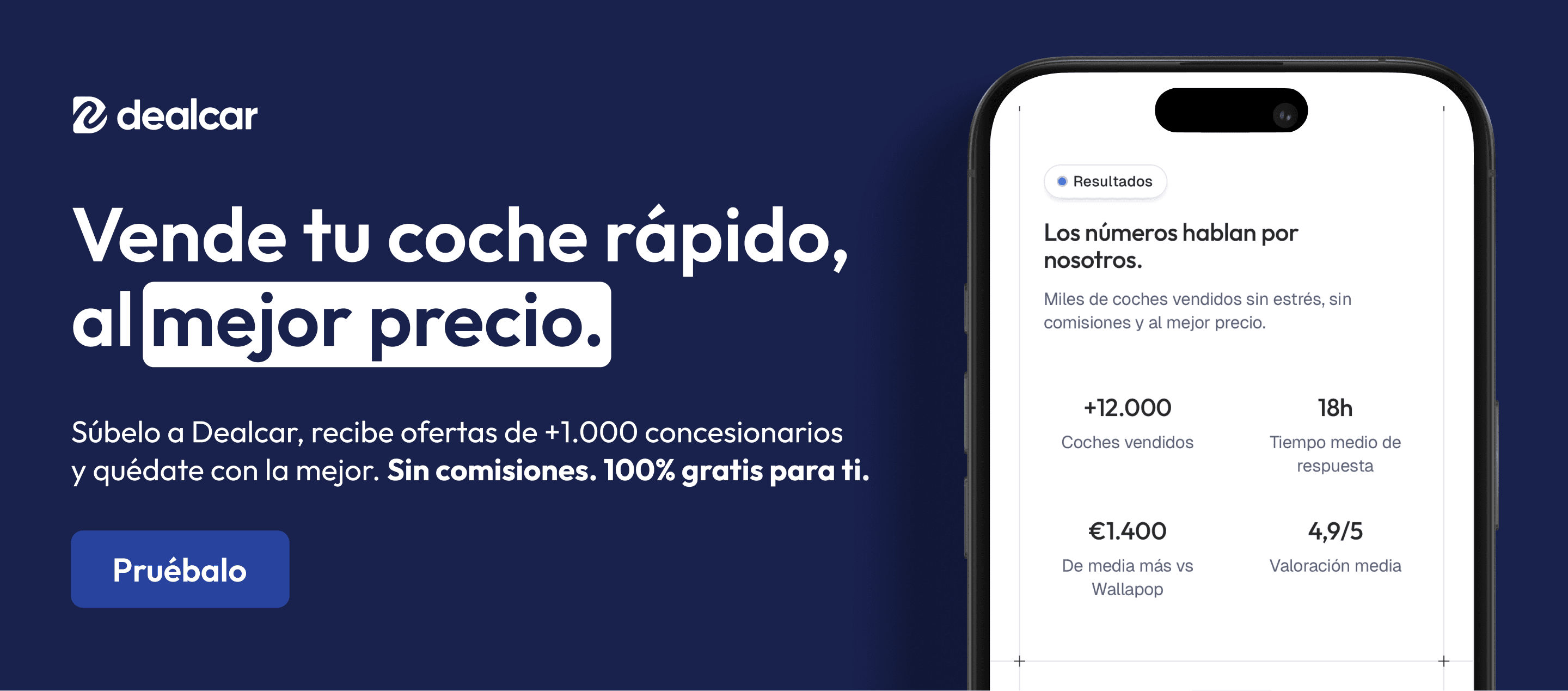
De media, 1.400 euros más que vendiendo en Wallapop.
Más de 12.000 coches vendidos y una valoración media de 4,9 sobre 5.
Usa el tasador gratuito de Dealcar.
Preguntas frecuentes
¿Puedo vender un coche heredado sin ponerlo a mi nombre?
No. La DGT exige dos transferencias: del fallecido al heredero, y del heredero al comprador. No se puede saltar el paso intermedio. Primero necesitas completar la herencia, pagar el Impuesto de Sucesiones y registrar el coche a tu nombre.
¿Cuánto tarda todo el proceso?
Depende de la complejidad de la herencia. Si hay testamento y un solo heredero, el proceso puede resolverse en 4-8 semanas (incluyendo plazos notariales y de la DGT). Si no hay testamento o hay varios herederos con desacuerdos, puede alargarse varios meses.
¿Puedo circular con el coche mientras tramito la herencia?
Sí, siempre que la documentación del vehículo esté en regla: permiso de circulación, ITV en vigor y seguro activo. Si el seguro del fallecido se ha cancelado, necesitarás contratar uno temporal a tu nombre.
¿Se puede renunciar solo al coche y aceptar el resto de la herencia?
No. La aceptación o renuncia de la herencia es total: aceptas todo o renuncias a todo. No se pueden seleccionar bienes individuales. Si aceptas la herencia y el coche no te interesa, primero ponlo a tu nombre y después véndelo.
¿Cuánto Impuesto de Sucesiones se paga por un coche?
Depende de la comunidad autónoma y del grado de parentesco. Muchas comunidades (Madrid, Andalucía, Comunitat Valenciana, Cantabria, entre otras) bonifican el 99% del impuesto para herencias entre cónyuge, hijos y padres, lo que reduce el ISD a una cantidad mínima. En comunidades sin bonificación o con parentesco lejano, el impuesto puede ser significativo.
Índice
¿Se puede vender directamente un coche heredado?
Paso 1: Notifica el fallecimiento a la DGT
Paso 2: Formaliza la herencia
Paso 3: Liquida el Impuesto de Sucesiones
Paso 4: Cambia la titularidad en la DGT
Paso 5: Vende el coche
Qué pasa si hay varios herederos
Costes totales del proceso
Casos especiales: coche con cargas, ITV caducada y baja temporal
Preguntas frecuentes
Heredar un coche parece sencillo en teoría, pero en la práctica implica una cadena de trámites que muchos herederos desconocen. No basta con tener las llaves: necesitas demostrar legalmente que el coche es tuyo, pagar los impuestos correspondientes y registrarlo a tu nombre antes de poder venderlo.
Según la DGT, más de un millón de vehículos en España siguen registrados a nombre de personas fallecidas. Esto da una idea de la complejidad del proceso y de cuántas personas deciden no afrontarlo. Sin embargo, con una guía clara, el proceso es perfectamente manejable.
En este artículo te explicamos cada paso para vender un coche heredado en España, en el orden correcto, con los plazos y costes reales.
¿Se puede vender directamente un coche heredado?
No. No puedes vender un coche que está a nombre de una persona fallecida directamente a un comprador. El proceso requiere dos transferencias: primero del fallecido al heredero, y después del heredero al comprador.
Esto significa que, antes de buscar comprador, necesitas completar la herencia y poner el coche a tu nombre. Solo cuando figures como titular en la DGT podrás vender legalmente.
La buena noticia es que puedes circular con el coche durante el periodo de tramitación, siempre que la documentación del vehículo esté en regla (permiso de circulación, ITV en vigor y seguro activo).
Paso 1: Notifica el fallecimiento a la DGT
Mientras el vehículo no se adjudique a sus herederos, la persona que lo tiene a su cargo debe notificar el fallecimiento del titular en la Jefatura de Tráfico. El plazo para hacerlo es de 90 días desde la defunción.
Esta notificación no transfiere el coche, sino que informa a la DGT de la situación. A partir de ese momento, el vehículo queda en una situación provisional hasta que se complete la herencia y el cambio de titularidad.
Si durante este periodo necesitas usar el coche, puedes solicitar una transmisión provisional (custodia) que te permite circular legalmente mientras se resuelve la adjudicación. Este trámite tiene una tasa propia en la DGT.
Documentación necesaria para la notificación: certificado de defunción del titular y DNI del heredero o persona que notifica.
Paso 2: Formaliza la herencia
Antes de poder tocar la titularidad del coche, necesitas que la herencia esté formalmente resuelta. Este paso depende de si existe testamento o no.
Si hay testamento
El proceso es más directo. El testamento indica quién hereda cada bien. Necesitarás obtener el certificado de últimas voluntades (se solicita en el Ministerio de Justicia, pasados 15 días hábiles desde el fallecimiento) y una copia autorizada del testamento.
Si el coche está asignado a un heredero concreto, ese heredero es quien tramitará la transferencia. Si el testamento no especifica quién se queda el coche (por ejemplo, reparte "todos los bienes a partes iguales"), los herederos deberán acordar entre ellos quién asume la titularidad del vehículo.
Si no hay testamento
Es necesario realizar una declaración de herederos ab intestato. Este trámite se hace ante notario (para familiares directos: cónyuge, hijos, padres) y determina quiénes son los herederos legales según el orden de parentesco establecido por ley.
El proceso notarial requiere el certificado de defunción, el certificado de últimas voluntades (que confirmará que no hay testamento), el certificado de empadronamiento del fallecido y testigos que acrediten la relación de parentesco.
Una vez determinados los herederos, se realiza la partición de la herencia (reparto de bienes), donde se asigna el coche a uno de ellos.
Escritura de aceptación de herencia
En ambos casos (con o sin testamento), la aceptación de la herencia se formaliza ante notario mediante una escritura de aceptación y partición. Este documento es el que acredita legalmente que el coche te pertenece y es imprescindible para los trámites posteriores.
Paso 3: Liquida el Impuesto de Sucesiones
Es obligatorio y hay que hacerlo antes del cambio de titularidad en la DGT. Sin el justificante del Impuesto de Sucesiones, Tráfico no tramitará la transferencia.
El Impuesto de Sucesiones y Donaciones (ISD) es un tributo autonómico, lo que significa que tanto el tipo impositivo como las bonificaciones varían enormemente según la comunidad autónoma. Algunas comunidades, como Madrid, Andalucía o la Comunitat Valenciana, ofrecen bonificaciones muy altas (del 99% en muchos casos) para herencias entre familiares directos (cónyuge, hijos, padres), lo que reduce el impuesto a una cantidad mínima.
Plazo. El Impuesto de Sucesiones debe presentarse en los 6 meses siguientes al fallecimiento. Este plazo es prorrogable por otros 6 meses si se solicita antes de que expire el plazo inicial.
Dónde se presenta. En la oficina tributaria de la comunidad autónoma donde residía el fallecido.
Qué necesitas. La escritura de aceptación de herencia, el certificado de defunción, los datos del vehículo (matrícula o bastidor) y el valor del coche según las tablas fiscales.
Una vez liquidado el impuesto (o acreditada su exención o bonificación), conserva el justificante sellado: lo necesitarás para la DGT.
Paso 4: Cambia la titularidad en la DGT
Con la herencia formalizada y el Impuesto de Sucesiones liquidado, puedes tramitar el cambio de titularidad del vehículo a tu nombre.
Documentación necesaria:
Impreso oficial de solicitud de cambio de titularidad (disponible en la DGT o en su sede electrónica)
Declaración responsable de cambio de titularidad por fallecimiento (modelo descargable en la web de la DGT), firmada por el heredero adjudicatario
DNI del heredero
Justificante de pago del Impuesto de Sucesiones (sellado por Hacienda autonómica)
Permiso de circulación del vehículo
Ficha técnica (tarjeta ITV)
Justificante de pago de la tasa de la DGT
Para la documentación completa de la venta posterior, consulta los documentos necesarios para vender un coche.
Coste de la tasa DGT. La tasa 1.2 de la DGT para cambio de titularidad es de 55,70 euros para vehículos en general (27,85 euros para ciclomotores). Se puede pagar online o con tarjeta en la jefatura el día de la cita.
Dónde se tramita. En la Jefatura Provincial de Tráfico correspondiente, con cita previa. Algunos trámites pueden realizarse a través de gestoría de forma telemática.
Una vez completado el trámite, la DGT emite un nuevo permiso de circulación a tu nombre. A partir de ese momento, eres el titular legal del vehículo y puedes venderlo.
Paso 5: Vende el coche
Con el coche a tu nombre, la venta sigue el proceso habitual de cualquier vehículo de segunda mano. Tienes las mismas opciones que cualquier otro vendedor.
Vender entre particulares. Publicas en portales, gestionas visitas, negocias y cierras. Consulta nuestros pasos para vender un coche entre particulares para el detalle completo.
Vender a una empresa de compra directa. Compramostucoche, Flexicar o Clicars te hacen una oferta y se encargan de los trámites. Rápido pero a precio más bajo.
Vender a través de Dealcar. Subes tu coche una vez y más de 1.000 concesionarios compiten por él. Es la opción que mejor combina precio y comodidad, porque la compraventa ganadora gestiona todo: transferencia, recogida y pago.
Un punto importante sobre la fiscalidad de la venta: el precio de adquisición a efectos de IRPF es el valor que declaraste en el Impuesto de Sucesiones, no lo que pagó el fallecido en su día. Si vendes por encima de ese valor, hay ganancia patrimonial que tributa. Si vendes por debajo (lo más habitual, dado que los coches heredados suelen tener años y kilómetros), no hay tributación adicional. Consulta nuestra guía de impuestos al vender tu coche para más detalle.
Qué pasa si hay varios herederos
Es una de las situaciones más habituales y la que más complicaciones genera. Si el coche forma parte de una herencia con varios herederos, todos deben estar de acuerdo en quién se queda con el vehículo.
Opción 1: Un heredero se queda el coche. Los demás herederos firman un documento (incluido en la escritura de partición) manifestando que el coche se adjudica a uno de ellos. Ese heredero tramita la transferencia a su nombre y puede venderlo después. Si vende, puede compensar a los demás herederos con la parte proporcional del precio.
Opción 2: Se vende directamente y se reparte el dinero. Un heredero se hace titular temporalmente (previo acuerdo con los demás), vende el coche y reparte el importe entre todos según las proporciones de la herencia. Es la opción más práctica cuando ninguno quiere quedarse el coche.
Una vez a tu nombre, la venta sigue los trámites habituales para vender un coche en España.
Opción 3: Vender a un profesional que gestione todo. Si hay desacuerdos o nadie quiere asumir la gestión, vender a un concesionario o a través de una plataforma como Dealcar simplifica el proceso. Un heredero se hace titular (con acuerdo del resto), sube el coche a la plataforma, recibe ofertas de concesionarios y cierra la venta. El concesionario gestiona la transferencia y el pago, y el heredero reparte el dinero.
En todos los casos, lo imprescindible es que haya acuerdo documentado entre los herederos. Sin ese acuerdo, la DGT no tramitará la transferencia.
Costes totales del proceso
Vender un coche heredado tiene unos costes asociados que conviene prever.
Concepto | Coste estimado |
|---|---|
Certificado de defunción | 3,70 € |
Certificado de últimas voluntades | 3,70 € |
Escritura de aceptación de herencia (notaría) | 200-600 € (según complejidad) |
Declaración de herederos ab intestato (si no hay testamento) | 200-400 € |
Impuesto de Sucesiones | Variable (muchas CCAA bonifican al 99% entre familiares directos) |
Tasa DGT cambio de titularidad | 55,70 € |
Gestoría (opcional, si delegas trámites) | 100-300 € |
Total orientativo | 300-1.000 € (sin contar ISD si no está bonificado) |
Los costes notariales son los más significativos. El Impuesto de Sucesiones puede ser mínimo (si tu comunidad autónoma bonifica al 99% entre familiares directos) o considerable (si no hay bonificación o el parentesco es lejano). Consulta la normativa de tu comunidad antes de hacer cálculos.
Casos especiales: coche con cargas, ITV caducada y baja temporal
Coche heredado con reserva de dominio
Si el coche tiene una financiación pendiente con reserva de dominio, los herederos pueden optar por liquidar la deuda (y cancelar la reserva) o rechazar la herencia del vehículo. Si la deuda ya estaba saldada pero la reserva sigue activa, el proceso de cancelación es el habitual. Consulta nuestra guía sobre la reserva de dominio de un coche para más detalle.
Coche heredado con ITV caducada
Puedes heredar el coche y poner la titularidad a tu nombre aunque la ITV esté caducada. Lo que no puedes hacer es circular con él hasta que la pases. Si tu intención es vender, valora si te compensa pasar la ITV antes (facilita la venta y justifica mejor precio) o venderlo tal cual a un profesional que asuma ese trámite.
Coche heredado dado de baja temporal
Si el vehículo estaba en baja temporal en la DGT, necesitarás solicitar el alta antes de poder tramitar la transferencia por herencia. El trámite de alta tiene su propia tasa en la DGT y requiere que el coche tenga ITV en vigor y seguro contratado.
Coche heredado con embargos o multas pendientes
Si el vehículo tiene multas impagadas o embargos del titular fallecido, estas deudas pueden afectar a la herencia. Los herederos asumen las deudas del fallecido hasta el valor de los bienes heredados (herencia a beneficio de inventario). Si las deudas asociadas al coche superan su valor, puede no compensar aceptar la herencia del vehículo.
Dealcar: tasa tu coche gratis y recibe ofertas de concesionarios
Si has heredado un coche y quieres venderlo sin complicaciones, con Dealcar puedes tasar el vehículo gratis en menos de 30 segundos y recibir ofertas de más de 1.000 concesionarios verificados que compiten entre sí. La compraventa ganadora gestiona transferencia, recogida a domicilio y pago.
Es especialmente útil en herencias con varios herederos: un solo heredero se hace titular, sube el coche, recibe ofertas, cierra la venta y reparte el dinero. Sin publicar anuncios, sin visitas, sin negociar.
100% gratis para ti. Sin comisiones ni costes ocultos.
Cobras antes de entregar las llaves. Transferencia bancaria antes de entregar el coche.
Te recogen el coche a domicilio. Sin desplazamientos.
Sin trámites de venta. La compraventa gestiona la segunda transferencia y todo el papeleo.
De media, 1.400 euros más que vendiendo en Wallapop.
Más de 12.000 coches vendidos y una valoración media de 4,9 sobre 5.
Usa el tasador gratuito de Dealcar.
Preguntas frecuentes
¿Puedo vender un coche heredado sin ponerlo a mi nombre?
No. La DGT exige dos transferencias: del fallecido al heredero, y del heredero al comprador. No se puede saltar el paso intermedio. Primero necesitas completar la herencia, pagar el Impuesto de Sucesiones y registrar el coche a tu nombre.
¿Cuánto tarda todo el proceso?
Depende de la complejidad de la herencia. Si hay testamento y un solo heredero, el proceso puede resolverse en 4-8 semanas (incluyendo plazos notariales y de la DGT). Si no hay testamento o hay varios herederos con desacuerdos, puede alargarse varios meses.
¿Puedo circular con el coche mientras tramito la herencia?
Sí, siempre que la documentación del vehículo esté en regla: permiso de circulación, ITV en vigor y seguro activo. Si el seguro del fallecido se ha cancelado, necesitarás contratar uno temporal a tu nombre.
¿Se puede renunciar solo al coche y aceptar el resto de la herencia?
No. La aceptación o renuncia de la herencia es total: aceptas todo o renuncias a todo. No se pueden seleccionar bienes individuales. Si aceptas la herencia y el coche no te interesa, primero ponlo a tu nombre y después véndelo.
¿Cuánto Impuesto de Sucesiones se paga por un coche?
Depende de la comunidad autónoma y del grado de parentesco. Muchas comunidades (Madrid, Andalucía, Comunitat Valenciana, Cantabria, entre otras) bonifican el 99% del impuesto para herencias entre cónyuge, hijos y padres, lo que reduce el ISD a una cantidad mínima. En comunidades sin bonificación o con parentesco lejano, el impuesto puede ser significativo.