Contents
Why paperwork is the first thing you should prepare
Mandatory documents to sell your car
Additional documents that make the sale easier
What documents you need depending on the type of sale
Where to get each document
Quick checklist before selling
Frequently asked questions
Many private car sales are delayed or fall through for a reason that has nothing to do with the price or the car itself: the paperwork. A missing document, a detail that doesn’t match, a tax that hasn’t been paid. These are problems that can be resolved in hours if you spot them in time, but they can cost you days or weeks if they appear halfway through the process.
Before you advertise your car, request a valuation or accept any offer, the smartest thing you can do is check that you have all the paperwork in order. It takes less than an hour and saves you more trouble than you might imagine.
In this article we set out exactly which documents you need to sell a car in Spain, where to get each one and what changes depending on whether you sell to a private buyer or a professional.
Why paperwork is the first thing you should prepare
It may seem obvious, but most sellers do not check their paperwork until they already have a buyer in front of them. And that is when they discover that the ITV has expired, that the registration certificate has an old address, or that the car has an outstanding title retention they did not know was still active.
Each of these issues has a solution, but all of them take time. And when you have a buyer waiting, time is not on your side: the buyer gets impatient, looks at other options and your negotiating position weakens.
Having the paperwork ready before you start selling gives you three clear advantages. First, you spot problems when you can still resolve them without pressure. Second, you project professionalism and confidence to the buyer, which makes negotiation easier. Third, you speed up the closing of the deal once there is agreement on the price.
Mandatory documents to sell your car
These are the documents you need, no exceptions, to complete the sale of a vehicle in Spain. Without any one of them, the transfer cannot be carried out.
Owner’s ID card
The identity document of the vehicle’s legal owner. The details on the ID card must match those shown on the registration certificate. If there has been a change of address, name or any personal detail that has not been updated on the registration certificate, it is best to sort out that discrepancy before starting the sale.
In the case of vehicles registered to a company, you will need the company tax ID and the documentation proving the legal authority of the person signing the sale.
Registration certificate
This is the document that proves who the legal owner of the vehicle is and authorises its use on public roads. Without it, the transfer cannot be processed. If you have lost it, you can request a duplicate from the DGT (in person or via the electronic office), although the process may take a few days.
Technical inspection sheet (ITV card)
The technical inspection sheet contains all the vehicle’s details: make, model, chassis number, power, weight, dimensions and the results of the technical inspections. It is an essential document for the transfer.
If the technical inspection sheet is damaged or has been lost, you will need a duplicate. This process is carried out at the relevant ITV station.
Valid ITV
Although it is not technically mandatory for the ITV to be valid in order to formalise the sale, in practice it is almost essential. A car with an expired ITV cannot legally be driven, which means the buyer will not be able to take it away by driving it and will have to bear the cost and hassle of getting it inspected.
The vast majority of buyers, both private and professional, will rule out a car with an expired ITV or demand a significant discount. Getting the ITV done before selling is an investment that pays for itself many times over in the sale price.
Latest paid vehicle tax receipt (IVTM)
The motor vehicle tax is a municipal tax paid annually. Having the latest receipt paid shows that the vehicle is up to date with its tax obligations.
If there are outstanding receipts, the buyer may ask you to pay them before closing the deal, or simply reject the purchase to avoid problems. Make sure you are up to date before putting the car up for sale.
Vehicle lien and encumbrance report
It is essential to check that the vehicle has no active liens, garnishments or title retentions before selling. If the car has any registered encumbrance, the transfer will be blocked at the DGT until it is resolved.
The most common situations are title retentions from finance agreements that have already been paid off but not formally cancelled, and garnishments arising from the owner’s debts. Both have a solution, but they require prior action.
If the car has encumbrances, the transfer will be blocked until they are resolved. You can read the full process in our guide to steps for selling a car in Spain.
You can check the vehicle’s status through the DGT electronic office or by requesting a vehicle report.
Additional documents that make the sale easier
In addition to the mandatory ones, there are a number of documents that are not strictly necessary but can speed up the sale and help you justify a higher price.
Service book and maintenance invoices. A complete, documented maintenance history is one of the things that professional buyers value most. It shows that the car has been cared for and reduces the buyer’s perception of risk.
Original purchase invoice. It is not mandatory, but it can be useful in the event of disputes about the vehicle’s origin or to prove the standard equipment.
Full set of keys. Having both original keys (or more, if applicable) is a detail that many buyers appreciate. Duplicating a modern car key can cost between 100 and 400 euros depending on the make and security system.
Vehicle history reports. Services such as CARFAX or Carvertical allow you to obtain detailed reports on the car’s history (accidents, changes of owner, recorded mileage). Having a clean report can be a powerful selling point.
Valid insurance. It is not necessary for the sale itself, but the buyer will need to take out insurance before they can drive it. If your policy is transferable, that can be a plus in the negotiation.
What documents you need depending on the type of sale
The basic paperwork is the same in all cases, but there are important differences depending on who you are selling to.
Private sale
In a sale between private individuals, both parties must handle the paperwork and formalities themselves (or through an agency). In addition to the mandatory documents, you will need to prepare a sales contract signed by both parties, setting out the seller’s and buyer’s details, the vehicle details, the price, the payment method and the terms of the deal.
The buyer, for their part, will need to pay the Property Transfer Tax (ITP) and handle the change of ownership at the DGT. As the seller, your responsibility is to notify the DGT of the sale within 10 calendar days.
Before signing any contract, make sure you know your car’s true value. You can get a free online valuation for your car with the available tools.
Sale to a dealership or company
When you sell to a professional, the paperwork burden on you as the seller is greatly reduced. The dealership takes care of preparing the deal paperwork, handling the transfer and paying the relevant taxes.
You only need to provide the ID card, the registration certificate, the technical inspection sheet and sign the paperwork presented to you by the buyer. Everything else is handled by the professional.
Sale through a platform like Dealcar
If you sell through Dealcar, the process is practically the same as selling to a dealership. The buying company takes care of all the paperwork: transfer, notification to the DGT and administrative formalities. You only need to have the basic documents in order and sign. You are paid by bank transfer before handing over the keys, and the buying company collects the car wherever you choose.
Where to get each document
If you are missing any document or need to renew one, here is where to go in each case.
Expired or lost ID card. National Police station. You need an appointment through the National Police electronic office.
Duplicate registration certificate. DGT electronic office (sede.dgt.gob.es) with a digital certificate, electronic ID or Cl@ve. You can also do it in person at a traffic office with an appointment. The fee is approximately 20 euros.
Duplicate technical inspection sheet. The ITV station where the vehicle’s last inspection is recorded. You will need the ID card and the registration certificate. The cost is usually around 10-20 euros.
Expired ITV. Any authorised ITV station. You can book an appointment online in most autonomous communities. The cost varies by region, but for a standard car it is between 30 and 50 euros.
IVTM receipt. The local council where the vehicle is registered. Many councils allow you to check and download receipts through their electronic office.
Vehicle lien and status report. DGT electronic office. You can check the vehicle’s administrative status with a digital certificate. You can also request it through an agency.
Cancellation of title retention. The financial institution that provided the finance. Once the debt has been settled, the finance company issues a cancellation certificate, which is submitted to the DGT to remove the encumbrance.
Quick checklist before selling
Before putting your car up for sale, go through this list and make sure you can tick every box.
Mandatory paperwork:
Valid ID card with up-to-date details
Registration certificate in good condition
Technical inspection sheet (ITV card)
Valid ITV
Latest paid IVTM receipt
Vehicle free of liens and garnishments
Recommended paperwork:
Service book and maintenance invoices
Full set of keys
Original purchase invoice
Vehicle history report
If everything is in order, you can go ahead with the sale with peace of mind. If you spot any problem (expired ITV, active title retention, outdated details), sort it out before moving on. It is quicker and cheaper to fix it now than halfway through the process.
If everything is in order, the next step is to decide where to list your car for sale. See our analysis of the best place to sell your car in Spain.
Dealcar: get a free valuation for your car and receive offers from dealerships
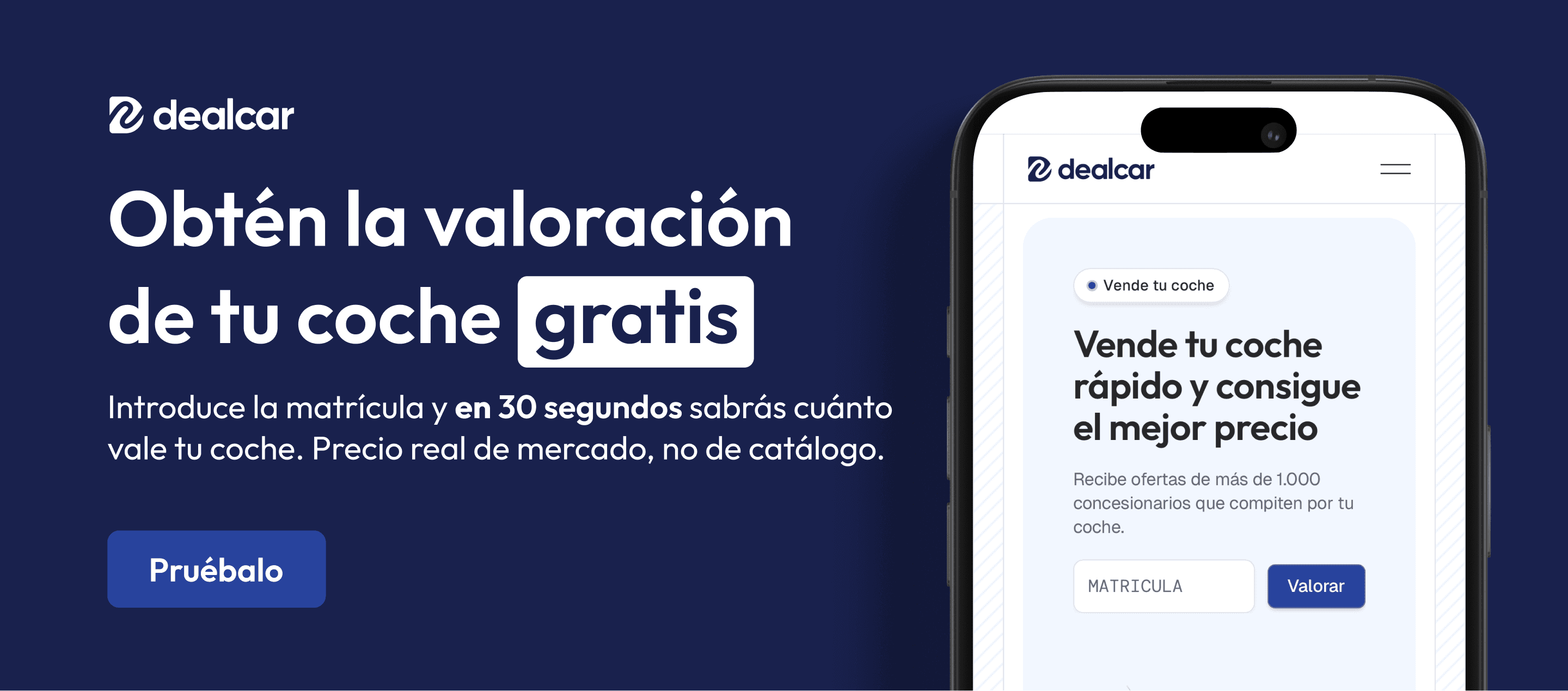
Dealcar gives you a free valuation tool that قيمates your car in less than 30 seconds. You enter the registration plate and vehicle details, and receive a valuation based on real prices from closed sales in the market.
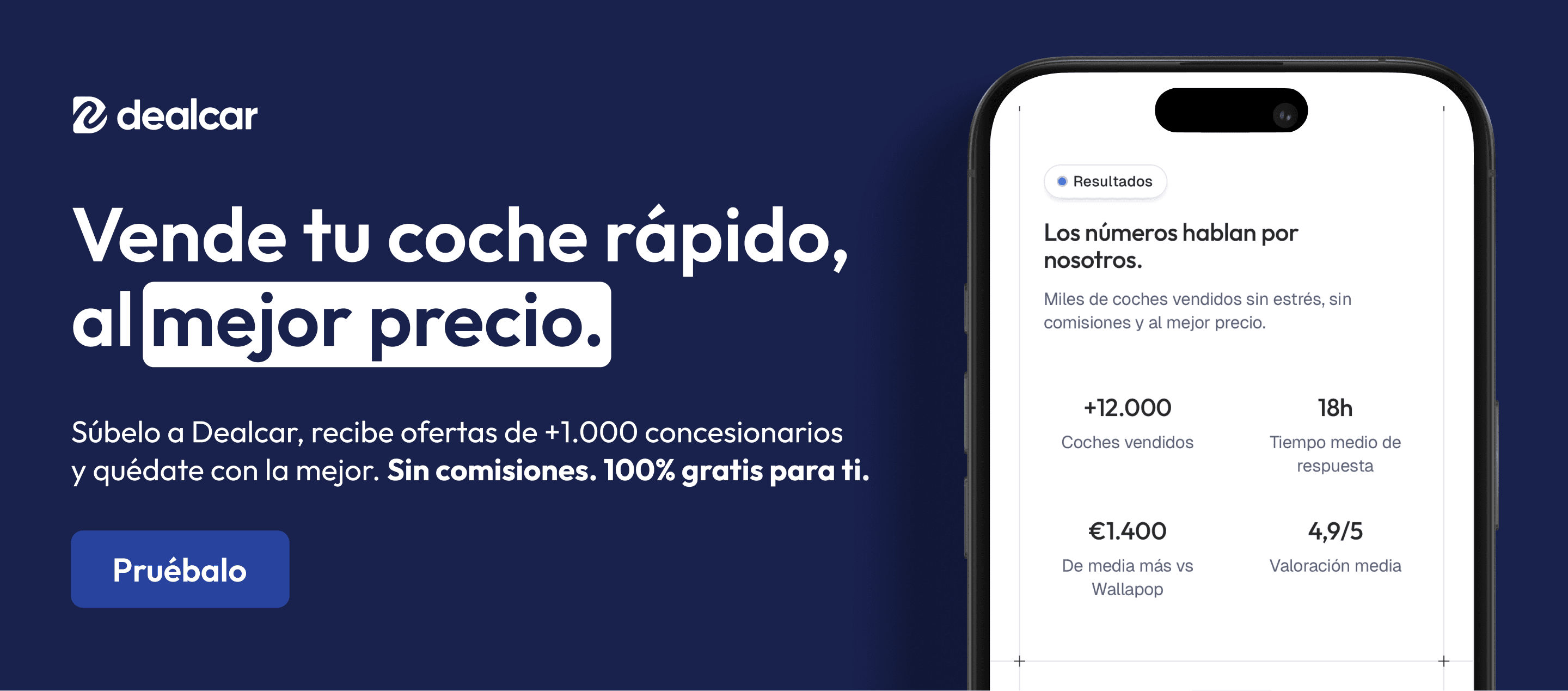
From there, your car is presented to a network of more than 1,000 verified professional buyers who bid against each other to buy it. On average, the first offers arrive in under 18 hours. You compare them and keep the best one. If none of them convinces you, you reject them with no penalty.
100% free for you. No commissions or hidden costs.
You get paid before handing over the keys. The payment arrives in your account by bank transfer before you hand over the car.
They collect the car from your home. The buying company collects the car wherever you choose.
No paperwork. The buying company handles the transfer, notification to the DGT and all the administrative formalities.
On average, 1,400 euros more than selling on Wallapop.
More than 12,000 cars sold and an average rating of 4.9 out of 5.
If you want to know how much your car is worth today, use Dealcar’s free valuation tool.
Frequently asked questions
Can I sell my car without a valid ITV?
Legally yes, but in practice it is very difficult. Most buyers will demand a significant discount or simply rule the car out. Getting the ITV done before selling makes the process easier and justifies a higher price.
What happens if the registration certificate has an old address?
It does not prevent the sale, but it can cause problems if the details on the ID card and the certificate do not match. Ideally, update the details with the DGT before selling. The process is straightforward and can be done online.
Do I need a sales contract?
If you sell to a private buyer, it is highly recommended even if it is not legally mandatory. The contract protects both parties in the event of later claims. If you sell to a dealership, the professional will prepare the paperwork.
How do I know if my car has liens or garnishments?
You can check it through the DGT electronic office with a digital certificate or Cl@ve. You can also request it through an agency or through vehicle report services such as CARFAX or Carvertical.
What should I do if my car has an active title retention?
Contact the financial institution to verify the status of the debt. If you have already paid it off, request the cancellation certificate and submit it to the DGT to remove the encumbrance. If you still owe money, you will need to settle the debt before you can transfer the vehicle.
Contents
Why paperwork is the first thing you should prepare
Mandatory documents to sell your car
Additional documents that make the sale easier
What documents you need depending on the type of sale
Where to get each document
Quick checklist before selling
Frequently asked questions
Many private car sales are delayed or fall through for a reason that has nothing to do with the price or the car itself: the paperwork. A missing document, a detail that doesn’t match, a tax that hasn’t been paid. These are problems that can be resolved in hours if you spot them in time, but they can cost you days or weeks if they appear halfway through the process.
Before you advertise your car, request a valuation or accept any offer, the smartest thing you can do is check that you have all the paperwork in order. It takes less than an hour and saves you more trouble than you might imagine.
In this article we set out exactly which documents you need to sell a car in Spain, where to get each one and what changes depending on whether you sell to a private buyer or a professional.
Why paperwork is the first thing you should prepare
It may seem obvious, but most sellers do not check their paperwork until they already have a buyer in front of them. And that is when they discover that the ITV has expired, that the registration certificate has an old address, or that the car has an outstanding title retention they did not know was still active.
Each of these issues has a solution, but all of them take time. And when you have a buyer waiting, time is not on your side: the buyer gets impatient, looks at other options and your negotiating position weakens.
Having the paperwork ready before you start selling gives you three clear advantages. First, you spot problems when you can still resolve them without pressure. Second, you project professionalism and confidence to the buyer, which makes negotiation easier. Third, you speed up the closing of the deal once there is agreement on the price.
Mandatory documents to sell your car
These are the documents you need, no exceptions, to complete the sale of a vehicle in Spain. Without any one of them, the transfer cannot be carried out.
Owner’s ID card
The identity document of the vehicle’s legal owner. The details on the ID card must match those shown on the registration certificate. If there has been a change of address, name or any personal detail that has not been updated on the registration certificate, it is best to sort out that discrepancy before starting the sale.
In the case of vehicles registered to a company, you will need the company tax ID and the documentation proving the legal authority of the person signing the sale.
Registration certificate
This is the document that proves who the legal owner of the vehicle is and authorises its use on public roads. Without it, the transfer cannot be processed. If you have lost it, you can request a duplicate from the DGT (in person or via the electronic office), although the process may take a few days.
Technical inspection sheet (ITV card)
The technical inspection sheet contains all the vehicle’s details: make, model, chassis number, power, weight, dimensions and the results of the technical inspections. It is an essential document for the transfer.
If the technical inspection sheet is damaged or has been lost, you will need a duplicate. This process is carried out at the relevant ITV station.
Valid ITV
Although it is not technically mandatory for the ITV to be valid in order to formalise the sale, in practice it is almost essential. A car with an expired ITV cannot legally be driven, which means the buyer will not be able to take it away by driving it and will have to bear the cost and hassle of getting it inspected.
The vast majority of buyers, both private and professional, will rule out a car with an expired ITV or demand a significant discount. Getting the ITV done before selling is an investment that pays for itself many times over in the sale price.
Latest paid vehicle tax receipt (IVTM)
The motor vehicle tax is a municipal tax paid annually. Having the latest receipt paid shows that the vehicle is up to date with its tax obligations.
If there are outstanding receipts, the buyer may ask you to pay them before closing the deal, or simply reject the purchase to avoid problems. Make sure you are up to date before putting the car up for sale.
Vehicle lien and encumbrance report
It is essential to check that the vehicle has no active liens, garnishments or title retentions before selling. If the car has any registered encumbrance, the transfer will be blocked at the DGT until it is resolved.
The most common situations are title retentions from finance agreements that have already been paid off but not formally cancelled, and garnishments arising from the owner’s debts. Both have a solution, but they require prior action.
If the car has encumbrances, the transfer will be blocked until they are resolved. You can read the full process in our guide to steps for selling a car in Spain.
You can check the vehicle’s status through the DGT electronic office or by requesting a vehicle report.
Additional documents that make the sale easier
In addition to the mandatory ones, there are a number of documents that are not strictly necessary but can speed up the sale and help you justify a higher price.
Service book and maintenance invoices. A complete, documented maintenance history is one of the things that professional buyers value most. It shows that the car has been cared for and reduces the buyer’s perception of risk.
Original purchase invoice. It is not mandatory, but it can be useful in the event of disputes about the vehicle’s origin or to prove the standard equipment.
Full set of keys. Having both original keys (or more, if applicable) is a detail that many buyers appreciate. Duplicating a modern car key can cost between 100 and 400 euros depending on the make and security system.
Vehicle history reports. Services such as CARFAX or Carvertical allow you to obtain detailed reports on the car’s history (accidents, changes of owner, recorded mileage). Having a clean report can be a powerful selling point.
Valid insurance. It is not necessary for the sale itself, but the buyer will need to take out insurance before they can drive it. If your policy is transferable, that can be a plus in the negotiation.
What documents you need depending on the type of sale
The basic paperwork is the same in all cases, but there are important differences depending on who you are selling to.
Private sale
In a sale between private individuals, both parties must handle the paperwork and formalities themselves (or through an agency). In addition to the mandatory documents, you will need to prepare a sales contract signed by both parties, setting out the seller’s and buyer’s details, the vehicle details, the price, the payment method and the terms of the deal.
The buyer, for their part, will need to pay the Property Transfer Tax (ITP) and handle the change of ownership at the DGT. As the seller, your responsibility is to notify the DGT of the sale within 10 calendar days.
Before signing any contract, make sure you know your car’s true value. You can get a free online valuation for your car with the available tools.
Sale to a dealership or company
When you sell to a professional, the paperwork burden on you as the seller is greatly reduced. The dealership takes care of preparing the deal paperwork, handling the transfer and paying the relevant taxes.
You only need to provide the ID card, the registration certificate, the technical inspection sheet and sign the paperwork presented to you by the buyer. Everything else is handled by the professional.
Sale through a platform like Dealcar
If you sell through Dealcar, the process is practically the same as selling to a dealership. The buying company takes care of all the paperwork: transfer, notification to the DGT and administrative formalities. You only need to have the basic documents in order and sign. You are paid by bank transfer before handing over the keys, and the buying company collects the car wherever you choose.
Where to get each document
If you are missing any document or need to renew one, here is where to go in each case.
Expired or lost ID card. National Police station. You need an appointment through the National Police electronic office.
Duplicate registration certificate. DGT electronic office (sede.dgt.gob.es) with a digital certificate, electronic ID or Cl@ve. You can also do it in person at a traffic office with an appointment. The fee is approximately 20 euros.
Duplicate technical inspection sheet. The ITV station where the vehicle’s last inspection is recorded. You will need the ID card and the registration certificate. The cost is usually around 10-20 euros.
Expired ITV. Any authorised ITV station. You can book an appointment online in most autonomous communities. The cost varies by region, but for a standard car it is between 30 and 50 euros.
IVTM receipt. The local council where the vehicle is registered. Many councils allow you to check and download receipts through their electronic office.
Vehicle lien and status report. DGT electronic office. You can check the vehicle’s administrative status with a digital certificate. You can also request it through an agency.
Cancellation of title retention. The financial institution that provided the finance. Once the debt has been settled, the finance company issues a cancellation certificate, which is submitted to the DGT to remove the encumbrance.
Quick checklist before selling
Before putting your car up for sale, go through this list and make sure you can tick every box.
Mandatory paperwork:
Valid ID card with up-to-date details
Registration certificate in good condition
Technical inspection sheet (ITV card)
Valid ITV
Latest paid IVTM receipt
Vehicle free of liens and garnishments
Recommended paperwork:
Service book and maintenance invoices
Full set of keys
Original purchase invoice
Vehicle history report
If everything is in order, you can go ahead with the sale with peace of mind. If you spot any problem (expired ITV, active title retention, outdated details), sort it out before moving on. It is quicker and cheaper to fix it now than halfway through the process.
If everything is in order, the next step is to decide where to list your car for sale. See our analysis of the best place to sell your car in Spain.
Dealcar: get a free valuation for your car and receive offers from dealerships
Dealcar gives you a free valuation tool that قيمates your car in less than 30 seconds. You enter the registration plate and vehicle details, and receive a valuation based on real prices from closed sales in the market.
From there, your car is presented to a network of more than 1,000 verified professional buyers who bid against each other to buy it. On average, the first offers arrive in under 18 hours. You compare them and keep the best one. If none of them convinces you, you reject them with no penalty.
100% free for you. No commissions or hidden costs.
You get paid before handing over the keys. The payment arrives in your account by bank transfer before you hand over the car.
They collect the car from your home. The buying company collects the car wherever you choose.
No paperwork. The buying company handles the transfer, notification to the DGT and all the administrative formalities.
On average, 1,400 euros more than selling on Wallapop.
More than 12,000 cars sold and an average rating of 4.9 out of 5.
If you want to know how much your car is worth today, use Dealcar’s free valuation tool.
Frequently asked questions
Can I sell my car without a valid ITV?
Legally yes, but in practice it is very difficult. Most buyers will demand a significant discount or simply rule the car out. Getting the ITV done before selling makes the process easier and justifies a higher price.
What happens if the registration certificate has an old address?
It does not prevent the sale, but it can cause problems if the details on the ID card and the certificate do not match. Ideally, update the details with the DGT before selling. The process is straightforward and can be done online.
Do I need a sales contract?
If you sell to a private buyer, it is highly recommended even if it is not legally mandatory. The contract protects both parties in the event of later claims. If you sell to a dealership, the professional will prepare the paperwork.
How do I know if my car has liens or garnishments?
You can check it through the DGT electronic office with a digital certificate or Cl@ve. You can also request it through an agency or through vehicle report services such as CARFAX or Carvertical.
What should I do if my car has an active title retention?
Contact the financial institution to verify the status of the debt. If you have already paid it off, request the cancellation certificate and submit it to the DGT to remove the encumbrance. If you still owe money, you will need to settle the debt before you can transfer the vehicle.