Contents
Do you have to pay tax when selling a car?
Property Transfer Tax (ITP): who pays it
Income Tax and capital gains: when it affects you as the seller
Vehicle tax (IVTM): who pays in the year of sale
VAT: when it applies and when it doesn't
What happens if you sell for less than you paid
Special cases: inheritances, gifts and company cars
Tax mistakes private sellers make
Frequently asked questions
One of the most common questions when someone decides to sell their car is whether tax has to be paid on the transaction. The answer is not a straightforward yes or no, because it depends on several factors: who you are selling to, at what price, and whether you make a profit on the sale.
The good news for most private sellers is that selling a used car rarely means paying tax as the seller, because it is normal to sell for less than you paid. But there are exceptions, and it is worth knowing them so you don't get any surprises from Hacienda.
In this article we explain each tax that can arise when selling a car, who pays it, when it applies and when it doesn't.
Do you have to pay tax when selling a car?
For a private seller, in most cases no. The main tax that applies to the sale of a car between private individuals (ITP) is paid by the buyer, not the seller. And the only tax that could affect you as the seller (capital gains in Income Tax) only applies if you sell for more than you paid, something uncommon with used cars.
However, there are indirect tax obligations that do affect you as the seller: the vehicle tax for the current year, the correct declaration of the sale price and, in certain special cases, VAT.
Let's look at it tax by tax.
Property Transfer Tax (ITP): who pays it
ITP is the tax that applies to the sale of goods between private individuals. It is the most important tax when selling a second-hand car and it is always paid by the buyer, never by the seller.
How much is paid. The tax rate varies depending on the autonomous community. In most communities it is between 4% and 8% of the vehicle's value. It is calculated on the declared price in the sale contract or on the tax value published by Hacienda (Ministry tables), whichever is higher.
How it is paid. The buyer has 30 working days from the date of the transaction to settle the ITP at the tax office of their autonomous community. Proof of payment is required to process the change of ownership with the DGT.
What affects you as the seller. Although you do not pay the ITP, the price you declare in the contract does affect you. If you sell for €10,000 but the fiscal value of the car according to Hacienda's tables is €12,000, the buyer will pay ITP on €12,000, not €10,000. And if you declare a price far below the fiscal value to "save" the buyer ITP, Hacienda may investigate the transaction.
The recommendation is simple: always declare the real sale price. Inflating or deflating the price in the contract only causes problems.
Income Tax and capital gains: when it affects you as the seller
This is the only tax that can directly affect you as a private seller. If you make a capital gain on the sale (that is, if you sell for more than you paid), that gain is taxed in your Income Tax return.
When does a capital gain arise? When the sale price is higher than the acquisition price. The acquisition price includes what you paid for the car plus the costs associated with the purchase (ITP, administration, etc.). The sale price is what you receive minus the costs of the sale.
How much is paid? The capital gain is taxed within the savings base of Income Tax, with these bands (2024-2025, subject to possible changes):
Up to €6,000: 19%
From €6,000 to €50,000: 21%
From €50,000 to €200,000: 23%
From €200,000 to €300,000: 27%
Over €300,000: 28%
Is it common to make a capital gain when selling a car? No. The vast majority of used car sales are made below the purchase price, because cars depreciate with use and time. If you bought your car for €20,000 and sell it for €12,000, there is no gain: there is a capital loss of €8,000.
Can capital losses be offset? Yes. Capital losses from selling a car can be offset against capital gains from other transactions (sale of shares, investment funds, other assets) in the Income Tax return for the same tax year or for the following four years.
Do you have to declare the sale even if there is no gain? Technically yes. Hacienda may request information about the transaction. In practice, if there is no capital gain, most taxpayers do not include the transaction in their return and Hacienda does not usually ask for it. But if you want to do things properly (and be able to offset the loss against future gains), include it.
Exceptional case: classic or collector cars. This is one of the few scenarios in which a private individual may make a capital gain when selling a car. If you bought a classic car years ago and its value has gone up, the difference is taxed as a capital gain.
Vehicle tax (IVTM): who pays in the year of sale
The motor vehicle tax (IVTM) is a municipal tax paid annually. It is paid by whoever is the registered owner of the vehicle on 1 January of each year.
If you sell your car in June, you have already incurred the full year's IVTM and you must pay it (or have already paid it). The buyer will start paying from 1 January of the following year, when they are already listed as the registered owner.
Common sticking point. Many buyers try to negotiate for the seller to reimburse them for the proportional part of the IVTM corresponding to the months they will no longer use the car. There is no legal basis for this (the IVTM is not prorated), but it is a point of negotiation that is worth anticipating.
The recommendation is to make this clear before closing the deal. If the buyer asks you to, you can agree or not, but it should be agreed and, if possible, set out in the sale contract.
VAT: when it applies and when it doesn't
Private sale to private sale: no VAT. When a private individual sells their car to another private individual, the transaction is not subject to VAT. What applies is ITP (paid by the buyer).
Sale from a private individual to a dealership: no VAT. When you, as a private individual, sell your car to a dealership or company, you also do not charge VAT. You are not a business owner or professional, so you cannot issue an invoice with VAT. The dealership pays you the agreed price and handles the transaction for tax purposes on its own.
If you are considering selling your car to a professional, find out what you need to know before accepting an offer of this kind.
When VAT does apply. Only when the seller is a business owner or professional and sells a car used in their activity. If you are self-employed and sell the car you used for your business, you must charge VAT (21%) to the buyer and issue an invoice. This is a specific case that does not affect most private individuals.
In short: if you are a private individual selling your own car, VAT is not something you need to handle or pay. Neither do you charge VAT nor does the private buyer pay it to you.
What happens if you sell for less than you paid
It is the most common situation. You bought your car for €22,000 five years ago and now you sell it for €11,000. In this case, you do not have a capital gain: you have a capital loss of €11,000.
Do you pay any tax as the seller? No. Without a gain, there is no tax due in Income Tax. ITP is paid by the buyer. And VAT does not apply between private individuals.
Can you use that loss? Yes. You can offset the €11,000 capital loss against capital gains you make in the same Income Tax return or in the following four years' returns. If during that period you sell shares or funds at a profit, the car loss reduces the tax bill for those transactions.
To be able to make use of this offset, you need to include the transaction in your Income Tax return with the purchase and sale amounts.
Special cases: inheritances, gifts and company cars
Inherited car
If you sell a car you received through inheritance, the acquisition price for tax purposes is the value declared for Inheritance Tax, not what the deceased paid for it at the time. If you sell above that declared value, there is a capital gain. If you sell below it, there is a loss.
In addition, when inheriting a vehicle you pay Inheritance Tax (the rate varies a lot depending on the autonomous community and the degree of kinship) and, if you decide to sell it to a third party, the buyer will pay the usual ITP.
In addition to the tax aspects, you will need the usual paperwork. See the documents needed to sell a car.
Car received as a gift
Similar to inheritance, but with Gift Tax instead of Inheritance Tax. The acquisition value for Income Tax purposes is the value declared in the gift. If you sell it above that, the gain is taxed.
Company car sold by a private individual
If you are self-employed and sell a car that was used in your professional activity, the transaction has specific tax considerations. You must charge VAT (21%) to the buyer, and the gain or loss is included in your Income Tax return as income from economic activity. In this case it is advisable to consult a tax adviser, because the treatment depends on how you have deducted the VAT and depreciated the car over its useful life.
Tax mistakes private sellers make
Declaring a lower price than the real one. Some sellers and buyers agree to declare a lower price in the contract so that the buyer pays less ITP. That is tax fraud. Hacienda cross-checks data and may issue a supplementary assessment to the buyer and penalise both parties.
Not declaring the sale in the return when there is a gain. If you sell a classic car that has increased in value and you do not include the gain in your return, Hacienda may demand the tax plus surcharges and interest if it detects the transaction.
Thinking the seller pays the ITP. Many private individuals do not know who pays what. The ITP is always paid by the buyer. If a buyer tells you that it is "already included in the price", they are trying to negotiate, not describing a legal obligation.
Not paying the current year's IVTM. If you sell in March and have not paid the IVTM that became due on 1 January, that debt is yours. If you do not settle it, the local council may claim it from you with surcharges.
To avoid this and other administrative problems, see the procedures required to sell a car in Spain.
Trying to charge VAT as a private individual. A private individual cannot issue invoices with VAT. If you sell your personal car, VAT does not come into the transaction. It only applies if you are self-employed or a company and you sell a car used in your activity.
Dealcar: get your car valued for free and receive dealership offers
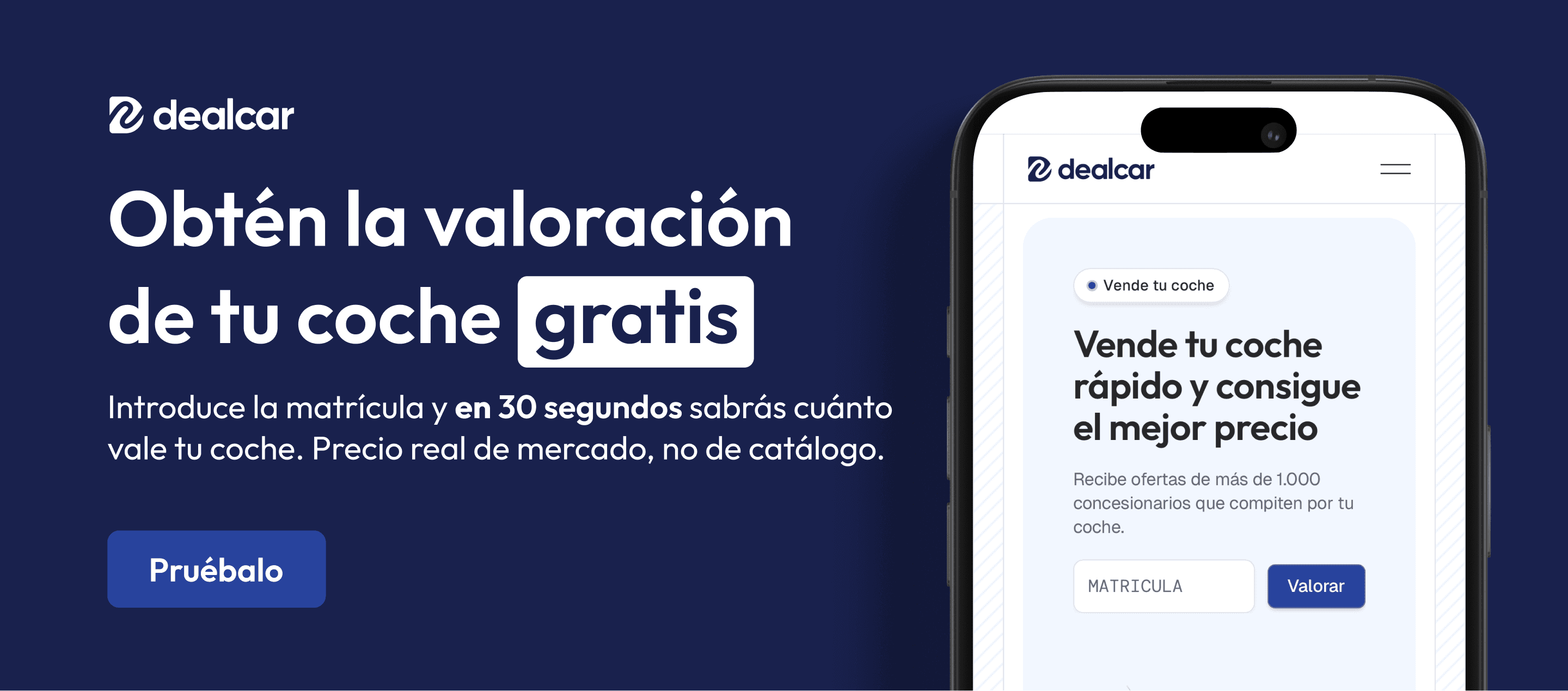
Dealcar gives you a free valuation tool that قيم? values your car in less than 30 seconds. You enter the registration plate and the vehicle details, and you receive a valuation based on real prices from closed sales in the market.
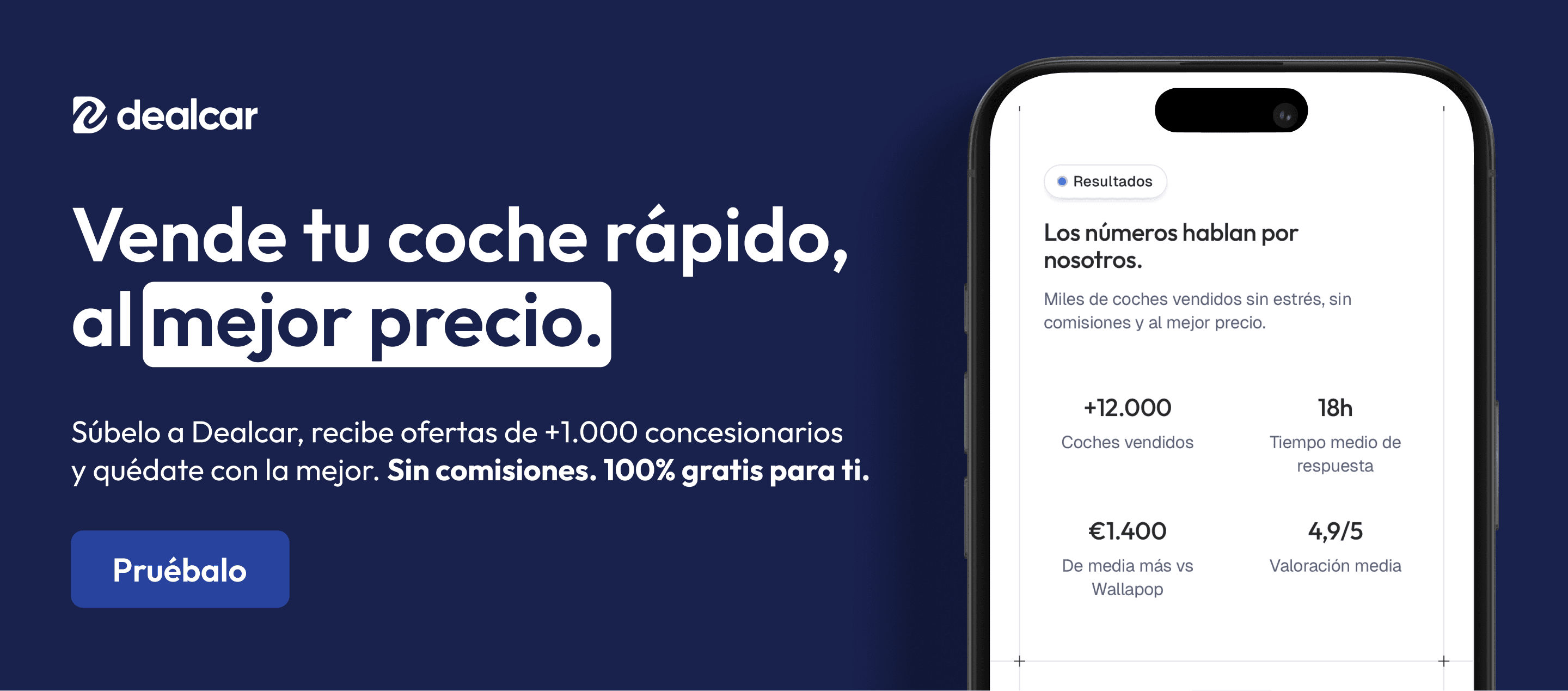
From there, your car is shown to a network of more than 1,000 verified professional buyers who bid against each other to buy it. On average, the first offers arrive in less than 18 hours. And when you sell to a dealership in the network, you as a private seller do not deal with any tax paperwork: the dealership handles everything.
100% free for you. No commissions or hidden costs.
You get paid before handing over the keys. The money reaches your account by bank transfer before you deliver the car.
They collect the car from your home. The purchasing dealer collects the car from wherever you say.
No paperwork. The buyer handles the transfer, DGT notification and all the paperwork.
On average, €1,400 more than selling on Wallapop.
More than 12,000 cars sold and an average rating of 4.9 out of 5.
If you want to know how much your car is worth, use Dealcar's free valuation tool.
Frequently asked questions
Do I have to pay tax if I sell my car for less than it cost me?
No. If you sell below the purchase price (the most common situation), there is no capital gain and you do not pay any Income Tax. ITP is paid by the buyer, not you. And VAT does not apply between private individuals.
Who pays the ITP, the buyer or the seller?
Always the buyer. ITP taxes the acquisition, not the sale. The seller has no obligation to pay it or deal with it.
Can Hacienda ask me to pay if I declare a low price in the contract?
Yes. Hacienda can check the declared price against the vehicle's fiscal value (official tables). If the declared price is lower than the fiscal value, it can issue a supplementary assessment to the buyer and, in clear cases of fraud, penalise both parties.
If I sell my car to a dealership, do I have to issue an invoice with VAT?
No. As a private individual, you cannot issue invoices with VAT because you are not a business owner or professional. The dealership pays you the agreed price without VAT and handles the transaction for tax purposes according to its regime.
Can I offset the loss from selling my car against stock market gains?
Yes. Capital losses from selling a car can be offset against capital gains from other transactions (shares, funds, property) in the return for the same tax year or the following four years. To make use of this offset, include the transaction in your Income Tax return.
What tax do I pay if I sell an inherited car?
When you inherit it, you pay Inheritance Tax (if applicable depending on your region and relationship). If you then sell the car, the buyer pays the ITP. And if you sell it for more than the value declared in the inheritance, you pay capital gains tax in Income Tax. If you sell for less, you do not.
Contents
Do you have to pay tax when selling a car?
Property Transfer Tax (ITP): who pays it
Income Tax and capital gains: when it affects you as the seller
Vehicle tax (IVTM): who pays in the year of sale
VAT: when it applies and when it doesn't
What happens if you sell for less than you paid
Special cases: inheritances, gifts and company cars
Tax mistakes private sellers make
Frequently asked questions
One of the most common questions when someone decides to sell their car is whether tax has to be paid on the transaction. The answer is not a straightforward yes or no, because it depends on several factors: who you are selling to, at what price, and whether you make a profit on the sale.
The good news for most private sellers is that selling a used car rarely means paying tax as the seller, because it is normal to sell for less than you paid. But there are exceptions, and it is worth knowing them so you don't get any surprises from Hacienda.
In this article we explain each tax that can arise when selling a car, who pays it, when it applies and when it doesn't.
Do you have to pay tax when selling a car?
For a private seller, in most cases no. The main tax that applies to the sale of a car between private individuals (ITP) is paid by the buyer, not the seller. And the only tax that could affect you as the seller (capital gains in Income Tax) only applies if you sell for more than you paid, something uncommon with used cars.
However, there are indirect tax obligations that do affect you as the seller: the vehicle tax for the current year, the correct declaration of the sale price and, in certain special cases, VAT.
Let's look at it tax by tax.
Property Transfer Tax (ITP): who pays it
ITP is the tax that applies to the sale of goods between private individuals. It is the most important tax when selling a second-hand car and it is always paid by the buyer, never by the seller.
How much is paid. The tax rate varies depending on the autonomous community. In most communities it is between 4% and 8% of the vehicle's value. It is calculated on the declared price in the sale contract or on the tax value published by Hacienda (Ministry tables), whichever is higher.
How it is paid. The buyer has 30 working days from the date of the transaction to settle the ITP at the tax office of their autonomous community. Proof of payment is required to process the change of ownership with the DGT.
What affects you as the seller. Although you do not pay the ITP, the price you declare in the contract does affect you. If you sell for €10,000 but the fiscal value of the car according to Hacienda's tables is €12,000, the buyer will pay ITP on €12,000, not €10,000. And if you declare a price far below the fiscal value to "save" the buyer ITP, Hacienda may investigate the transaction.
The recommendation is simple: always declare the real sale price. Inflating or deflating the price in the contract only causes problems.
Income Tax and capital gains: when it affects you as the seller
This is the only tax that can directly affect you as a private seller. If you make a capital gain on the sale (that is, if you sell for more than you paid), that gain is taxed in your Income Tax return.
When does a capital gain arise? When the sale price is higher than the acquisition price. The acquisition price includes what you paid for the car plus the costs associated with the purchase (ITP, administration, etc.). The sale price is what you receive minus the costs of the sale.
How much is paid? The capital gain is taxed within the savings base of Income Tax, with these bands (2024-2025, subject to possible changes):
Up to €6,000: 19%
From €6,000 to €50,000: 21%
From €50,000 to €200,000: 23%
From €200,000 to €300,000: 27%
Over €300,000: 28%
Is it common to make a capital gain when selling a car? No. The vast majority of used car sales are made below the purchase price, because cars depreciate with use and time. If you bought your car for €20,000 and sell it for €12,000, there is no gain: there is a capital loss of €8,000.
Can capital losses be offset? Yes. Capital losses from selling a car can be offset against capital gains from other transactions (sale of shares, investment funds, other assets) in the Income Tax return for the same tax year or for the following four years.
Do you have to declare the sale even if there is no gain? Technically yes. Hacienda may request information about the transaction. In practice, if there is no capital gain, most taxpayers do not include the transaction in their return and Hacienda does not usually ask for it. But if you want to do things properly (and be able to offset the loss against future gains), include it.
Exceptional case: classic or collector cars. This is one of the few scenarios in which a private individual may make a capital gain when selling a car. If you bought a classic car years ago and its value has gone up, the difference is taxed as a capital gain.
Vehicle tax (IVTM): who pays in the year of sale
The motor vehicle tax (IVTM) is a municipal tax paid annually. It is paid by whoever is the registered owner of the vehicle on 1 January of each year.
If you sell your car in June, you have already incurred the full year's IVTM and you must pay it (or have already paid it). The buyer will start paying from 1 January of the following year, when they are already listed as the registered owner.
Common sticking point. Many buyers try to negotiate for the seller to reimburse them for the proportional part of the IVTM corresponding to the months they will no longer use the car. There is no legal basis for this (the IVTM is not prorated), but it is a point of negotiation that is worth anticipating.
The recommendation is to make this clear before closing the deal. If the buyer asks you to, you can agree or not, but it should be agreed and, if possible, set out in the sale contract.
VAT: when it applies and when it doesn't
Private sale to private sale: no VAT. When a private individual sells their car to another private individual, the transaction is not subject to VAT. What applies is ITP (paid by the buyer).
Sale from a private individual to a dealership: no VAT. When you, as a private individual, sell your car to a dealership or company, you also do not charge VAT. You are not a business owner or professional, so you cannot issue an invoice with VAT. The dealership pays you the agreed price and handles the transaction for tax purposes on its own.
If you are considering selling your car to a professional, find out what you need to know before accepting an offer of this kind.
When VAT does apply. Only when the seller is a business owner or professional and sells a car used in their activity. If you are self-employed and sell the car you used for your business, you must charge VAT (21%) to the buyer and issue an invoice. This is a specific case that does not affect most private individuals.
In short: if you are a private individual selling your own car, VAT is not something you need to handle or pay. Neither do you charge VAT nor does the private buyer pay it to you.
What happens if you sell for less than you paid
It is the most common situation. You bought your car for €22,000 five years ago and now you sell it for €11,000. In this case, you do not have a capital gain: you have a capital loss of €11,000.
Do you pay any tax as the seller? No. Without a gain, there is no tax due in Income Tax. ITP is paid by the buyer. And VAT does not apply between private individuals.
Can you use that loss? Yes. You can offset the €11,000 capital loss against capital gains you make in the same Income Tax return or in the following four years' returns. If during that period you sell shares or funds at a profit, the car loss reduces the tax bill for those transactions.
To be able to make use of this offset, you need to include the transaction in your Income Tax return with the purchase and sale amounts.
Special cases: inheritances, gifts and company cars
Inherited car
If you sell a car you received through inheritance, the acquisition price for tax purposes is the value declared for Inheritance Tax, not what the deceased paid for it at the time. If you sell above that declared value, there is a capital gain. If you sell below it, there is a loss.
In addition, when inheriting a vehicle you pay Inheritance Tax (the rate varies a lot depending on the autonomous community and the degree of kinship) and, if you decide to sell it to a third party, the buyer will pay the usual ITP.
In addition to the tax aspects, you will need the usual paperwork. See the documents needed to sell a car.
Car received as a gift
Similar to inheritance, but with Gift Tax instead of Inheritance Tax. The acquisition value for Income Tax purposes is the value declared in the gift. If you sell it above that, the gain is taxed.
Company car sold by a private individual
If you are self-employed and sell a car that was used in your professional activity, the transaction has specific tax considerations. You must charge VAT (21%) to the buyer, and the gain or loss is included in your Income Tax return as income from economic activity. In this case it is advisable to consult a tax adviser, because the treatment depends on how you have deducted the VAT and depreciated the car over its useful life.
Tax mistakes private sellers make
Declaring a lower price than the real one. Some sellers and buyers agree to declare a lower price in the contract so that the buyer pays less ITP. That is tax fraud. Hacienda cross-checks data and may issue a supplementary assessment to the buyer and penalise both parties.
Not declaring the sale in the return when there is a gain. If you sell a classic car that has increased in value and you do not include the gain in your return, Hacienda may demand the tax plus surcharges and interest if it detects the transaction.
Thinking the seller pays the ITP. Many private individuals do not know who pays what. The ITP is always paid by the buyer. If a buyer tells you that it is "already included in the price", they are trying to negotiate, not describing a legal obligation.
Not paying the current year's IVTM. If you sell in March and have not paid the IVTM that became due on 1 January, that debt is yours. If you do not settle it, the local council may claim it from you with surcharges.
To avoid this and other administrative problems, see the procedures required to sell a car in Spain.
Trying to charge VAT as a private individual. A private individual cannot issue invoices with VAT. If you sell your personal car, VAT does not come into the transaction. It only applies if you are self-employed or a company and you sell a car used in your activity.
Dealcar: get your car valued for free and receive dealership offers
Dealcar gives you a free valuation tool that قيم? values your car in less than 30 seconds. You enter the registration plate and the vehicle details, and you receive a valuation based on real prices from closed sales in the market.
From there, your car is shown to a network of more than 1,000 verified professional buyers who bid against each other to buy it. On average, the first offers arrive in less than 18 hours. And when you sell to a dealership in the network, you as a private seller do not deal with any tax paperwork: the dealership handles everything.
100% free for you. No commissions or hidden costs.
You get paid before handing over the keys. The money reaches your account by bank transfer before you deliver the car.
They collect the car from your home. The purchasing dealer collects the car from wherever you say.
No paperwork. The buyer handles the transfer, DGT notification and all the paperwork.
On average, €1,400 more than selling on Wallapop.
More than 12,000 cars sold and an average rating of 4.9 out of 5.
If you want to know how much your car is worth, use Dealcar's free valuation tool.
Frequently asked questions
Do I have to pay tax if I sell my car for less than it cost me?
No. If you sell below the purchase price (the most common situation), there is no capital gain and you do not pay any Income Tax. ITP is paid by the buyer, not you. And VAT does not apply between private individuals.
Who pays the ITP, the buyer or the seller?
Always the buyer. ITP taxes the acquisition, not the sale. The seller has no obligation to pay it or deal with it.
Can Hacienda ask me to pay if I declare a low price in the contract?
Yes. Hacienda can check the declared price against the vehicle's fiscal value (official tables). If the declared price is lower than the fiscal value, it can issue a supplementary assessment to the buyer and, in clear cases of fraud, penalise both parties.
If I sell my car to a dealership, do I have to issue an invoice with VAT?
No. As a private individual, you cannot issue invoices with VAT because you are not a business owner or professional. The dealership pays you the agreed price without VAT and handles the transaction for tax purposes according to its regime.
Can I offset the loss from selling my car against stock market gains?
Yes. Capital losses from selling a car can be offset against capital gains from other transactions (shares, funds, property) in the return for the same tax year or the following four years. To make use of this offset, include the transaction in your Income Tax return.
What tax do I pay if I sell an inherited car?
When you inherit it, you pay Inheritance Tax (if applicable depending on your region and relationship). If you then sell the car, the buyer pays the ITP. And if you sell it for more than the value declared in the inheritance, you pay capital gains tax in Income Tax. If you sell for less, you do not.


