Contents
Before you start: the three decisions that shape everything
Step 1: Check your car's status
Step 2: Find out your vehicle's true value
Step 3: Prepare the car for sale
Step 4: Choose the sales channel
Step 5: Manage the sale according to the chosen channel
Step 6: Formalise the transaction
Step 7: Get paid and hand over
Step 8: Complete the post-sale paperwork
Indicative timeline: how long each route takes
Frequently asked questions
Selling a used car is something most drivers will do several times over the course of their lives. And yet, every time it comes up, the same doubts arise: what price to set, where to advertise, what documents I need, how to avoid scams, who pays the taxes.
The reality is that the process has defined steps which, if you follow them in order, make the sale predictable and manageable. What changes from one sale to another is not the steps, but the channel you choose: selling to a private buyer takes more work but can get you a better price; selling to a professional is quicker and more convenient, but depends on how many buyers you reach.
In this guide we explain the full process of selling a used car in Spain, step by step, covering all possible routes so you can choose the one that best suits your situation.
Before you start: the three decisions that shape everything
Before starting the process, there are three questions worth answering because they determine the path you will follow.
How much time do you have? If you can wait 4-8 weeks, you have room to advertise on portals and negotiate with private buyers. If you need to sell in less than a week, professional options (direct-buy companies or dealer-bidding platforms) are more realistic.
How much effort do you want to put in? Selling privately involves photos, ads, calls, viewings, negotiation, a contract and paperwork. Selling to a professional reduces your work to uploading the car details and choosing the best offer.
What do you prioritise: maximum price or convenience? The options that give the best price (dealer bidding, selling privately with good negotiation) are not necessarily the most convenient. The most convenient (direct-buy company) do not usually give the best price.
With those three answers clear, the rest of the process becomes simpler. Let's go step by step.
Step 1: Check your car's status
Before talking about prices or channels, make sure your car can be sold without problems. This means checking three things.
Registration status with the DGT. Access the online portal (sede.dgt.gob.es) with a digital certificate, electronic ID or Cl@ve and check that there are no outstanding liens, seizures or active title reservations. If any appear, you'll need to resolve them before you can transfer ownership. See our guide on how to sell a car with encumbrances if you're in this situation.
Valid MOT. Check the expiry date. If it is close to expiry or has expired, consider getting it done before selling. A car with a valid MOT sells more easily and at a better price. One without an MOT creates mistrust and forces the buyer to take on a cost and uncertainty they will use to negotiate the price down.
Road tax up to date. Check that the current year's IVTM has been paid. An outstanding receipt can block or complicate the transaction.
If everything is clear, you can move forward with confidence. If there is any issue, resolve it before continuing. It is faster and cheaper to do it without pressure than with a buyer waiting.
Step 2: Find out your vehicle's true value
Setting the price without data is the most expensive mistake you can make. You need a solid reference before deciding how much to ask or which offers to accept.
Check listing portals. Search for cars of the same model, year and mileage on Coches.net, AutoScout24 and Wallapop. Note the average price (discarding the highest and lowest) and remember that the actual selling price is 5-15% below the listed price.
Use online valuation tools. The calculators from Coches.net, AutoScout24 and Ganvam tables give you a second reference. If you want to go deeper, see our guide on how to value your car online for free.
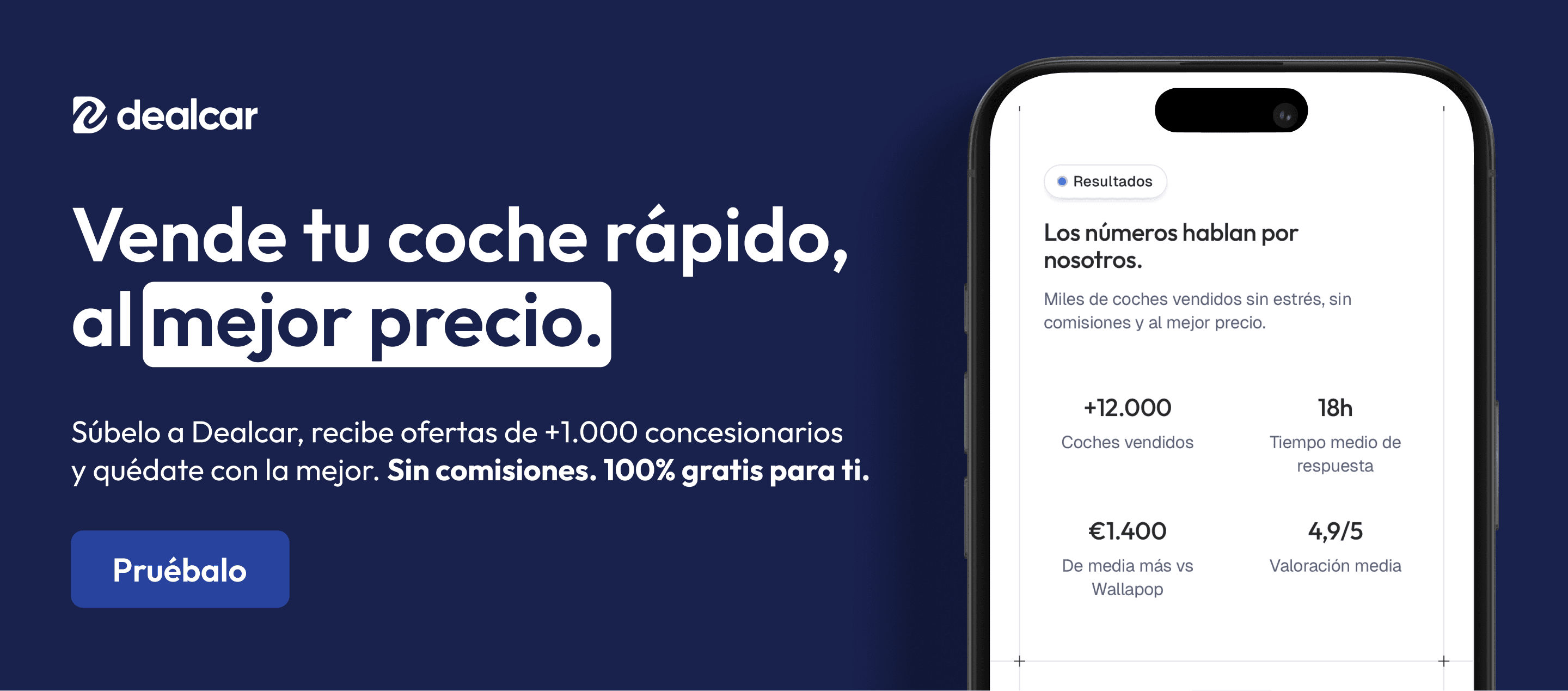
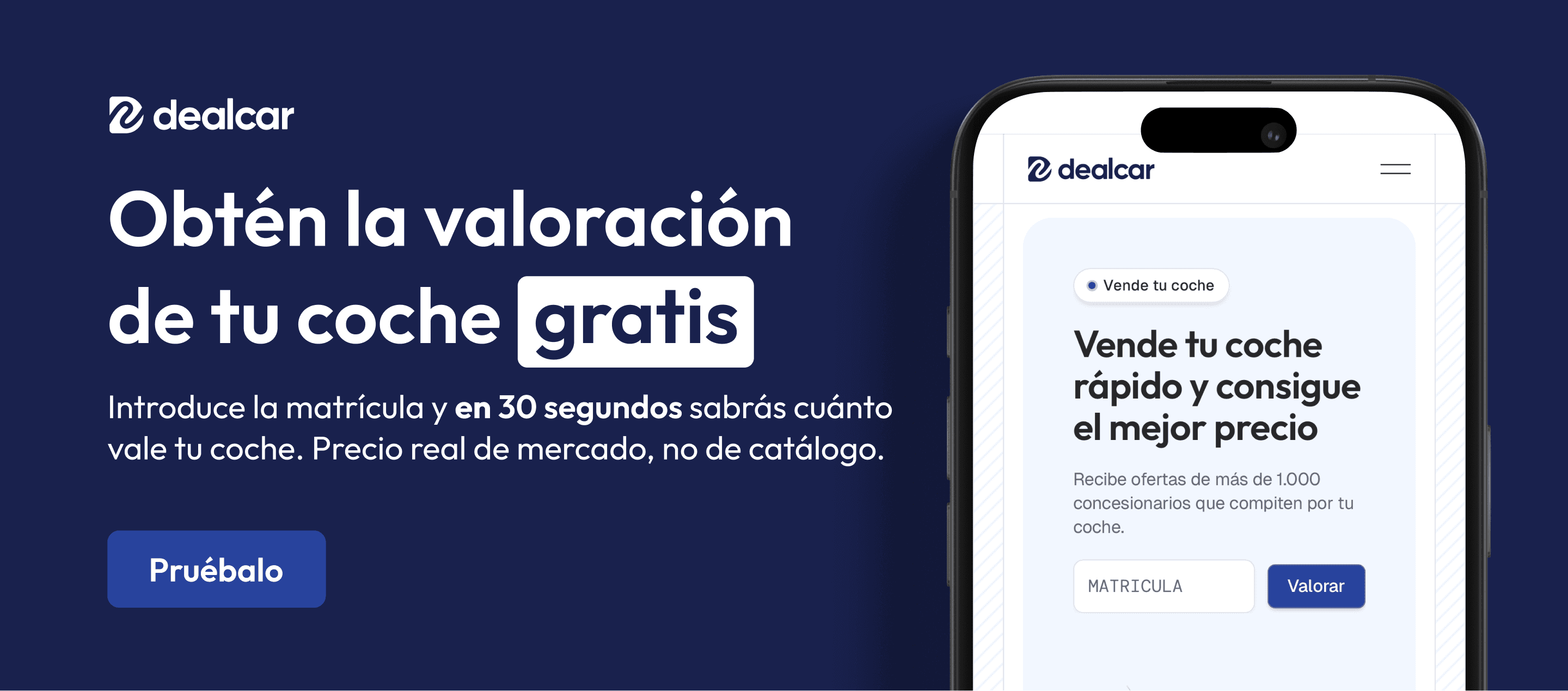
Get real offers. This is the most reliable step. When a dealership tells you what it's willing to pay, that's not an estimate: it's real money. Dealcar's valuation tool gives you a valuation in 30 seconds and, after that, more than 1,000 dealerships can send you real offers. No commitment.
With these three sources you will have a reliable price range: a floor (what professionals pay) and a ceiling (average portal listing price minus the usual negotiation discount).
Step 3: Prepare the car for sale
Preparation has a direct impact on price. It's not about spending hundreds of euros, but about making the car convey care and transparency.
Full clean. Exterior and interior. Wash the bodywork (including wheels and door sills), vacuum the upholstery, clean the dashboard and screens, and remove odours. A clean car is perceived as better cared for and justifies a higher price.
Minor repairs. Replace blown bulbs, change worn wipers, fix a broken wheel cap. These are investments of 10-30 euros that remove objections from the buyer.
Paperwork ready. Have your ID, registration certificate, V5C-equivalent technical sheet, the latest IVTM receipt, the service history book and service invoices to hand. A seller who shows complete paperwork builds trust. See our guide on documents needed to sell a car for the full list.
High-quality photos (if you're advertising on portals). Clean car, natural light, exterior, at least 10 photos from all angles. Include the dashboard, mileage display, seats, boot and any visible defects.
Step 4: Choose the sales channel
This is where the three initial decisions (time, effort, priority) set the direction. There are four main channels.
Listing portals (Wallapop, Coches.net, Milanuncios)
You publish, manage and negotiate. Full control, but all the work is yours. Average selling time: 30-90 days. Price: depends on your negotiating ability. Cost: free or low (paid promoted ads). Risk: medium-high (scams, non-payments, failed viewings).
Direct-buy companies (Compramostucoche, Flexicar, Clicars)
You fill in a form, have an in-person inspection, receive a fixed offer. Fast and convenient. Time: 2-5 days. Price: 10-20% below market value. Cost: free. Risk: low. If you want to understand this model better, see what you need to know before accepting a direct-buy offer.
Direct dealership
You visit several dealerships in your area and compare offers. Time: depends on how many you visit. Price: variable. Cost: your time. Risk: low.
Dealer-bidding platform (Dealcar)
You upload your car once and more than 1,000 dealerships compete for it. Time: offers in less than 18 hours. Price: on average, 1,400 euros more than Wallapop (competition pushes the price up). Cost: free. Risk: low (verified dealers, payment by bank transfer before handover).
Step 5: Manage the sale according to the chosen channel
If you sell on portals
Publish the ad with good photos and a complete description. Set a price with a 5-8% margin for negotiation. Filter contacts before accepting viewings (ask whether they've seen the photos, whether the price works for them and when they intend to buy). Meet in public places. Negotiate with facts and do not accept absurd offers. See our step-by-step guide to selling privately for more detail.
If you sell to a direct-buy company
Enter the details on the website, receive the indicative valuation, go to the in-person inspection and assess the final offer. Remember that the online valuation is only indicative and the real offer is usually lower. Do not commit without comparing at least one other option.
If you sell directly to dealerships
Visit at least three car buyers in your area. Take the car clean and with the paperwork ready. Ask for written offers so you can compare them. Don't accept the first one without seeing the others.
If you use Dealcar
Go to dealcar.io/vende-tu-coche, enter the registration number and vehicle details. You receive a valuation in 30 seconds. Interested dealerships send you offers (on average, in less than 18 hours). You compare them, choose the best one and the winning dealer handles collection, paperwork and payment.
Step 6: Formalise the transaction
Regardless of the channel, the sale must be formalised properly.
If you sell to a private buyer
Sign a sales contract with all the essential details: parties, vehicle, price, payment method, car condition and signatures. If you need a template, you can download Dealcar's contract template for free. For more detail on special clauses, see our sales contract guide.
If you sell to a professional
The dealership or company prepares the contractual paperwork. Your responsibility is to check that the details are correct and sign. The professional handles transfer, taxes and paperwork.
Step 7: Get paid and hand over
The order is always the same: first you get paid, then you hand over the car.
Recommended payment method. Bank transfer. It leaves a paper trail, is verifiable and doesn't have the risks of cash or cheques. Cash payment between private individuals is limited by law to 1,000 euros.
Payment verification. Do not hand over the car or the paperwork until the money has been confirmed in your bank account. It's not enough to see a transfer receipt: wait for confirmation from your bank.
If you sell through Dealcar. You are paid by bank transfer before handing over the keys. The purchasing dealer collects the car from your home on the agreed date.
Step 8: Complete the post-sale paperwork
The sale doesn't end when you hand over the keys. There are steps you must complete to protect yourself.
Notify the DGT of the sale. You have 10 calendar days. You can do it online at sede.dgt.gob.es (free, completed in minutes) or in person at a traffic office with an appointment. It is mandatory and your main protection: until you notify them, fines and responsibilities for the car are still yours.
Cancel the insurance. Contact your insurer to cancel the policy or transfer it to another vehicle. If you do not cancel it, they will keep charging you.
Cancel linked services. Via-T, parking apps, the car's connectivity service, roadside assistance. Anything else associated with the vehicle.
Keep the paperwork. Keep a copy of the contract, proof of payment and proof of notification to the DGT for at least five years.
For the full details of the post-sale steps, see what to do after selling a car.
Indicative timeline: how long each route takes
Channel | Preparation | Buyer search | Closing and paperwork | Estimated total |
|---|---|---|---|---|
Portals (private) | 1-2 days | 2-12 weeks | 2-3 days | 3-14 weeks |
Direct-buy company | 1 day | Immediate | 1-3 days | 2-5 days |
Direct dealership | 1 day | 1-2 weeks | 2-5 days | 1-3 weeks |
Dealcar (dealer bidding) | 1 day | Offers in -18h | 3-5 days | 4-7 days |
The table shows why the channel matters as much as the car. The same vehicle can sell in 4 days or in 14 weeks depending on the route you choose.
Dealcar: value your car for free and receive dealer offers
Dealcar provides you with a free valuation tool that قيمuates your car in less than 30 seconds. You enter the registration number and the vehicle details, and receive a valuation based on real prices from closed sales in the market.
From there, your car is presented to a network of more than 1,000 verified professional dealers who bid against each other to buy it. On average, the first offers arrive in less than 18 hours. You compare them and keep the best one. If none of them convince you, you reject them without penalty.
100% free for you. No commissions or hidden costs.
You get paid before handing over the keys. Bank transfer before delivering the car.
They collect the car from your home. No travel needed.
No paperwork. The dealer handles the transfer, DGT and all the admin.
On average, 1,400 euros more than selling on Wallapop.
More than 12,000 cars sold and an average rating of 4.9 out of 5.
Use Dealcar's free valuation tool.
Frequently asked questions
How long does it take to sell a used car? It depends on the channel. On portals between private individuals, the average is 30-90 days. With direct-buy companies, 2-5 days. With platforms where dealers compete for your car, such as Dealcar, you can receive offers in less than 24 hours and close within a week.
What documents do I need to sell my car? At a minimum: the owner's ID, registration certificate, technical inspection document with a valid MOT and the latest paid IVTM receipt. In addition, the service book and service invoices make the sale easier and justify a better price.
Who pays the taxes when selling a car? The ITP (Property Transfer Tax) is always paid by the buyer, not the seller. The current year's IVTM is the responsibility of whoever was the owner on 1 January. And if you sell for more than you bought it for (rare with used cars), the capital gain is taxed through your income tax return. See our guide to taxes when selling your car for more detail.
Is it better to sell to a private buyer or to a dealership? With a private buyer you may get a slightly higher price, but in exchange for weeks of work, scam risk and full paperwork management. With a dealership it is quicker, safer and more convenient. The best price-to-convenience ratio is offered by platforms where several dealerships compete for your car.
Can I sell my car if it still has finance outstanding? Yes, but you need to pay off the debt and remove the title reservation before completing the transfer. You can do it with your own funds, with the money from the sale or through a dealership that manages the process. See our guide on how to sell a financed car.
Contents
Before you start: the three decisions that shape everything
Step 1: Check your car's status
Step 2: Find out your vehicle's true value
Step 3: Prepare the car for sale
Step 4: Choose the sales channel
Step 5: Manage the sale according to the chosen channel
Step 6: Formalise the transaction
Step 7: Get paid and hand over
Step 8: Complete the post-sale paperwork
Indicative timeline: how long each route takes
Frequently asked questions
Selling a used car is something most drivers will do several times over the course of their lives. And yet, every time it comes up, the same doubts arise: what price to set, where to advertise, what documents I need, how to avoid scams, who pays the taxes.
The reality is that the process has defined steps which, if you follow them in order, make the sale predictable and manageable. What changes from one sale to another is not the steps, but the channel you choose: selling to a private buyer takes more work but can get you a better price; selling to a professional is quicker and more convenient, but depends on how many buyers you reach.
In this guide we explain the full process of selling a used car in Spain, step by step, covering all possible routes so you can choose the one that best suits your situation.
Before you start: the three decisions that shape everything
Before starting the process, there are three questions worth answering because they determine the path you will follow.
How much time do you have? If you can wait 4-8 weeks, you have room to advertise on portals and negotiate with private buyers. If you need to sell in less than a week, professional options (direct-buy companies or dealer-bidding platforms) are more realistic.
How much effort do you want to put in? Selling privately involves photos, ads, calls, viewings, negotiation, a contract and paperwork. Selling to a professional reduces your work to uploading the car details and choosing the best offer.
What do you prioritise: maximum price or convenience? The options that give the best price (dealer bidding, selling privately with good negotiation) are not necessarily the most convenient. The most convenient (direct-buy company) do not usually give the best price.
With those three answers clear, the rest of the process becomes simpler. Let's go step by step.
Step 1: Check your car's status
Before talking about prices or channels, make sure your car can be sold without problems. This means checking three things.
Registration status with the DGT. Access the online portal (sede.dgt.gob.es) with a digital certificate, electronic ID or Cl@ve and check that there are no outstanding liens, seizures or active title reservations. If any appear, you'll need to resolve them before you can transfer ownership. See our guide on how to sell a car with encumbrances if you're in this situation.
Valid MOT. Check the expiry date. If it is close to expiry or has expired, consider getting it done before selling. A car with a valid MOT sells more easily and at a better price. One without an MOT creates mistrust and forces the buyer to take on a cost and uncertainty they will use to negotiate the price down.
Road tax up to date. Check that the current year's IVTM has been paid. An outstanding receipt can block or complicate the transaction.
If everything is clear, you can move forward with confidence. If there is any issue, resolve it before continuing. It is faster and cheaper to do it without pressure than with a buyer waiting.
Step 2: Find out your vehicle's true value
Setting the price without data is the most expensive mistake you can make. You need a solid reference before deciding how much to ask or which offers to accept.
Check listing portals. Search for cars of the same model, year and mileage on Coches.net, AutoScout24 and Wallapop. Note the average price (discarding the highest and lowest) and remember that the actual selling price is 5-15% below the listed price.
Use online valuation tools. The calculators from Coches.net, AutoScout24 and Ganvam tables give you a second reference. If you want to go deeper, see our guide on how to value your car online for free.
Get real offers. This is the most reliable step. When a dealership tells you what it's willing to pay, that's not an estimate: it's real money. Dealcar's valuation tool gives you a valuation in 30 seconds and, after that, more than 1,000 dealerships can send you real offers. No commitment.
With these three sources you will have a reliable price range: a floor (what professionals pay) and a ceiling (average portal listing price minus the usual negotiation discount).
Step 3: Prepare the car for sale
Preparation has a direct impact on price. It's not about spending hundreds of euros, but about making the car convey care and transparency.
Full clean. Exterior and interior. Wash the bodywork (including wheels and door sills), vacuum the upholstery, clean the dashboard and screens, and remove odours. A clean car is perceived as better cared for and justifies a higher price.
Minor repairs. Replace blown bulbs, change worn wipers, fix a broken wheel cap. These are investments of 10-30 euros that remove objections from the buyer.
Paperwork ready. Have your ID, registration certificate, V5C-equivalent technical sheet, the latest IVTM receipt, the service history book and service invoices to hand. A seller who shows complete paperwork builds trust. See our guide on documents needed to sell a car for the full list.
High-quality photos (if you're advertising on portals). Clean car, natural light, exterior, at least 10 photos from all angles. Include the dashboard, mileage display, seats, boot and any visible defects.
Step 4: Choose the sales channel
This is where the three initial decisions (time, effort, priority) set the direction. There are four main channels.
Listing portals (Wallapop, Coches.net, Milanuncios)
You publish, manage and negotiate. Full control, but all the work is yours. Average selling time: 30-90 days. Price: depends on your negotiating ability. Cost: free or low (paid promoted ads). Risk: medium-high (scams, non-payments, failed viewings).
Direct-buy companies (Compramostucoche, Flexicar, Clicars)
You fill in a form, have an in-person inspection, receive a fixed offer. Fast and convenient. Time: 2-5 days. Price: 10-20% below market value. Cost: free. Risk: low. If you want to understand this model better, see what you need to know before accepting a direct-buy offer.
Direct dealership
You visit several dealerships in your area and compare offers. Time: depends on how many you visit. Price: variable. Cost: your time. Risk: low.
Dealer-bidding platform (Dealcar)
You upload your car once and more than 1,000 dealerships compete for it. Time: offers in less than 18 hours. Price: on average, 1,400 euros more than Wallapop (competition pushes the price up). Cost: free. Risk: low (verified dealers, payment by bank transfer before handover).
Step 5: Manage the sale according to the chosen channel
If you sell on portals
Publish the ad with good photos and a complete description. Set a price with a 5-8% margin for negotiation. Filter contacts before accepting viewings (ask whether they've seen the photos, whether the price works for them and when they intend to buy). Meet in public places. Negotiate with facts and do not accept absurd offers. See our step-by-step guide to selling privately for more detail.
If you sell to a direct-buy company
Enter the details on the website, receive the indicative valuation, go to the in-person inspection and assess the final offer. Remember that the online valuation is only indicative and the real offer is usually lower. Do not commit without comparing at least one other option.
If you sell directly to dealerships
Visit at least three car buyers in your area. Take the car clean and with the paperwork ready. Ask for written offers so you can compare them. Don't accept the first one without seeing the others.
If you use Dealcar
Go to dealcar.io/vende-tu-coche, enter the registration number and vehicle details. You receive a valuation in 30 seconds. Interested dealerships send you offers (on average, in less than 18 hours). You compare them, choose the best one and the winning dealer handles collection, paperwork and payment.
Step 6: Formalise the transaction
Regardless of the channel, the sale must be formalised properly.
If you sell to a private buyer
Sign a sales contract with all the essential details: parties, vehicle, price, payment method, car condition and signatures. If you need a template, you can download Dealcar's contract template for free. For more detail on special clauses, see our sales contract guide.
If you sell to a professional
The dealership or company prepares the contractual paperwork. Your responsibility is to check that the details are correct and sign. The professional handles transfer, taxes and paperwork.
Step 7: Get paid and hand over
The order is always the same: first you get paid, then you hand over the car.
Recommended payment method. Bank transfer. It leaves a paper trail, is verifiable and doesn't have the risks of cash or cheques. Cash payment between private individuals is limited by law to 1,000 euros.
Payment verification. Do not hand over the car or the paperwork until the money has been confirmed in your bank account. It's not enough to see a transfer receipt: wait for confirmation from your bank.
If you sell through Dealcar. You are paid by bank transfer before handing over the keys. The purchasing dealer collects the car from your home on the agreed date.
Step 8: Complete the post-sale paperwork
The sale doesn't end when you hand over the keys. There are steps you must complete to protect yourself.
Notify the DGT of the sale. You have 10 calendar days. You can do it online at sede.dgt.gob.es (free, completed in minutes) or in person at a traffic office with an appointment. It is mandatory and your main protection: until you notify them, fines and responsibilities for the car are still yours.
Cancel the insurance. Contact your insurer to cancel the policy or transfer it to another vehicle. If you do not cancel it, they will keep charging you.
Cancel linked services. Via-T, parking apps, the car's connectivity service, roadside assistance. Anything else associated with the vehicle.
Keep the paperwork. Keep a copy of the contract, proof of payment and proof of notification to the DGT for at least five years.
For the full details of the post-sale steps, see what to do after selling a car.
Indicative timeline: how long each route takes
Channel | Preparation | Buyer search | Closing and paperwork | Estimated total |
|---|---|---|---|---|
Portals (private) | 1-2 days | 2-12 weeks | 2-3 days | 3-14 weeks |
Direct-buy company | 1 day | Immediate | 1-3 days | 2-5 days |
Direct dealership | 1 day | 1-2 weeks | 2-5 days | 1-3 weeks |
Dealcar (dealer bidding) | 1 day | Offers in -18h | 3-5 days | 4-7 days |
The table shows why the channel matters as much as the car. The same vehicle can sell in 4 days or in 14 weeks depending on the route you choose.
Dealcar: value your car for free and receive dealer offers
Dealcar provides you with a free valuation tool that قيمuates your car in less than 30 seconds. You enter the registration number and the vehicle details, and receive a valuation based on real prices from closed sales in the market.
From there, your car is presented to a network of more than 1,000 verified professional dealers who bid against each other to buy it. On average, the first offers arrive in less than 18 hours. You compare them and keep the best one. If none of them convince you, you reject them without penalty.
100% free for you. No commissions or hidden costs.
You get paid before handing over the keys. Bank transfer before delivering the car.
They collect the car from your home. No travel needed.
No paperwork. The dealer handles the transfer, DGT and all the admin.
On average, 1,400 euros more than selling on Wallapop.
More than 12,000 cars sold and an average rating of 4.9 out of 5.
Use Dealcar's free valuation tool.
Frequently asked questions
How long does it take to sell a used car? It depends on the channel. On portals between private individuals, the average is 30-90 days. With direct-buy companies, 2-5 days. With platforms where dealers compete for your car, such as Dealcar, you can receive offers in less than 24 hours and close within a week.
What documents do I need to sell my car? At a minimum: the owner's ID, registration certificate, technical inspection document with a valid MOT and the latest paid IVTM receipt. In addition, the service book and service invoices make the sale easier and justify a better price.
Who pays the taxes when selling a car? The ITP (Property Transfer Tax) is always paid by the buyer, not the seller. The current year's IVTM is the responsibility of whoever was the owner on 1 January. And if you sell for more than you bought it for (rare with used cars), the capital gain is taxed through your income tax return. See our guide to taxes when selling your car for more detail.
Is it better to sell to a private buyer or to a dealership? With a private buyer you may get a slightly higher price, but in exchange for weeks of work, scam risk and full paperwork management. With a dealership it is quicker, safer and more convenient. The best price-to-convenience ratio is offered by platforms where several dealerships compete for your car.
Can I sell my car if it still has finance outstanding? Yes, but you need to pay off the debt and remove the title reservation before completing the transfer. You can do it with your own funds, with the money from the sale or through a dealership that manages the process. See our guide on how to sell a financed car.