Contents
Why what you do after selling is just as important as the sale itself
Notify the sale to the DGT (mandatory)
Cancel the car insurance
Check that the change of ownership has been completed
Cancel services linked to the vehicle
Keep the sale documentation
Tax matters: what to declare and what not to
Full checklist after selling
Frequently asked questions
You have agreed the price, signed the contract, received the bank transfer and handed over the keys. The sale is done. But the process is not over. There are a series of follow-up steps which, if you do not complete them, can cause serious problems: fines arriving in your name months later, insurance charges you no longer need, legal liability for accidents involving a car that is no longer yours.
Most of these formalities can be sorted out in less than an hour. But if you ignore them or put them off, the consequences can drag on for months or years.
In this article we explain exactly what to do after selling your car, in what order, and within what timeframes.
Why what you do after selling is just as important as the sale itself
The reason is simple: until the DGT records that the car is no longer yours, you still appear as the owner for all purposes. This means that any traffic fine, accident, claim or liability generated by the vehicle falls on you.
A real and common example: you sell your car in March. You do not notify the DGT of the sale. In June, the buyer runs a red-light camera and the fine arrives at your home. In October, the council bills you for the following year's road tax because on 1 January you were still shown as the owner. And if, in the worst case, the car is involved in a serious accident, the initial liability points to you.
All of this is avoided with a free procedure that takes five minutes. But you have to do it.
If you want to avoid most of these follow-up steps, selling to a professional dealer simplifies the process enormously. See how to sell your car fast and at the best price.
Notify the sale to the DGT (mandatory)
This is the most important and the most urgent step. You have 10 calendar days from the date of sale to notify the DGT that you have sold the vehicle. This is not a recommendation: it is a legal obligation.
How to do it online
The quickest way is through the DGT's e-office (sede.dgt.gob.es). You need a digital certificate, electronic ID card or Cl@ve. The process is as follows:
You access the e-office, look for the "Vehicle sale notification" procedure, enter the vehicle details (registration number), the buyer's details (name and ID) and the date of sale. You confirm and download the receipt.
The procedure is free and takes minutes. Keep the receipt: it is your proof that you notified the sale within the deadline.
How to do it in person
If you do not have online access, you can do it at a traffic office. You need an appointment (requested on the DGT website or by phone), your ID, the vehicle registration document and a copy of the sales contract.
The in-person procedure is also free, but it requires you to travel and wait for the appointment. The online route is more efficient if you have the means.
What happens if you do not notify on time
If you do not notify the sale within 10 days, you will continue to appear as the vehicle owner at the DGT. This means you will receive the fines generated by the car, you will be billed for next year's road tax, and in the event of an accident, the initial liability will fall on you.
In addition, the DGT may impose a penalty for failing to comply with the notification obligation. Although in practice these penalties are not common, the risk of being burdened with someone else's fines is more than enough reason not to skip this step.
The sale notification is one of the mandatory procedures in the process. See the full guide to the procedures for selling a car in Spain.
Cancel the car insurance
Once the car is sold, you no longer need the insurance policy. If you do not cancel it, the insurer will keep charging you premiums.
How cancellation works
Contact your insurer and let them know you have sold the vehicle. Depending on the company and the terms of your policy, two situations may arise.
Cancellation with a proportional refund. The insurer cancels the policy and refunds the proportion of the premium corresponding to the unused period. If you paid for a full year and sell after six months, you will get roughly half back.
Transfer of the policy to another vehicle. If you are going to buy another car, many insurers allow you to transfer the policy to the new vehicle without penalty. This is usually more advantageous than cancelling and taking out a new policy, because you keep your no-claims history and discounts.
Documents they will ask for
The insurer will usually ask you for a copy of the sales contract or the receipt for the DGT sale notification. Some companies accept notification by phone or email; others require a specific form.
Recommended timeframe
Do it as soon as possible after the sale. While the policy remains active, you keep paying. Some insurers have clauses that limit the refund if cancellation is requested late.
Check that the change of ownership has been completed
The change of ownership is the buyer's responsibility. They have 30 days to process it with the DGT. But just because it is their responsibility does not mean you should ignore it.
A few days after the sale, check on the DGT e-office whether the vehicle is no longer registered in your name. If the transfer has been completed, you will see that the owner has changed. If not, the car will still appear in your name (although your sale notification protects you from liability).
If the buyer does not process the transfer. Contact them to remind them. If they do not respond or delay it, your sale notification to the DGT is what protects you. It is your proof that the car was no longer yours from the date you stated.
In private sales, this follow-up is important. In sales to professional dealers, the change of ownership is handled automatically by the buyer as part of their usual process.
Cancel services linked to the vehicle
It is easy to forget the services and subscriptions you had linked to the car. Go through this list and cancel what applies.
Automatic tolls. If you had Via-T, Telepeaje or any toll device linked to the car, tell the provider to cancel it. If you do not, the tolls used by the new owner will be charged to your account.
Parking apps. EasyPark, Parclick, Telpark or any app where you had the car registered. Remove the vehicle from your profile.
Roadside assistance. If you had a separately contracted assistance service (not linked to insurance), cancel it.
Car connectivity service. Many modern cars have connected services (manufacturer app, GPS tracking, remote unlocking). Unlink your account from the vehicle so the new owner cannot access your information and you do not receive notifications from the car.
Road tax (IVTM). You have already paid the current year's IVTM (or you must pay it if the sale is after 1 January). The buyer will pay from the following year onwards. There is no additional procedure, but it is worth being clear about it to avoid confusion.
Keep the sale documentation
Keep all documentation related to the sale for at least five years. It is your support in the event of any future claim.
Documents you should keep:
Signed copy of the sales contract, proof of the bank transfer (payment received), receipt of the DGT sale notification, copy of the insurance cancellation and any relevant communication with the buyer (emails, messages).
The sales contract is the most important document. If you have not signed it yet, see our car sales contract guide.
If the sale involved cancelling finance or lifting a retention of title, also keep the finance company's cancellation letter and the simple registry extract from the Personal Property Register.
If the sale involved cancelling finance, keep the cancellation letter. More information in our guide on retention of title on a car.
These documents may be needed if the tax authority requests information about the transaction, if the buyer makes a claim for any reason, or if fines or liabilities arise that you need to dispute.
Tax matters: what to declare and what not to
After selling, you may wonder whether you have any tax obligations as the seller.
In most cases, no. If you sold your car for less than you paid for it (which is usual), there is no capital gain and you do not pay anything in income tax. The transfer tax is paid by the buyer, not you. And VAT does not apply between private individuals.
If you sold for more than you bought it for (unusual, but possible with classic cars or in exceptional circumstances), the difference is a capital gain that is taxed in your income tax return. See our guide to taxes when selling your car for more detail.
If you sold a car used for your professional activity (you are self-employed), the transaction has specific tax implications (VAT, income tax as business income). Check with your tax adviser.
Capital losses can be offset. If you sold for less than you bought it for, you can include the transaction in your income tax return as a capital loss and offset it against gains from other transactions (shares, funds) in the same tax year or in the following four years.
Full checklist after selling
Use this list to make sure you do not forget anything.
Immediate (first 10 days):
Notify the sale to the DGT (sede.dgt.gob.es or traffic office)
Contact the insurer to cancel or transfer the policy
Cancel Via-T, parking apps and connected services
Unlink your account from the car manufacturer's app
In the following weeks:
Check with the DGT that the change of ownership has been completed
If it has not been completed, contact the buyer
When filing your tax return:
If you sold at a loss: consider including it to offset future gains
If you sold at a gain: declare it obligatorily
Keep forever:
Keep a copy of the contract, proof of payment and DGT notification receipt for at least five years
Dealcar: value your car for free and receive offers from dealers
If you have not sold your car yet and want to avoid the complexity of handling the paperwork yourself, with Dealcar the purchasing dealer takes care of practically everything: change of ownership, notification to the DGT and documentation. You just sign, get paid and cancel your insurance.
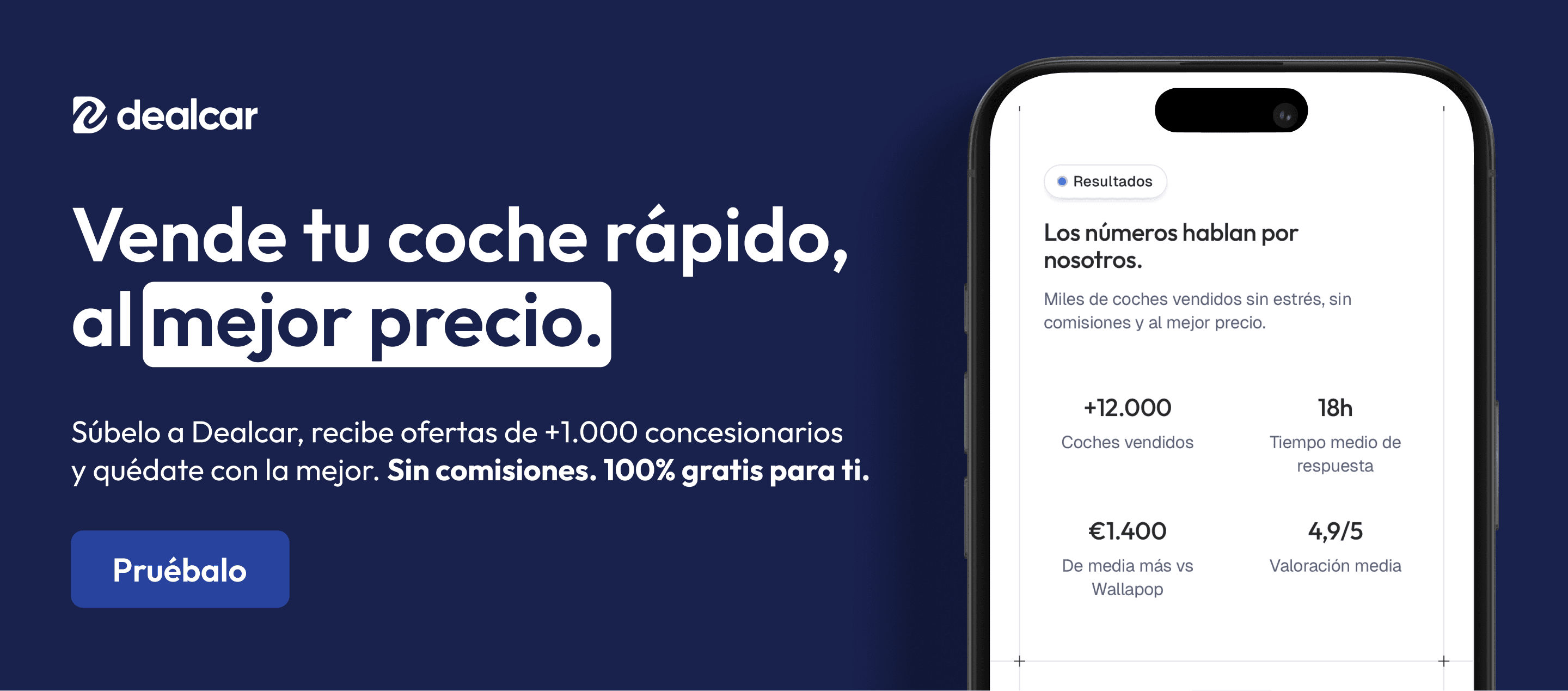
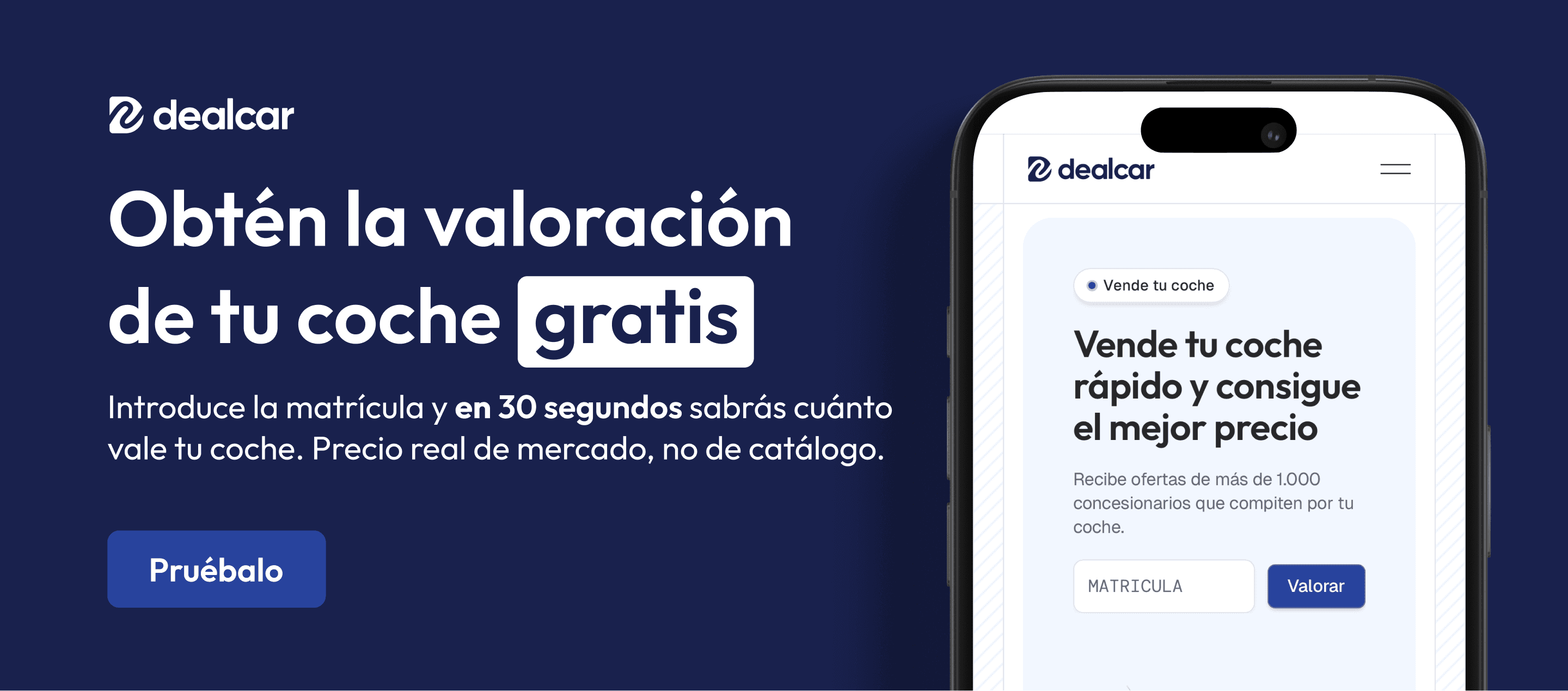
Value your car for free in less than 30 seconds and receive offers from more than 1,000 professional car buyers competing against each other. On average, the first offers arrive in less than 18 hours.
100% free for you. No commissions or hidden costs.
You get paid before handing over the keys. Bank transfer before delivering the car.
They collect the car from your home. No travelling.
No paperwork. The dealer handles the transfer, DGT and all the paperwork.
On average, €1,400 more than selling on Wallapop.
More than 12,000 cars sold and an average rating of 4.9 out of 5.
Use Dealcar's free valuation tool.
Frequently asked questions
What happens if I do not notify the sale to the DGT?
You will continue to appear as the vehicle owner. This means you will receive the fines, taxes and any liability arising from the use of the car by the new owner. The notification is free and takes minutes: there is no reason not to do it.
Will I get part of the insurance back if I cancel before it expires?
It depends on your insurer and the terms of your policy. Most refund the unused proportion of the premium. Some apply penalties for early cancellation. Check with your company before cancelling.
Do I have to declare the sale of the car on my tax return?
If you sold at a loss (which is usual), it is not mandatory but may be useful to offset future gains. If you sold at a gain (rare with used cars), it is mandatory to declare it.
How long does it take the buyer to complete the change of ownership?
The legal deadline is 30 days. In practice, dealers do it in a few days. Private buyers may take longer. Your sale notification to the DGT protects you regardless of when the buyer does it.
Can I receive fines after selling if I have notified the DGT?
You may receive fines for offences committed before the date of sale, since those remain your responsibility. Offences after the date of notification should not come in your name. If they do, you can appeal them by presenting the sale notification receipt.
Contents
Why what you do after selling is just as important as the sale itself
Notify the sale to the DGT (mandatory)
Cancel the car insurance
Check that the change of ownership has been completed
Cancel services linked to the vehicle
Keep the sale documentation
Tax matters: what to declare and what not to
Full checklist after selling
Frequently asked questions
You have agreed the price, signed the contract, received the bank transfer and handed over the keys. The sale is done. But the process is not over. There are a series of follow-up steps which, if you do not complete them, can cause serious problems: fines arriving in your name months later, insurance charges you no longer need, legal liability for accidents involving a car that is no longer yours.
Most of these formalities can be sorted out in less than an hour. But if you ignore them or put them off, the consequences can drag on for months or years.
In this article we explain exactly what to do after selling your car, in what order, and within what timeframes.
Why what you do after selling is just as important as the sale itself
The reason is simple: until the DGT records that the car is no longer yours, you still appear as the owner for all purposes. This means that any traffic fine, accident, claim or liability generated by the vehicle falls on you.
A real and common example: you sell your car in March. You do not notify the DGT of the sale. In June, the buyer runs a red-light camera and the fine arrives at your home. In October, the council bills you for the following year's road tax because on 1 January you were still shown as the owner. And if, in the worst case, the car is involved in a serious accident, the initial liability points to you.
All of this is avoided with a free procedure that takes five minutes. But you have to do it.
If you want to avoid most of these follow-up steps, selling to a professional dealer simplifies the process enormously. See how to sell your car fast and at the best price.
Notify the sale to the DGT (mandatory)
This is the most important and the most urgent step. You have 10 calendar days from the date of sale to notify the DGT that you have sold the vehicle. This is not a recommendation: it is a legal obligation.
How to do it online
The quickest way is through the DGT's e-office (sede.dgt.gob.es). You need a digital certificate, electronic ID card or Cl@ve. The process is as follows:
You access the e-office, look for the "Vehicle sale notification" procedure, enter the vehicle details (registration number), the buyer's details (name and ID) and the date of sale. You confirm and download the receipt.
The procedure is free and takes minutes. Keep the receipt: it is your proof that you notified the sale within the deadline.
How to do it in person
If you do not have online access, you can do it at a traffic office. You need an appointment (requested on the DGT website or by phone), your ID, the vehicle registration document and a copy of the sales contract.
The in-person procedure is also free, but it requires you to travel and wait for the appointment. The online route is more efficient if you have the means.
What happens if you do not notify on time
If you do not notify the sale within 10 days, you will continue to appear as the vehicle owner at the DGT. This means you will receive the fines generated by the car, you will be billed for next year's road tax, and in the event of an accident, the initial liability will fall on you.
In addition, the DGT may impose a penalty for failing to comply with the notification obligation. Although in practice these penalties are not common, the risk of being burdened with someone else's fines is more than enough reason not to skip this step.
The sale notification is one of the mandatory procedures in the process. See the full guide to the procedures for selling a car in Spain.
Cancel the car insurance
Once the car is sold, you no longer need the insurance policy. If you do not cancel it, the insurer will keep charging you premiums.
How cancellation works
Contact your insurer and let them know you have sold the vehicle. Depending on the company and the terms of your policy, two situations may arise.
Cancellation with a proportional refund. The insurer cancels the policy and refunds the proportion of the premium corresponding to the unused period. If you paid for a full year and sell after six months, you will get roughly half back.
Transfer of the policy to another vehicle. If you are going to buy another car, many insurers allow you to transfer the policy to the new vehicle without penalty. This is usually more advantageous than cancelling and taking out a new policy, because you keep your no-claims history and discounts.
Documents they will ask for
The insurer will usually ask you for a copy of the sales contract or the receipt for the DGT sale notification. Some companies accept notification by phone or email; others require a specific form.
Recommended timeframe
Do it as soon as possible after the sale. While the policy remains active, you keep paying. Some insurers have clauses that limit the refund if cancellation is requested late.
Check that the change of ownership has been completed
The change of ownership is the buyer's responsibility. They have 30 days to process it with the DGT. But just because it is their responsibility does not mean you should ignore it.
A few days after the sale, check on the DGT e-office whether the vehicle is no longer registered in your name. If the transfer has been completed, you will see that the owner has changed. If not, the car will still appear in your name (although your sale notification protects you from liability).
If the buyer does not process the transfer. Contact them to remind them. If they do not respond or delay it, your sale notification to the DGT is what protects you. It is your proof that the car was no longer yours from the date you stated.
In private sales, this follow-up is important. In sales to professional dealers, the change of ownership is handled automatically by the buyer as part of their usual process.
Cancel services linked to the vehicle
It is easy to forget the services and subscriptions you had linked to the car. Go through this list and cancel what applies.
Automatic tolls. If you had Via-T, Telepeaje or any toll device linked to the car, tell the provider to cancel it. If you do not, the tolls used by the new owner will be charged to your account.
Parking apps. EasyPark, Parclick, Telpark or any app where you had the car registered. Remove the vehicle from your profile.
Roadside assistance. If you had a separately contracted assistance service (not linked to insurance), cancel it.
Car connectivity service. Many modern cars have connected services (manufacturer app, GPS tracking, remote unlocking). Unlink your account from the vehicle so the new owner cannot access your information and you do not receive notifications from the car.
Road tax (IVTM). You have already paid the current year's IVTM (or you must pay it if the sale is after 1 January). The buyer will pay from the following year onwards. There is no additional procedure, but it is worth being clear about it to avoid confusion.
Keep the sale documentation
Keep all documentation related to the sale for at least five years. It is your support in the event of any future claim.
Documents you should keep:
Signed copy of the sales contract, proof of the bank transfer (payment received), receipt of the DGT sale notification, copy of the insurance cancellation and any relevant communication with the buyer (emails, messages).
The sales contract is the most important document. If you have not signed it yet, see our car sales contract guide.
If the sale involved cancelling finance or lifting a retention of title, also keep the finance company's cancellation letter and the simple registry extract from the Personal Property Register.
If the sale involved cancelling finance, keep the cancellation letter. More information in our guide on retention of title on a car.
These documents may be needed if the tax authority requests information about the transaction, if the buyer makes a claim for any reason, or if fines or liabilities arise that you need to dispute.
Tax matters: what to declare and what not to
After selling, you may wonder whether you have any tax obligations as the seller.
In most cases, no. If you sold your car for less than you paid for it (which is usual), there is no capital gain and you do not pay anything in income tax. The transfer tax is paid by the buyer, not you. And VAT does not apply between private individuals.
If you sold for more than you bought it for (unusual, but possible with classic cars or in exceptional circumstances), the difference is a capital gain that is taxed in your income tax return. See our guide to taxes when selling your car for more detail.
If you sold a car used for your professional activity (you are self-employed), the transaction has specific tax implications (VAT, income tax as business income). Check with your tax adviser.
Capital losses can be offset. If you sold for less than you bought it for, you can include the transaction in your income tax return as a capital loss and offset it against gains from other transactions (shares, funds) in the same tax year or in the following four years.
Full checklist after selling
Use this list to make sure you do not forget anything.
Immediate (first 10 days):
Notify the sale to the DGT (sede.dgt.gob.es or traffic office)
Contact the insurer to cancel or transfer the policy
Cancel Via-T, parking apps and connected services
Unlink your account from the car manufacturer's app
In the following weeks:
Check with the DGT that the change of ownership has been completed
If it has not been completed, contact the buyer
When filing your tax return:
If you sold at a loss: consider including it to offset future gains
If you sold at a gain: declare it obligatorily
Keep forever:
Keep a copy of the contract, proof of payment and DGT notification receipt for at least five years
Dealcar: value your car for free and receive offers from dealers
If you have not sold your car yet and want to avoid the complexity of handling the paperwork yourself, with Dealcar the purchasing dealer takes care of practically everything: change of ownership, notification to the DGT and documentation. You just sign, get paid and cancel your insurance.
Value your car for free in less than 30 seconds and receive offers from more than 1,000 professional car buyers competing against each other. On average, the first offers arrive in less than 18 hours.
100% free for you. No commissions or hidden costs.
You get paid before handing over the keys. Bank transfer before delivering the car.
They collect the car from your home. No travelling.
No paperwork. The dealer handles the transfer, DGT and all the paperwork.
On average, €1,400 more than selling on Wallapop.
More than 12,000 cars sold and an average rating of 4.9 out of 5.
Use Dealcar's free valuation tool.
Frequently asked questions
What happens if I do not notify the sale to the DGT?
You will continue to appear as the vehicle owner. This means you will receive the fines, taxes and any liability arising from the use of the car by the new owner. The notification is free and takes minutes: there is no reason not to do it.
Will I get part of the insurance back if I cancel before it expires?
It depends on your insurer and the terms of your policy. Most refund the unused proportion of the premium. Some apply penalties for early cancellation. Check with your company before cancelling.
Do I have to declare the sale of the car on my tax return?
If you sold at a loss (which is usual), it is not mandatory but may be useful to offset future gains. If you sold at a gain (rare with used cars), it is mandatory to declare it.
How long does it take the buyer to complete the change of ownership?
The legal deadline is 30 days. In practice, dealers do it in a few days. Private buyers may take longer. Your sale notification to the DGT protects you regardless of when the buyer does it.
Can I receive fines after selling if I have notified the DGT?
You may receive fines for offences committed before the date of sale, since those remain your responsibility. Offences after the date of notification should not come in your name. If they do, you can appeal them by presenting the sale notification receipt.


