

Table of Contents
The chicken and egg dilemma
Option 1: Sell first, buy later
Option 2: Buy first, sell later
Option 3: Coordinate both operations in parallel
The step-by-step plan to coordinate sale and purchase
What to do if you need a car during the gap
Mistakes that complicate coordination
Frequently asked questions
The most common situation when selling a car is not "I want to get rid of it". It is "I want to change my car". And changing cars involves two operations that have to fit together in time: selling the old one and buying the new one.
If you sell first, you are left without a car until you have the new one. If you buy first, you have two cars for a time (two insurances, two parking spaces, tied-up capital). And if you try to do everything on the same day, any unforeseen event in one of the two operations ruins the other.
Coordination is not difficult, but it requires a plan. In this article we give you the exact plan so that the transition between one car and another is smooth, without surprises and without losing money.
The chicken and egg dilemma
The complication is not theoretical: it is logistical. Each option has practical implications.
If you sell first. Advantage: you negotiate the purchase of the new one with cash in hand (strong position). Disadvantage: you are left without a car during the intermediate period, which can be days or weeks depending on how long it takes you to find and receive the new one.
If you buy first. Advantage: you are never left without a car. Disadvantage: you need to finance the purchase of the new one without having yet collected for the old one (double tied-up capital), you pay two insurances simultaneously and you sell the old one with more urgency (which weakens you in the negotiation).
If you do a trade-in. Advantage: everything is resolved in one operation. Disadvantage: the dealership pays you less for the old one (between 10% and 25% less than the market rate). Check our guide on car trade-in: what it is and how it works to understand the numbers.
Most people opt for the trade-in because it is the most convenient, without realising that this convenience costs them between €1,000 and €3,000 euro. The option that gives the best result is to coordinate both operations in parallel, and it is not as complicated as it seems.
Option 1: Sell first, buy later
This is the option that maximises the economic result but requires managing the period without a car.
When it works well
You have a second car in the family that you can use temporarily. You work from home or can use public transport for a few days. The new car you want is already available in stock (no need to wait for months). You can afford a few days or a week without a private car.
How to do it
You value your car with Dealcar and receive offers in less than 18 hours. You accept the best offer, get paid by bank transfer and hand over the car. With the money already available, you go to the dealership and buy the new one paying in cash or with a larger down payment (which improves the financing conditions). If the new one is in stock, you can have it in 3-5 days. The period without a car is reduced to less than a week.
The risk
That the new car takes longer than expected (due to preparation, transfer or dealership logistics). In that case, the period without a car becomes longer. The way to mitigate this is not to hand over the old one until you have a firm delivery date for the new one.
Option 2: Buy first, sell later
This is the option that guarantees you are never left without a car, but it requires more capital and puts pressure on you to sell the old one.
When it works well
The new car is an opportunity you can't pass up (good price, last model in stock, limited offer). You have the financial capacity to have two cars simultaneously (even if only for a few days). Your old car sells easily (popular model, good condition, good price).
How to do it
You buy the new car (with financing if necessary). Immediately afterwards, you value the old one with Dealcar and receive offers. You accept the best one, get paid and hand it over. The "two cars" period is reduced to days.
The risk
That the old one takes longer to sell than expected. Every week you spend with two cars means two insurances, two parking spaces and tied-up capital. That is why it is important to use a channel that generates offers quickly (Dealcar: less than 18 hours) instead of posting on a portal and waiting for weeks.
Option 3: Coordinate both operations in parallel
This is the smartest option: you start both processes at the same time and coordinate the dates so they overlap without a gap.
When it works well
In most situations. It is the default option unless you have a special circumstance that forces you to choose one of the other two.
How to do it
Week 1: Start both processes simultaneously. Value your old car with Dealcar. Offers arrive in less than 18 hours. At the same time, start looking for the new car: visit dealerships, ask for quotes, do test drives. Do not close either of the two operations yet.
Week 2: You have the real figures. You know how much they are offering for the old one (Dealcar offers). You know how much the new one costs (dealership quotes). You can calculate exactly how much you need to finance, how much down payment you can put down and what your margin is.
If you want to prepare before getting a valuation, check how to know how much your car is worth.
Week 3: Close both operations with coordinated dates. Accept the best Dealcar offer and agree on a collection date for the old one (for example, Friday 15th). Close the purchase of the new one and agree on the delivery for the same date (or with a margin of 1-2 days). Agreeing on dates is possible both with Dealcar and with the new car dealership.
D-Day: Transition. You hand over the old one (or they collect it from your home) and receive the new one. Ideally on the same day. If there is a 1-2 day gap, it is manageable with alternative transport.
Why it works
Because you don't commit to anything until you have information from both sides. You don't sell the old one without knowing when you will have the new one. You don't buy the new one without knowing how much you will collect for the old one. Decisions are made with complete data, not with hopes.
The step-by-step plan to coordinate sale and purchase
If you want maximum detail, this is the complete plan.
Day 1: Value your old car. Go to dealcar.io/vende-tu-coche, enter the details and receive the valuation. Dealerships will start sending offers.
Day 1-2: You receive offers. On average, in less than 18 hours you have several offers on the table. Now you know exactly how much money you are going to receive for the old one.
To maximise what you get for the old one, check our strategies to get the best price.
Day 2-7: Look for the new car. With the figure for the old car clear, visit dealerships. Negotiate the price of the new one knowing how much down payment you can make. If the new one is in stock, ask for a delivery date. If it has to be ordered, ask for the real delivery time.
Day 7-10: Close both operations. Accept the Dealcar offer that suits you best. Agree on the collection date with the buying dealer (usually flexible). Close the purchase of the new one with a coordinated delivery date. Sign both contracts.
Day 10-14: Transition period. If the schedule works out, the collection of the old one and the delivery of the new one can be on the same day or 1-2 days apart. During that period, the payment for the old one is already in your account (Dealcar pays before collecting) and you can use it for the new one’s down payment.
Day 14+: Final steps. Cancel the insurance on the old car (or transfer it to the new one). The buying dealer from Dealcar manages the ownership transfer and the DGT (Traffic Authority) paperwork. The new car dealership handles their part. You don't have to do any paperwork.
Total process time: 2-3 weeks. Actual effort: a few hours spread over that period.
What to do if you need a car during the gap
If there is a gap between the delivery of the old one and the receipt of the new one, there are several solutions.
Courtsy car from the dealership. Many dealerships selling new cars offer a free replacement car during the waiting period. Not all of them do, but ask: it is a service that might be included or that they can offer you if requested.
Short car rental. A 3-5 day rental costs between 75 and 200 euro depending on the model and city. It is a simple solution if the gap is only a few days.
Second family car. If your partner or a family member has a car, you can coordinate for a few days to share it.
Public transport + taxi. For 1-2 day gaps, it can be the simplest and cheapest option. A combination of underground/bus for day-to-day and a taxi for specific trips costs less than a day's rental.
Agree the collection date with Dealcar. This is the most direct solution: if you know your new car arrives on Friday 20th, agree the collection of the old one for Thursday 19th or Friday 20th. Professional buyers on Dealcar are flexible with dates once the transaction is closed.
Mistakes that complicate coordination
Selling in a hurry because you already bought the new one. If you buy first and then need to sell urgently, you will accept the first offer that comes along (which will probably be low). Urgency destroys your bargaining power. It is always better to value the old one before committing to the purchase of the new one.
Committing to the new one without knowing how much you will get for the old one. If you close the purchase of the new one assuming your old one is worth €10,000 and then find out that the offers are €8,000, you have a financing problem. Know the real offers for the old one first.
Not agreeing on dates in advance. If you sell the old one without agreeing on a collection date and the buyer wants to collect it tomorrow but your new car arrives in two weeks, you have a logistical problem. Agree on the dates of both operations before closing.
Cancelling the insurance of the old one before handing it over. Do not cancel the insurance until the car has been collected or delivered. Driving without insurance, even for one day, is illegal and exposes you to huge liabilities. Check what to do after selling a car for the correct order of the steps.
Not notifying the DGT of the sale of the old car. If you sell through Dealcar, the buying dealership manages the transfer. If you sell to a private individual, you have 10 days to notify them. Don't forget, otherwise fines for the old car will continue to arrive in your name.
Dealcar: value your car for free and coordinate your car swap
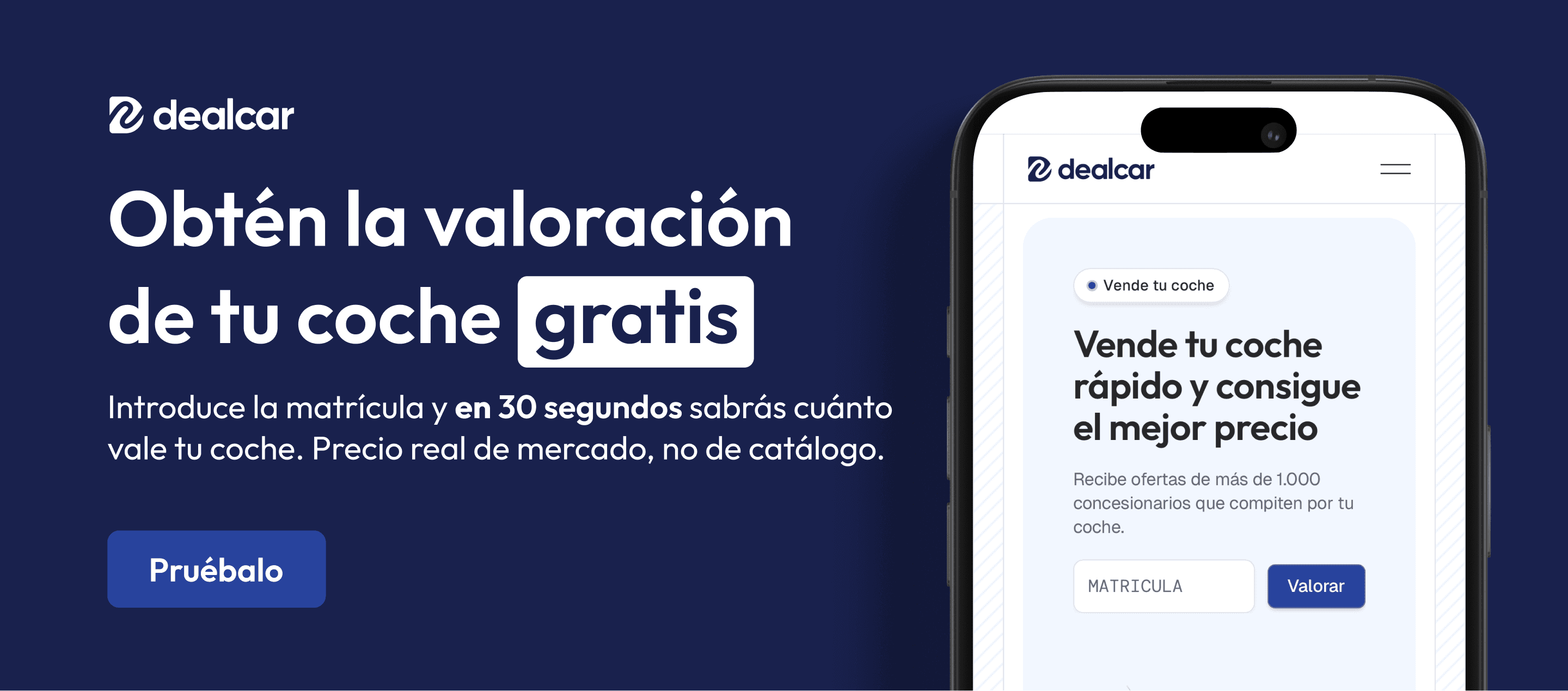
Dealcar is the tool that makes coordination possible. You value your old car for free in less than 30 seconds, receive offers from more than 1,000 dealerships in less than 18 hours and can agree on the collection date to coincide with the delivery of the new one.
100% free for you. No commissions or hidden costs.
You get paid before handing over the keys. Bank transfer before collection.
They collect the car from your home. On the date you agree.
No paperwork. The buying dealer manages the transfer, DGT and all the paperwork.
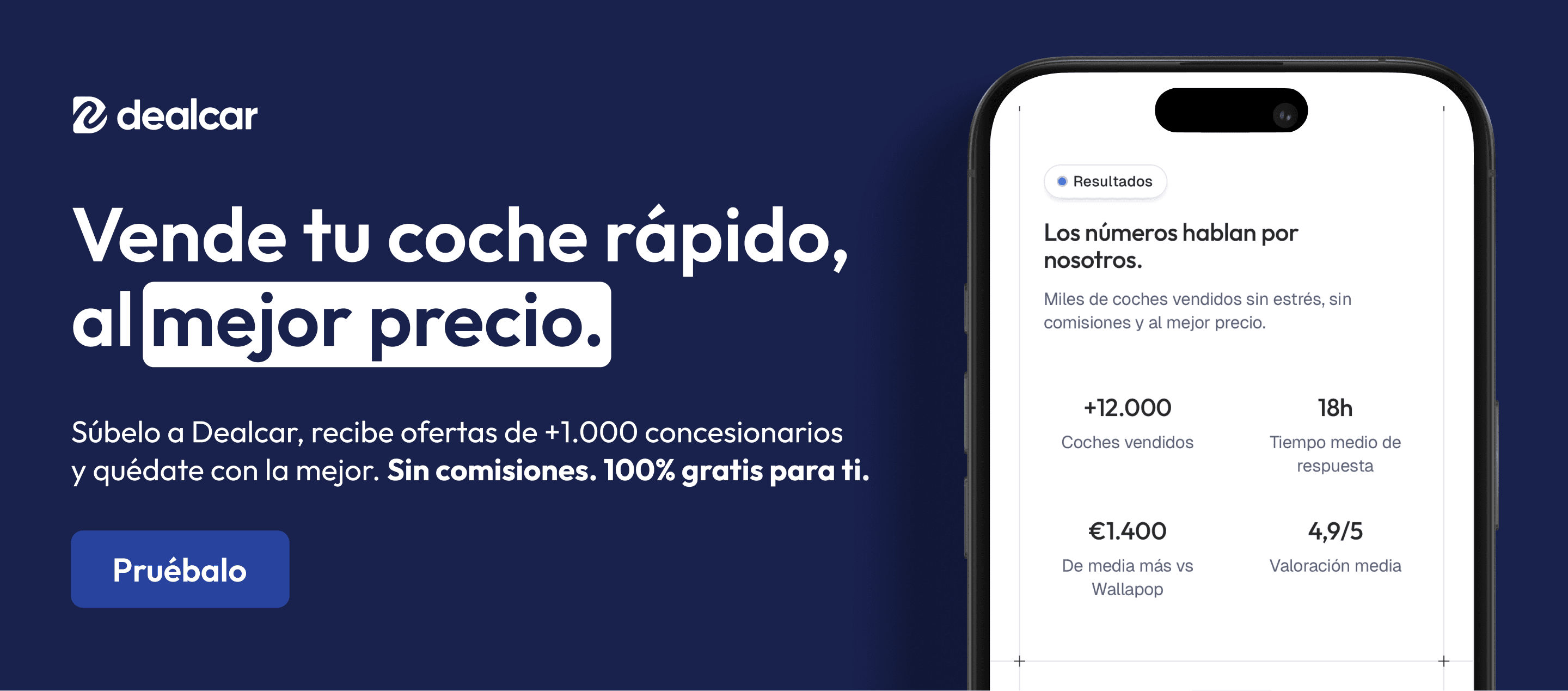
On average, €1,400 more than selling on Wallapop.
More than 12,000 cars sold and an average rating of 4.9 out of 5.
Use the free Dealcar valuation tool.
Frequently asked questions
Can I sell and buy on the same day? Yes, if you coordinate the dates. The Dealcar buyer can collect your old car in the morning and the new car dealership can deliver your car in the afternoon. It requires planning, but it is feasible.
How long does the whole car swap process take? If you coordinate in parallel: 2-3 weeks from when you start valuing the old one until you have the new one. If you do a trade-in at the dealership: 1-2 weeks (but you lose money). If you sell first and buy later: 3-5 weeks (including the period without a car).
Can I use the money from the old car as a down payment for the new one? Yes. With Dealcar you get paid by bank transfer before handing over the old one. That money is available in your account and you can use it as a down payment or partial payment for the new one. If the collection of the old one and the delivery of the new one are on the same day, the payment will have already arrived.
What if my old car has active financing? The Dealcar buyer handles the cancellation of the financing as part of the transaction, deducting the pending debt from the price. You do not need to settle the financing before starting the process. Check how to sell a financed car.
What if the offers for the old one are lower than expected? If you are not convinced by the offers, you can reject them at no cost and rethink your budget for the new car. Better to find out at the beginning of the process than after having committed to the purchase of the new one.
Table of Contents
The chicken and egg dilemma
Option 1: Sell first, buy later
Option 2: Buy first, sell later
Option 3: Coordinate both operations in parallel
The step-by-step plan to coordinate sale and purchase
What to do if you need a car during the gap
Mistakes that complicate coordination
Frequently asked questions
The most common situation when selling a car is not "I want to get rid of it". It is "I want to change my car". And changing cars involves two operations that have to fit together in time: selling the old one and buying the new one.
If you sell first, you are left without a car until you have the new one. If you buy first, you have two cars for a time (two insurances, two parking spaces, tied-up capital). And if you try to do everything on the same day, any unforeseen event in one of the two operations ruins the other.
Coordination is not difficult, but it requires a plan. In this article we give you the exact plan so that the transition between one car and another is smooth, without surprises and without losing money.
The chicken and egg dilemma
The complication is not theoretical: it is logistical. Each option has practical implications.
If you sell first. Advantage: you negotiate the purchase of the new one with cash in hand (strong position). Disadvantage: you are left without a car during the intermediate period, which can be days or weeks depending on how long it takes you to find and receive the new one.
If you buy first. Advantage: you are never left without a car. Disadvantage: you need to finance the purchase of the new one without having yet collected for the old one (double tied-up capital), you pay two insurances simultaneously and you sell the old one with more urgency (which weakens you in the negotiation).
If you do a trade-in. Advantage: everything is resolved in one operation. Disadvantage: the dealership pays you less for the old one (between 10% and 25% less than the market rate). Check our guide on car trade-in: what it is and how it works to understand the numbers.
Most people opt for the trade-in because it is the most convenient, without realising that this convenience costs them between €1,000 and €3,000 euro. The option that gives the best result is to coordinate both operations in parallel, and it is not as complicated as it seems.
Option 1: Sell first, buy later
This is the option that maximises the economic result but requires managing the period without a car.
When it works well
You have a second car in the family that you can use temporarily. You work from home or can use public transport for a few days. The new car you want is already available in stock (no need to wait for months). You can afford a few days or a week without a private car.
How to do it
You value your car with Dealcar and receive offers in less than 18 hours. You accept the best offer, get paid by bank transfer and hand over the car. With the money already available, you go to the dealership and buy the new one paying in cash or with a larger down payment (which improves the financing conditions). If the new one is in stock, you can have it in 3-5 days. The period without a car is reduced to less than a week.
The risk
That the new car takes longer than expected (due to preparation, transfer or dealership logistics). In that case, the period without a car becomes longer. The way to mitigate this is not to hand over the old one until you have a firm delivery date for the new one.
Option 2: Buy first, sell later
This is the option that guarantees you are never left without a car, but it requires more capital and puts pressure on you to sell the old one.
When it works well
The new car is an opportunity you can't pass up (good price, last model in stock, limited offer). You have the financial capacity to have two cars simultaneously (even if only for a few days). Your old car sells easily (popular model, good condition, good price).
How to do it
You buy the new car (with financing if necessary). Immediately afterwards, you value the old one with Dealcar and receive offers. You accept the best one, get paid and hand it over. The "two cars" period is reduced to days.
The risk
That the old one takes longer to sell than expected. Every week you spend with two cars means two insurances, two parking spaces and tied-up capital. That is why it is important to use a channel that generates offers quickly (Dealcar: less than 18 hours) instead of posting on a portal and waiting for weeks.
Option 3: Coordinate both operations in parallel
This is the smartest option: you start both processes at the same time and coordinate the dates so they overlap without a gap.
When it works well
In most situations. It is the default option unless you have a special circumstance that forces you to choose one of the other two.
How to do it
Week 1: Start both processes simultaneously. Value your old car with Dealcar. Offers arrive in less than 18 hours. At the same time, start looking for the new car: visit dealerships, ask for quotes, do test drives. Do not close either of the two operations yet.
Week 2: You have the real figures. You know how much they are offering for the old one (Dealcar offers). You know how much the new one costs (dealership quotes). You can calculate exactly how much you need to finance, how much down payment you can put down and what your margin is.
If you want to prepare before getting a valuation, check how to know how much your car is worth.
Week 3: Close both operations with coordinated dates. Accept the best Dealcar offer and agree on a collection date for the old one (for example, Friday 15th). Close the purchase of the new one and agree on the delivery for the same date (or with a margin of 1-2 days). Agreeing on dates is possible both with Dealcar and with the new car dealership.
D-Day: Transition. You hand over the old one (or they collect it from your home) and receive the new one. Ideally on the same day. If there is a 1-2 day gap, it is manageable with alternative transport.
Why it works
Because you don't commit to anything until you have information from both sides. You don't sell the old one without knowing when you will have the new one. You don't buy the new one without knowing how much you will collect for the old one. Decisions are made with complete data, not with hopes.
The step-by-step plan to coordinate sale and purchase
If you want maximum detail, this is the complete plan.
Day 1: Value your old car. Go to dealcar.io/vende-tu-coche, enter the details and receive the valuation. Dealerships will start sending offers.
Day 1-2: You receive offers. On average, in less than 18 hours you have several offers on the table. Now you know exactly how much money you are going to receive for the old one.
To maximise what you get for the old one, check our strategies to get the best price.
Day 2-7: Look for the new car. With the figure for the old car clear, visit dealerships. Negotiate the price of the new one knowing how much down payment you can make. If the new one is in stock, ask for a delivery date. If it has to be ordered, ask for the real delivery time.
Day 7-10: Close both operations. Accept the Dealcar offer that suits you best. Agree on the collection date with the buying dealer (usually flexible). Close the purchase of the new one with a coordinated delivery date. Sign both contracts.
Day 10-14: Transition period. If the schedule works out, the collection of the old one and the delivery of the new one can be on the same day or 1-2 days apart. During that period, the payment for the old one is already in your account (Dealcar pays before collecting) and you can use it for the new one’s down payment.
Day 14+: Final steps. Cancel the insurance on the old car (or transfer it to the new one). The buying dealer from Dealcar manages the ownership transfer and the DGT (Traffic Authority) paperwork. The new car dealership handles their part. You don't have to do any paperwork.
Total process time: 2-3 weeks. Actual effort: a few hours spread over that period.
What to do if you need a car during the gap
If there is a gap between the delivery of the old one and the receipt of the new one, there are several solutions.
Courtsy car from the dealership. Many dealerships selling new cars offer a free replacement car during the waiting period. Not all of them do, but ask: it is a service that might be included or that they can offer you if requested.
Short car rental. A 3-5 day rental costs between 75 and 200 euro depending on the model and city. It is a simple solution if the gap is only a few days.
Second family car. If your partner or a family member has a car, you can coordinate for a few days to share it.
Public transport + taxi. For 1-2 day gaps, it can be the simplest and cheapest option. A combination of underground/bus for day-to-day and a taxi for specific trips costs less than a day's rental.
Agree the collection date with Dealcar. This is the most direct solution: if you know your new car arrives on Friday 20th, agree the collection of the old one for Thursday 19th or Friday 20th. Professional buyers on Dealcar are flexible with dates once the transaction is closed.
Mistakes that complicate coordination
Selling in a hurry because you already bought the new one. If you buy first and then need to sell urgently, you will accept the first offer that comes along (which will probably be low). Urgency destroys your bargaining power. It is always better to value the old one before committing to the purchase of the new one.
Committing to the new one without knowing how much you will get for the old one. If you close the purchase of the new one assuming your old one is worth €10,000 and then find out that the offers are €8,000, you have a financing problem. Know the real offers for the old one first.
Not agreeing on dates in advance. If you sell the old one without agreeing on a collection date and the buyer wants to collect it tomorrow but your new car arrives in two weeks, you have a logistical problem. Agree on the dates of both operations before closing.
Cancelling the insurance of the old one before handing it over. Do not cancel the insurance until the car has been collected or delivered. Driving without insurance, even for one day, is illegal and exposes you to huge liabilities. Check what to do after selling a car for the correct order of the steps.
Not notifying the DGT of the sale of the old car. If you sell through Dealcar, the buying dealership manages the transfer. If you sell to a private individual, you have 10 days to notify them. Don't forget, otherwise fines for the old car will continue to arrive in your name.
Dealcar: value your car for free and coordinate your car swap
Dealcar is the tool that makes coordination possible. You value your old car for free in less than 30 seconds, receive offers from more than 1,000 dealerships in less than 18 hours and can agree on the collection date to coincide with the delivery of the new one.
100% free for you. No commissions or hidden costs.
You get paid before handing over the keys. Bank transfer before collection.
They collect the car from your home. On the date you agree.
No paperwork. The buying dealer manages the transfer, DGT and all the paperwork.
On average, €1,400 more than selling on Wallapop.
More than 12,000 cars sold and an average rating of 4.9 out of 5.
Use the free Dealcar valuation tool.
Frequently asked questions
Can I sell and buy on the same day? Yes, if you coordinate the dates. The Dealcar buyer can collect your old car in the morning and the new car dealership can deliver your car in the afternoon. It requires planning, but it is feasible.
How long does the whole car swap process take? If you coordinate in parallel: 2-3 weeks from when you start valuing the old one until you have the new one. If you do a trade-in at the dealership: 1-2 weeks (but you lose money). If you sell first and buy later: 3-5 weeks (including the period without a car).
Can I use the money from the old car as a down payment for the new one? Yes. With Dealcar you get paid by bank transfer before handing over the old one. That money is available in your account and you can use it as a down payment or partial payment for the new one. If the collection of the old one and the delivery of the new one are on the same day, the payment will have already arrived.
What if my old car has active financing? The Dealcar buyer handles the cancellation of the financing as part of the transaction, deducting the pending debt from the price. You do not need to settle the financing before starting the process. Check how to sell a financed car.
What if the offers for the old one are lower than expected? If you are not convinced by the offers, you can reject them at no cost and rethink your budget for the new car. Better to find out at the beginning of the process than after having committed to the purchase of the new one.


