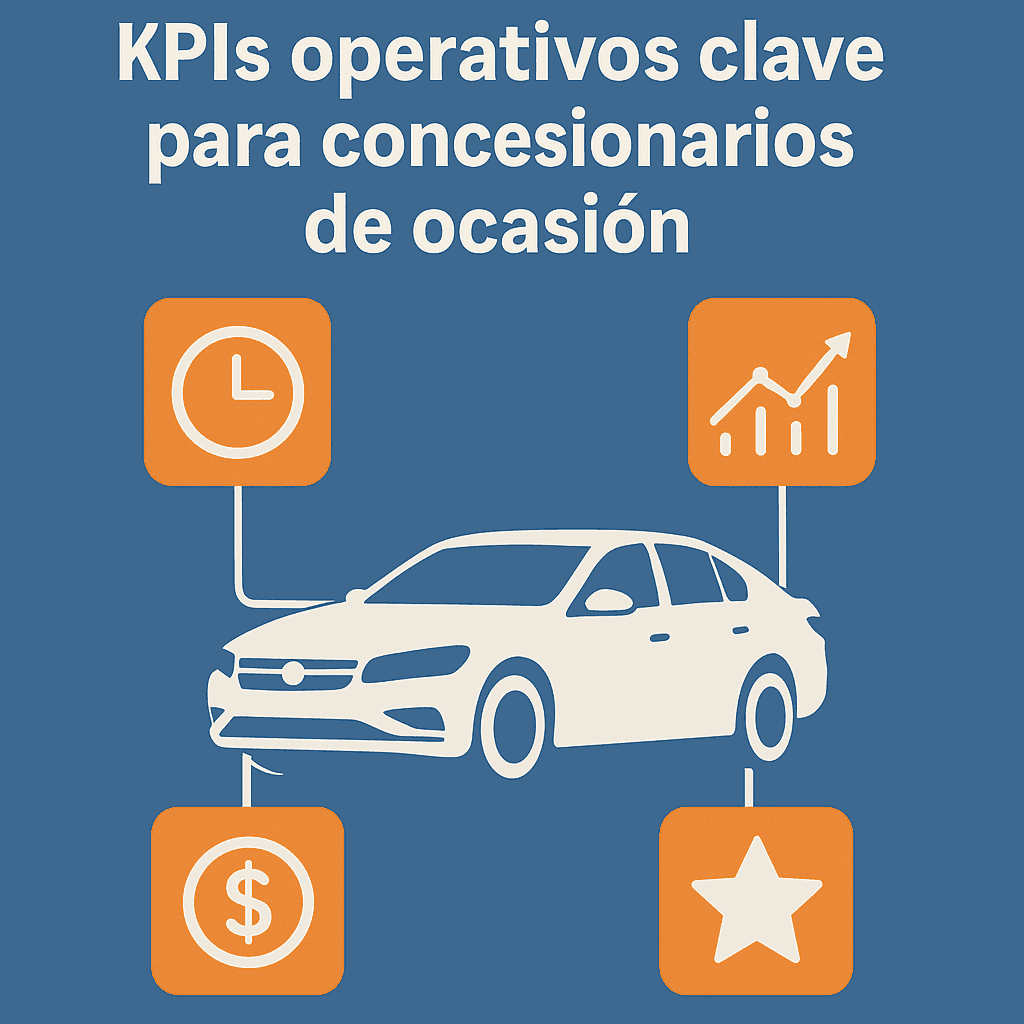
Key Performance Indicators (KPIs), or key performance indicators, are essential metrics for measuring a business's performance. In the case of a used car dealership, KPIs make it possible to make informed decisions, identify areas for improvement and increase profitability.
In a market as competitive as the used car market, measuring operational KPIs correctly can make the difference between growth and stagnation. It is not just about having more sales, but about understanding which processes are working, which need optimisation and how sustainable long-term growth can be achieved.
Implementing a measurement culture also enables the team to align its objectives with the expected results and adapt quickly to market changes.
Essential operational KPIs for used car dealerships
Average stock holding time
This KPI measures the average number of days a car remains in inventory before being sold. A low stock holding time indicates efficient turnover and avoids capital being tied up. Conversely, stock that moves slowly can generate additional costs and missed opportunities.
Formula: Total days in stock across all vehicles / Number of vehicles sold
Practical tip: Segment this KPI by vehicle type, price or age to identify which segments turn over best.
Gross margin per vehicle
This indicates the profit made on each car sold before overheads. It helps assess efficiency in purchasing, reconditioning and selling. It is a direct indicator of the dealership's financial success.
Formula: Sale price - Acquisition and preparation cost
Practical tip: Comparing this margin across different sales channels (online, in person, brokers) can reveal opportunities for improvement.
Inventory turnover ratio
This assesses how frequently the dealership replenishes its stock over a given period. The higher this ratio, the more efficient the operation.
Formula: Total sales / Average inventory
This KPI is key to understanding whether capital is being used well. Low turnover may be due to uncompetitive prices, poor product presentation or ineffective marketing strategies.
Average reconditioning cost
Monitoring this KPI makes it possible to optimise vehicle preparation processes without affecting quality. Spending less without losing perceived value is key to maintaining healthy margins.
Practical tip: Keeping a detailed record of each reconditioning item helps identify suppliers or services that unnecessarily increase the cost of the process.
Lead conversion rate
This relates the contacts or enquiries received to the sales completed. It is a direct indicator of sales effectiveness and the quality of the leads generated.
Formula: (Sales / Leads received) x 100
Practical tip: Measuring this KPI by source (website, portals, social media, etc.) will allow you to focus your efforts on the most profitable channels.
Customer satisfaction (NPS or ratings)
This measures the after-sales experience and loyalty. A good score boosts reputation and generates sales through recommendations. In addition, in a digital environment, Google reviews and portal ratings are decisive in attracting new customers.
Practical tip: Automate the sending of satisfaction surveys after vehicle handover and actively respond to public comments.
Conclusion
KPIs are essential allies for running a used car dealership efficiently. Measuring, analysing and acting on data makes it possible to optimise resources, improve processes and increase profitability. The key is to review these indicators regularly and adjust strategies according to the results.
Investing time in defining and understanding your KPIs not only improves the present of your business, but also builds a more robust, professional and profitable future.
Frequently asked questions
Which KPI is most important in a used car dealership?
Stock holding time and margin per unit are the most critical for ensuring turnover and profitability. However, the most relevant one may vary depending on the dealership's business model.
How is the inventory turnover ratio calculated?
By dividing total sales over a period by the average number of units in stock during that same period.
How often should KPIs be reviewed?
The recommendation is to do so monthly in order to adjust sales and operational strategies quickly. Some dealerships even do this weekly for specific campaigns.
What tools help measure KPIs in a dealership?
CRMs, automotive-sector-specific ERPs, automated spreadsheets or platforms such as Dealcar, which integrate real-time data.
Do you want to improve your KPIs and simplify the management of your dealership? Discover how Dealcar can help you make data-driven decisions.
Key Performance Indicators (KPIs), or key performance indicators, are essential metrics for measuring a business's performance. In the case of a used car dealership, KPIs make it possible to make informed decisions, identify areas for improvement and increase profitability.
In a market as competitive as the used car market, measuring operational KPIs correctly can make the difference between growth and stagnation. It is not just about having more sales, but about understanding which processes are working, which need optimisation and how sustainable long-term growth can be achieved.
Implementing a measurement culture also enables the team to align its objectives with the expected results and adapt quickly to market changes.
Essential operational KPIs for used car dealerships
Average stock holding time
This KPI measures the average number of days a car remains in inventory before being sold. A low stock holding time indicates efficient turnover and avoids capital being tied up. Conversely, stock that moves slowly can generate additional costs and missed opportunities.
Formula: Total days in stock across all vehicles / Number of vehicles sold
Practical tip: Segment this KPI by vehicle type, price or age to identify which segments turn over best.
Gross margin per vehicle
This indicates the profit made on each car sold before overheads. It helps assess efficiency in purchasing, reconditioning and selling. It is a direct indicator of the dealership's financial success.
Formula: Sale price - Acquisition and preparation cost
Practical tip: Comparing this margin across different sales channels (online, in person, brokers) can reveal opportunities for improvement.
Inventory turnover ratio
This assesses how frequently the dealership replenishes its stock over a given period. The higher this ratio, the more efficient the operation.
Formula: Total sales / Average inventory
This KPI is key to understanding whether capital is being used well. Low turnover may be due to uncompetitive prices, poor product presentation or ineffective marketing strategies.
Average reconditioning cost
Monitoring this KPI makes it possible to optimise vehicle preparation processes without affecting quality. Spending less without losing perceived value is key to maintaining healthy margins.
Practical tip: Keeping a detailed record of each reconditioning item helps identify suppliers or services that unnecessarily increase the cost of the process.
Lead conversion rate
This relates the contacts or enquiries received to the sales completed. It is a direct indicator of sales effectiveness and the quality of the leads generated.
Formula: (Sales / Leads received) x 100
Practical tip: Measuring this KPI by source (website, portals, social media, etc.) will allow you to focus your efforts on the most profitable channels.
Customer satisfaction (NPS or ratings)
This measures the after-sales experience and loyalty. A good score boosts reputation and generates sales through recommendations. In addition, in a digital environment, Google reviews and portal ratings are decisive in attracting new customers.
Practical tip: Automate the sending of satisfaction surveys after vehicle handover and actively respond to public comments.
Conclusion
KPIs are essential allies for running a used car dealership efficiently. Measuring, analysing and acting on data makes it possible to optimise resources, improve processes and increase profitability. The key is to review these indicators regularly and adjust strategies according to the results.
Investing time in defining and understanding your KPIs not only improves the present of your business, but also builds a more robust, professional and profitable future.
Frequently asked questions
Which KPI is most important in a used car dealership?
Stock holding time and margin per unit are the most critical for ensuring turnover and profitability. However, the most relevant one may vary depending on the dealership's business model.
How is the inventory turnover ratio calculated?
By dividing total sales over a period by the average number of units in stock during that same period.
How often should KPIs be reviewed?
The recommendation is to do so monthly in order to adjust sales and operational strategies quickly. Some dealerships even do this weekly for specific campaigns.
What tools help measure KPIs in a dealership?
CRMs, automotive-sector-specific ERPs, automated spreadsheets or platforms such as Dealcar, which integrate real-time data.
Do you want to improve your KPIs and simplify the management of your dealership? Discover how Dealcar can help you make data-driven decisions.