

Index
Why digital transfer of ownership matters in a professional sale
The three ways to manage ownership transfer
What documentation you need in each case
How much it costs: fees, agencies, and platforms
Who processes the transfer: the dealership or the buyer
Notification of sale: the procedure many forget
Common mistakes and how to avoid them
Frequently asked questions
Why digital transfer of ownership matters in a professional sale
A dealership that sells fifteen cars a month generates fifteen transfers of ownership. If each one requires a trip to the DGT (Traffic Authority), manual document management, and telephone follow-up with the agency, the administrative burden is considerable. And every day that a sold car remains in the dealership's name in the DGT register is a day of exposure to fines, insurance incidents, or unpaid municipal vehicle tax (IVTM) bills that arrive in the seller's name even though the vehicle is no longer theirs.
Digitalising the procedure does not eliminate documentary responsibility, but it does drastically reduce the time and cost per transaction when the process is well-structured. An ownership transfer that previously required two visits and several days can be resolved in hours if the paperwork is in order and the right channel is used.
The three ways to manage ownership transfer
Method 1: DGT Portal (miDGT / electronic office)
The DGT allows you to process the transfer of ownership directly through its electronic office. The main requirement is to have a digital certificate or access via Cl@ve. The buyer (or the dealership if managing the process on their behalf) accesses the portal, uploads the documentation, pays the fee online, and the DGT processes the change.
It is the cheapest option but the least efficient for medium or high volumes. The interface is not optimised for batch management, and any documentation issues require dealing with the DGT directly.
Method 2: Traditional agency (Gestoría)
An administrative agency processes the ownership transfer using a power of attorney from the client or signed documentation. The dealership hands over the documents, the agency manages the process in person or online, and returns the registration certificate with the new owner's details.
The advantage is that the agency takes responsibility for the process. The disadvantage is the cost (between €60 and €120 per transaction depending on the agency and complexity) and the lack of real-time visibility on the status of each case.
Method 3: Platform with DGT API integration
Some dealership management platforms have direct integration with the DGT or with digital agencies connected to the Traffic system. This allows starting and tracking the procedure directly from the dealership's own management software, without leaving the platform and without physical paperwork.
For dealerships with more than five or six operations monthly, this is the most efficient option: the cost per transaction goes down, tracking is in real-time, and the documentation remains centralised in the vehicle's file.
To see how a DMS can integrate this procedure into the workflow of each transaction, check out the guide on what a DMS in automotive is and how to choose the right one.
What documentation you need in each case
The basic documentation is the same regardless of the method you use. Who provides it and how it is submitted varies.
Documents provided by the seller (dealership):
Original registration certificate of the vehicle. Technical sheet. Sale contract signed by both parties. If the vehicle has active liens, the documentation showing cancellation of the lien. If the vehicle was temporarily decommissioned, the document showing its prior reinstatement.
Documents provided by the buyer:
Valid DNI or NIE. Proof of payment of the Property Transfer Tax (ITP - form 620 or 621 depending on the autonomous community), except if the buyer is a professional paying VAT, in which case another scheme applies. In transactions where the dealership issues an invoice with VAT, the private buyer does not pay ITP: the transfer process is done based on the invoice. To clarify when ITP applies and when it doesn't, you can consult the guide on what ITP is in car sales and when it applies.
For the online procedure, the following is also required:
Digital certificate or Cl@ve access of the owner carrying out the procedure (or power of attorney if managed by a third party). In some autonomous communities, proof of ITP must be presented in digital format with a verification code.
How much it costs: fees, agencies, and platforms
DGT Fee: the official fee for the transfer of ownership is €55.70 (rate in force in 2026). It is paid regardless of the channel used for processing.
Traditional agency: between €60 and €120 per transaction, depending on the agency, the complexity of the procedure, and if there are any complications. In some areas or with agencies specialising in automotive, a flat rate for volumes can be negotiated.
Digital platforms with DGT integration: the cost varies depending on the provider. Some charge per transaction (between €25 and €50 in addition to the DGT fee), while others include it in the monthly software fee. For high-volume dealerships, the cost per transaction is usually lower than that of a traditional agency.
The total cost per transfer for a dealership using a conventional agency ranges between €115 and €175 per transaction (fee plus agency charges). Multiplied by fifteen operations per month, that represents between €1,725 and €2,625 per month just on managing transfers.
Who processes the transfer: the dealership or the buyer
Legally, the obligation to process the transfer of ownership falls on the buyer: they have 30 business days from the signing of the contract to complete the process. However, in practice, many dealerships manage the transfer on behalf of the buyer, especially when they include it as a service within the transaction or when they work with their own agency.
To understand the consequences of not notifying the sale, you can review the article on complaints against dealerships before the DGT.
When the dealership manages the procedure, they control the process and reduce the risk of the buyer delaying it or doing it incorrectly. When left in the hands of the buyer, the dealership loses that visibility and may find that the car is still in their name weeks after the sale.
If you choose to leave the process to the buyer, the notification of sale to the DGT (which is indeed the seller's obligation) detaches you on the register, even if the change of name has not yet been completed.
Manage all the procedures for your dealership from a single place. Find out more at dealcar.io/gestoria.
Notification of sale: the procedure many forget
The notification of sale is different from the transfer of ownership, and many dealerships confuse or ignore it. The seller is obliged to notify the DGT that they have sold the vehicle, regardless of whether or not they manage the transfer of ownership.
This procedure can be done online on the DGT electronic office in minutes and is free of charge. Once the sale is notified, if the buyer receives a fine or causes an incident before completing the name change, the dealership is protected on the registry: the DGT has a record that the vehicle was transferred.
Without notification of sale, the dealership may receive fines, notifications of expired MOTs (ITV), or IVTM tax bills for a car they have already sold, and they will have more difficulty proving that the responsibility is not theirs. To see how this procedure fits into the compulsory documentation of each transaction, you can consult the guide on compulsory documentation in each sale transaction.
Common mistakes and how to avoid them
Not checking that the vehicle is free of liens before starting the process. An active embargo or a reservation of domain blocks the transfer of ownership until it is cancelled. Checking this before selling, rather than after the process is blocked, saves weeks of management. To see how to detect and resolve these situations, you can consult the guide on how to know if a car has liens.
Not having the ITP paid before starting the process. Without proof of payment of the ITP (when applicable), the DGT does not process the transfer of ownership. If the buyer has not paid the tax, the process is put on hold until they do.
Not notifying the sale at the time of signing the contract. The notification must be made immediately after closing the deal, not days later. Every day of delay is a day of exposure to incidents that arrive in the seller's name.
Using the same digital certificate to process on behalf of several clients without power of attorney. To manage the process on behalf of the buyer, the dealership needs a power of attorney or the buyer's express signature on the application. Without that backing, the procedure can be challenged.
Not following up on the status of the process. A transfer initiated is not a transfer completed. Verifying the status of the procedure 3-5 days after starting it allows you to detect and resolve any issues before they become entrenched.
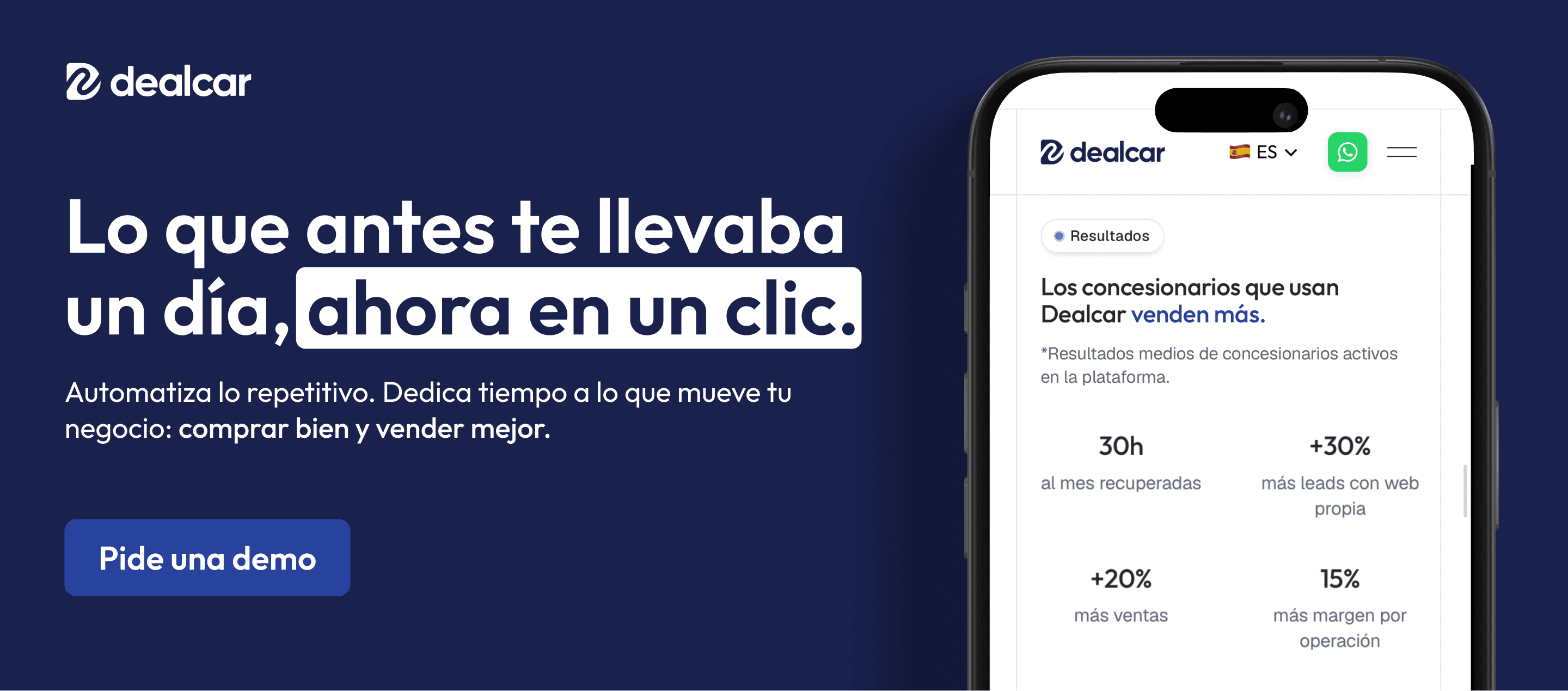
More than 750 dealerships already use Dealcar to manage their daily operations
Dealcar integrates the management of the ownership transfer into the workflow of each transaction: from generating the sale contract to tracking the status of the transfer, everything is recorded in the vehicle's file. With the notification of sale and documents centralised, each transaction closes cleanly without relying on physical folders or manual reminders.
Manage all the procedures for your dealership from a single place. Find out more at dealcar.io/gestoria.
If you want to see how it works, you can book a free demo at dealcar.io.
Frequently asked questions
Can the dealership process the transfer of ownership without going to the Traffic Office?
Yes. Whether through the DGT portal with a digital certificate, or through an agency or platform with API integration, the procedure can be completed entirely online without needing to go to any Traffic Office in person.
What happens if the buyer does not complete the transfer of ownership within 30 days?
The buyer fails to meet their legal obligation and may receive penalties. The dealership, if they have notified the sale to the DGT at the time of signing the contract, remains protected against any incidents caused by the buyer. Without that notification, the dealership remains responsible on the register.
How long does it take to complete the online transfer of ownership?
Under normal conditions, with all the documentation in order and no incidents, between 3 and 7 business days. If there are outstanding liens, the ITP is not paid, or any document is missing, the period is extended until the issue is resolved.
Is the DGT fee of €55.70 paid by the buyer or the seller?
Normally, it is paid by the buyer, as they are the one carrying out the transfer of ownership process. If the dealership manages the process as a service, they can include it in the management price or pass it on to the client.
Is a digital certificate necessary to carry out the online procedure?
To access the DGT portal directly, yes: a digital certificate or Cl@ve access is required. If the procedure is managed through an agency or integrated platform, it is not necessary for the dealership to have its own digital certificate.
Index
Why digital transfer of ownership matters in a professional sale
The three ways to manage ownership transfer
What documentation you need in each case
How much it costs: fees, agencies, and platforms
Who processes the transfer: the dealership or the buyer
Notification of sale: the procedure many forget
Common mistakes and how to avoid them
Frequently asked questions
Why digital transfer of ownership matters in a professional sale
A dealership that sells fifteen cars a month generates fifteen transfers of ownership. If each one requires a trip to the DGT (Traffic Authority), manual document management, and telephone follow-up with the agency, the administrative burden is considerable. And every day that a sold car remains in the dealership's name in the DGT register is a day of exposure to fines, insurance incidents, or unpaid municipal vehicle tax (IVTM) bills that arrive in the seller's name even though the vehicle is no longer theirs.
Digitalising the procedure does not eliminate documentary responsibility, but it does drastically reduce the time and cost per transaction when the process is well-structured. An ownership transfer that previously required two visits and several days can be resolved in hours if the paperwork is in order and the right channel is used.
The three ways to manage ownership transfer
Method 1: DGT Portal (miDGT / electronic office)
The DGT allows you to process the transfer of ownership directly through its electronic office. The main requirement is to have a digital certificate or access via Cl@ve. The buyer (or the dealership if managing the process on their behalf) accesses the portal, uploads the documentation, pays the fee online, and the DGT processes the change.
It is the cheapest option but the least efficient for medium or high volumes. The interface is not optimised for batch management, and any documentation issues require dealing with the DGT directly.
Method 2: Traditional agency (Gestoría)
An administrative agency processes the ownership transfer using a power of attorney from the client or signed documentation. The dealership hands over the documents, the agency manages the process in person or online, and returns the registration certificate with the new owner's details.
The advantage is that the agency takes responsibility for the process. The disadvantage is the cost (between €60 and €120 per transaction depending on the agency and complexity) and the lack of real-time visibility on the status of each case.
Method 3: Platform with DGT API integration
Some dealership management platforms have direct integration with the DGT or with digital agencies connected to the Traffic system. This allows starting and tracking the procedure directly from the dealership's own management software, without leaving the platform and without physical paperwork.
For dealerships with more than five or six operations monthly, this is the most efficient option: the cost per transaction goes down, tracking is in real-time, and the documentation remains centralised in the vehicle's file.
To see how a DMS can integrate this procedure into the workflow of each transaction, check out the guide on what a DMS in automotive is and how to choose the right one.
What documentation you need in each case
The basic documentation is the same regardless of the method you use. Who provides it and how it is submitted varies.
Documents provided by the seller (dealership):
Original registration certificate of the vehicle. Technical sheet. Sale contract signed by both parties. If the vehicle has active liens, the documentation showing cancellation of the lien. If the vehicle was temporarily decommissioned, the document showing its prior reinstatement.
Documents provided by the buyer:
Valid DNI or NIE. Proof of payment of the Property Transfer Tax (ITP - form 620 or 621 depending on the autonomous community), except if the buyer is a professional paying VAT, in which case another scheme applies. In transactions where the dealership issues an invoice with VAT, the private buyer does not pay ITP: the transfer process is done based on the invoice. To clarify when ITP applies and when it doesn't, you can consult the guide on what ITP is in car sales and when it applies.
For the online procedure, the following is also required:
Digital certificate or Cl@ve access of the owner carrying out the procedure (or power of attorney if managed by a third party). In some autonomous communities, proof of ITP must be presented in digital format with a verification code.
How much it costs: fees, agencies, and platforms
DGT Fee: the official fee for the transfer of ownership is €55.70 (rate in force in 2026). It is paid regardless of the channel used for processing.
Traditional agency: between €60 and €120 per transaction, depending on the agency, the complexity of the procedure, and if there are any complications. In some areas or with agencies specialising in automotive, a flat rate for volumes can be negotiated.
Digital platforms with DGT integration: the cost varies depending on the provider. Some charge per transaction (between €25 and €50 in addition to the DGT fee), while others include it in the monthly software fee. For high-volume dealerships, the cost per transaction is usually lower than that of a traditional agency.
The total cost per transfer for a dealership using a conventional agency ranges between €115 and €175 per transaction (fee plus agency charges). Multiplied by fifteen operations per month, that represents between €1,725 and €2,625 per month just on managing transfers.
Who processes the transfer: the dealership or the buyer
Legally, the obligation to process the transfer of ownership falls on the buyer: they have 30 business days from the signing of the contract to complete the process. However, in practice, many dealerships manage the transfer on behalf of the buyer, especially when they include it as a service within the transaction or when they work with their own agency.
To understand the consequences of not notifying the sale, you can review the article on complaints against dealerships before the DGT.
When the dealership manages the procedure, they control the process and reduce the risk of the buyer delaying it or doing it incorrectly. When left in the hands of the buyer, the dealership loses that visibility and may find that the car is still in their name weeks after the sale.
If you choose to leave the process to the buyer, the notification of sale to the DGT (which is indeed the seller's obligation) detaches you on the register, even if the change of name has not yet been completed.
Manage all the procedures for your dealership from a single place. Find out more at dealcar.io/gestoria.
Notification of sale: the procedure many forget
The notification of sale is different from the transfer of ownership, and many dealerships confuse or ignore it. The seller is obliged to notify the DGT that they have sold the vehicle, regardless of whether or not they manage the transfer of ownership.
This procedure can be done online on the DGT electronic office in minutes and is free of charge. Once the sale is notified, if the buyer receives a fine or causes an incident before completing the name change, the dealership is protected on the registry: the DGT has a record that the vehicle was transferred.
Without notification of sale, the dealership may receive fines, notifications of expired MOTs (ITV), or IVTM tax bills for a car they have already sold, and they will have more difficulty proving that the responsibility is not theirs. To see how this procedure fits into the compulsory documentation of each transaction, you can consult the guide on compulsory documentation in each sale transaction.
Common mistakes and how to avoid them
Not checking that the vehicle is free of liens before starting the process. An active embargo or a reservation of domain blocks the transfer of ownership until it is cancelled. Checking this before selling, rather than after the process is blocked, saves weeks of management. To see how to detect and resolve these situations, you can consult the guide on how to know if a car has liens.
Not having the ITP paid before starting the process. Without proof of payment of the ITP (when applicable), the DGT does not process the transfer of ownership. If the buyer has not paid the tax, the process is put on hold until they do.
Not notifying the sale at the time of signing the contract. The notification must be made immediately after closing the deal, not days later. Every day of delay is a day of exposure to incidents that arrive in the seller's name.
Using the same digital certificate to process on behalf of several clients without power of attorney. To manage the process on behalf of the buyer, the dealership needs a power of attorney or the buyer's express signature on the application. Without that backing, the procedure can be challenged.
Not following up on the status of the process. A transfer initiated is not a transfer completed. Verifying the status of the procedure 3-5 days after starting it allows you to detect and resolve any issues before they become entrenched.
More than 750 dealerships already use Dealcar to manage their daily operations
Dealcar integrates the management of the ownership transfer into the workflow of each transaction: from generating the sale contract to tracking the status of the transfer, everything is recorded in the vehicle's file. With the notification of sale and documents centralised, each transaction closes cleanly without relying on physical folders or manual reminders.
Manage all the procedures for your dealership from a single place. Find out more at dealcar.io/gestoria.
If you want to see how it works, you can book a free demo at dealcar.io.
Frequently asked questions
Can the dealership process the transfer of ownership without going to the Traffic Office?
Yes. Whether through the DGT portal with a digital certificate, or through an agency or platform with API integration, the procedure can be completed entirely online without needing to go to any Traffic Office in person.
What happens if the buyer does not complete the transfer of ownership within 30 days?
The buyer fails to meet their legal obligation and may receive penalties. The dealership, if they have notified the sale to the DGT at the time of signing the contract, remains protected against any incidents caused by the buyer. Without that notification, the dealership remains responsible on the register.
How long does it take to complete the online transfer of ownership?
Under normal conditions, with all the documentation in order and no incidents, between 3 and 7 business days. If there are outstanding liens, the ITP is not paid, or any document is missing, the period is extended until the issue is resolved.
Is the DGT fee of €55.70 paid by the buyer or the seller?
Normally, it is paid by the buyer, as they are the one carrying out the transfer of ownership process. If the dealership manages the process as a service, they can include it in the management price or pass it on to the client.
Is a digital certificate necessary to carry out the online procedure?
To access the DGT portal directly, yes: a digital certificate or Cl@ve access is required. If the procedure is managed through an agency or integrated platform, it is not necessary for the dealership to have its own digital certificate.


