When a customer walks into your showroom and looks at a car’s registration plate before the price, they’re doing something every professional in the sector knows well: trying to estimate the vehicle’s age at a glance. The plate letters are the first mental filter any buyer applies.
For a dealership or used-car trader, the latest registration assigned by the DGT is not just a curiosity. It’s a direct reference for understanding how the market perceives the age of the cars you have in stock, and it allows you to make better decisions when valuing, buying and pricing.
In this article we explain how the registration system works in Spain, which letters they’re up to in 2026, and how you can use this information to your advantage in the day-to-day running of your business.
Contents
How the registration system works in Spain
Latest DGT registration in 2026: which letters they’re up to
What the registration plate tells you about a car’s age
How the registration plate affects the value of a used car
How to make the most of the latest DGT registration if you’re a dealership
What the registration plate doesn’t tell you (and what you should check instead)
How the registration system works in Spain
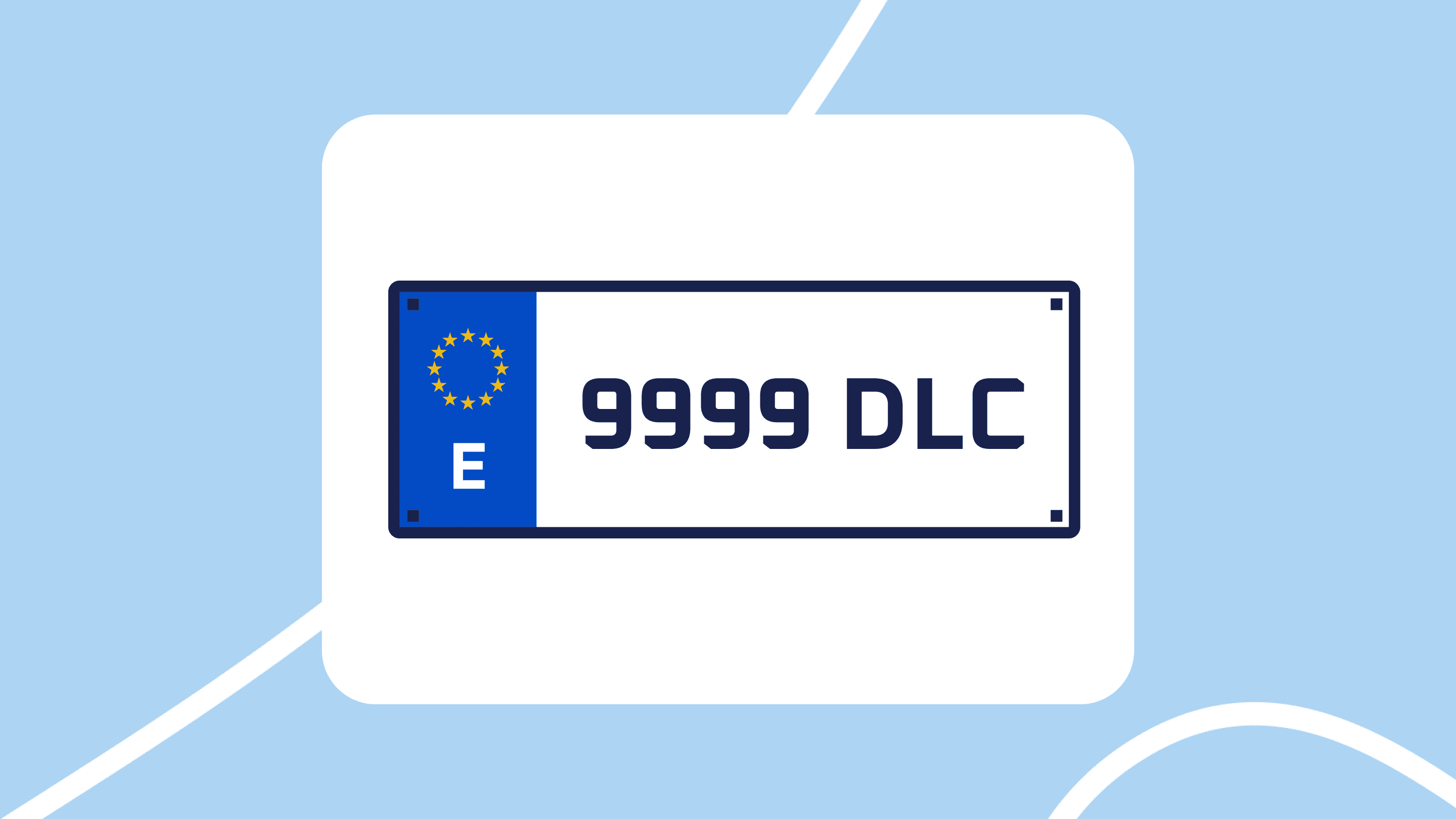
Since 18 September 2000, Spain has used a registration system made up of four numbers (from 0000 to 9999) followed by three letters. This format replaced the old provincial system, where the plate included the initials of the province (M for Madrid, B for Barcelona, SE for Seville, etc.).
The current system is national and sequential. It doesn’t matter whether the car is registered in Madrid, Barcelona or Seville: the numbering advances in order across the whole country. When the 10,000 numbers in one letter combination run out (for example, from 0000 NLB to 9999 NLB), it automatically moves on to the next combination (NLC).
The letters used are 20 consonants: B, C, D, F, G, H, J, K, L, M, N, P, R, S, T, V, W, X, Y and Z. The five vowels (A, E, I, O, U) are excluded to avoid combinations that form offensive words, and Ñ and Q are also excluded so they are not confused with N and O.
This design allows for a total of approximately 80 million combinations. Since 2000, around 45% of that capacity has been used up, which means the system has room until 2050 or even beyond, depending on the pace of sales.
Latest DGT registration in 2026: which letters they’re up to
At the beginning of April 2026, the registration series is around the combination NLZ/NMB. This means that the first letter (N) has remained stable for several years, while the second and third letters advance at a pace that depends directly on registration volumes.
In Spain, between 80,000 and 120,000 vehicles are registered per month. The pace is not constant: the last few days of each month and, above all, quarter-end closings create a peak in registrations because official dealerships and brands close their sales targets. On those days, the third letter can change every 24 or 48 hours.
If you’re waiting for the delivery of a new vehicle and want to get ahead of it, it’s worth knowing how long it takes to register a car so you can work out which letters you might get.
Where can you check the latest registration? The DGT does not publish this data in real time. It does so with a one-day delay: the information is processed overnight and published the following morning. Several specialist websites (such as dieselogasolina.com, matriculas.com.es or coches.net) compile this information and update it with data from users and dealerships reporting the latest registrations they have seen.
For a professional, what matters is not knowing the exact plate on the day, but having a reference for which series we’re in. That allows you to estimate the age of any car that comes into your showroom or is offered to you for purchase at a glance.
And if you want to make sure you’re not missing anything for the paperwork, here’s the full list of documents needed to register a car.
What the registration plate tells you about a car’s age
The registration plate doesn’t show when the car was manufactured, only when it was registered. That difference matters: a vehicle may have spent months in the manufacturer’s warehouse or in the official dealership’s stock before receiving its plate.
That said, the three letters on the plate are a fairly reliable indicator of the approximate date of first registration. Here’s a guide table with the letter ranges by year since 2015:
Year | Approximate letter range |
|---|---|
2015 | GLP - GTD |
2016 | GTD - GZN |
2017 | GZN - HKD |
2018 | HKD - HPR |
2019 | HPR - HXG |
2020 | HXG - JCM |
2021 | JCM - JLH |
2022 | JLH - JWM |
2023 | JWM - KKM |
2024 | KKM - KYT |
2025 | KYT - NKJ (approx.) |
2026 (up to April) | NKJ - NMB (approx.) |
This table is indicative and may vary slightly depending on the source. But it gives you a quick tool: if you’re offered a car with an HPN plate, you know it was registered around 2018-2019 without needing to ask for paperwork.
What you mustn’t forget is that the registration plate reflects the date of registration, not the date of manufacture or purchase. A nearly new car registered in December 2024 to meet brand targets may have an "older" plate than another car of the same model actually sold in January 2025. This nuance is relevant both when buying and selling.
How the registration plate affects the value of a used car
In the second-hand market, perception rules. And the letters on the plate create an immediate first impression about the vehicle’s age.
A private buyer who sees two identical cars on a portal (same model, same colour, similar mileage) will tend to value the one with the "newer" letters more highly. A car with a KYT plate (late 2024) feels fresher than one with KKM (early 2024), even though the real age difference is only a few months.
Does that translate into money? Yes, in many cases. When a car is registered just before a major series change (for example, moving from J to K as the first letter), the next car in the same series already "looks" like a different generation. That visual jump can shift the sale price by 200 to 500 euros in mid-range cars, simply because of the perception of age.
A car’s depreciation is not calculated on the plate alone, but the plate does influence the perception of that depreciation. Hacienda and GANVAM tables use the date of first registration as one of the factors for estimating the trade-in value and market value. If you want to go deeper into how it’s calculated, we explain it in detail in our guide to the differences between a car’s trade-in value and market value.
For a dealership, this has a practical implication: when setting the price of a used car, it’s not enough to look at the year of manufacture. You have to look at the letters and know how the average buyer interprets them.
How to make the most of the latest DGT registration if you’re a dealership
Knowing the current registration series gives you an advantage at three specific points in the business.
When valuing a car for purchase. When someone offers you a vehicle, the first thing you do is look at the plate. If the letters are "old" for the year shown on the registration document, you can use that information as an argument to adjust the purchase price downwards. A car manufactured in 2023 but registered at the end of 2022 (with 2022 letters) will be harder to sell at the price of a 2023 model. That difference should be reflected in what you pay for it. If you need a more complete method, see our definitive guide to valuing used cars.
When setting the sale price. If you have two similar cars in stock but with plates from different series, the one with more recent letters can support a slightly higher price. List the one with the older plate first (or price it to move it faster) and keep the one with the newer plate to attract the buyer looking for "the most recent possible" within their budget. To keep profitability in view, review how to calculate gross and net margin on used cars.
When planning registrations for new or nearly new cars. If you work with new cars or nearly new cars, the last few days of each month and each quarter are the periods with the highest registration volumes. If you can schedule the registration just after a series change (when the letters have just advanced), the car will carry the freshest letters on the market. That gives it an extra residual value that buyers will perceive for years.
Before deciding when to register, it’s worth being clear on how much it costs to register a car so you can factor it into the deal’s margin calculation.
What the registration plate doesn’t tell you (and what you should check instead)
The registration plate gives you a quick clue about age, but it doesn’t tell you anything about what really matters when buying a car: its actual condition.
By just looking at the plate, you can’t know whether the car has outstanding finance or liens, whether it has suffered accidents, whether the mileage has been tampered with, whether the ITV is valid or whether there is any administrative hold preventing transfer.
It’s also worth knowing the most common mistakes when registering a car so you can avoid delays that may leave you with a plate you weren’t expecting.
That’s what the official DGT reports and tools like CARFAX are for. The DGT report confirms the vehicle’s administrative status: ownership, encumbrances, ITV history, recorded mileage and number of previous owners. CARFAX, for its part, adds information from insurers, workshops and records from other countries, which is especially useful for imported or auction cars. We recommend reading how to make the most of the DGT and Carfax history in your purchasing decisions.
At Dealcar you can request DGT and CARFAX reports directly from each vehicle’s listing in your stock, with preferential rates and no minimums. The report is linked to the car, accessible from the app and ready to share with the customer if needed.
The registration plate is a useful first filter. But a professional who stops at the letters is taking a risk that, for just a few euros, can be avoided entirely. You can review all the documentation needed to buy a used car in our updated guide.
The latest registration assigned by the DGT is a simple piece of data that, used well, helps you value better, set tighter prices and understand how buyers perceive age. But it does not replace real information about the vehicle. The professional who combines both things (perception + verified data) is the one who makes the best buying and selling decisions.
Frequently asked questions
Can you choose the registration of a new car in Spain?
No. The DGT assigns plates sequentially and automatically at the time of the application. There is no option to pay for a personalised plate as in other countries. What you can do is follow the latest assigned registration and instruct the dealership or agency to register it when the letters are close to the combination you want, although this requires close attention, especially at the end of the month.
How often does the last letter of the plate change?
It depends on sales volume. The third letter (the one that advances fastest) can change every 3 or 4 days in normal months, and every 24-48 hours during peaks such as June or December. The second letter takes about a month to advance. The first letter remains stable for several years.
Does the registration plate affect road tax?
No. The Mechanical Propulsion Vehicle Tax (IVTM) is calculated according to the vehicle’s fiscal horsepower and the municipality where it is registered, not the registration date or the letters on the plate. What can be affected by a car’s age are low-emission zone traffic restrictions, although these depend on the environmental label (engine type and Euro standard), not on the plate itself.
How long will the current registration system last in Spain?
The system has capacity for around 80 million combinations and, at the current rate of registrations (around one million vehicles a year), there is room until 2050 or 2060. When the limit gets closer, the DGT will introduce a new format, probably aligned with a European standard that could include a fifth digit or an additional letter at the beginning.
More than 500 dealerships already use Dealcar.
It’s the all-in-one platform that lets you manage your stock, publish to portals automatically, request DGT, CARFAX and Carvertical reports at preferential rates and keep full control of every transaction from a single tool.
If you want to check your cars’ history without hassle, you can consult the DGT and CARFAX report from Dealcar.
When a customer walks into your showroom and looks at a car’s registration plate before the price, they’re doing something every professional in the sector knows well: trying to estimate the vehicle’s age at a glance. The plate letters are the first mental filter any buyer applies.
For a dealership or used-car trader, the latest registration assigned by the DGT is not just a curiosity. It’s a direct reference for understanding how the market perceives the age of the cars you have in stock, and it allows you to make better decisions when valuing, buying and pricing.
In this article we explain how the registration system works in Spain, which letters they’re up to in 2026, and how you can use this information to your advantage in the day-to-day running of your business.
Contents
How the registration system works in Spain
Latest DGT registration in 2026: which letters they’re up to
What the registration plate tells you about a car’s age
How the registration plate affects the value of a used car
How to make the most of the latest DGT registration if you’re a dealership
What the registration plate doesn’t tell you (and what you should check instead)
How the registration system works in Spain
Since 18 September 2000, Spain has used a registration system made up of four numbers (from 0000 to 9999) followed by three letters. This format replaced the old provincial system, where the plate included the initials of the province (M for Madrid, B for Barcelona, SE for Seville, etc.).
The current system is national and sequential. It doesn’t matter whether the car is registered in Madrid, Barcelona or Seville: the numbering advances in order across the whole country. When the 10,000 numbers in one letter combination run out (for example, from 0000 NLB to 9999 NLB), it automatically moves on to the next combination (NLC).
The letters used are 20 consonants: B, C, D, F, G, H, J, K, L, M, N, P, R, S, T, V, W, X, Y and Z. The five vowels (A, E, I, O, U) are excluded to avoid combinations that form offensive words, and Ñ and Q are also excluded so they are not confused with N and O.
This design allows for a total of approximately 80 million combinations. Since 2000, around 45% of that capacity has been used up, which means the system has room until 2050 or even beyond, depending on the pace of sales.
Latest DGT registration in 2026: which letters they’re up to
At the beginning of April 2026, the registration series is around the combination NLZ/NMB. This means that the first letter (N) has remained stable for several years, while the second and third letters advance at a pace that depends directly on registration volumes.
In Spain, between 80,000 and 120,000 vehicles are registered per month. The pace is not constant: the last few days of each month and, above all, quarter-end closings create a peak in registrations because official dealerships and brands close their sales targets. On those days, the third letter can change every 24 or 48 hours.
If you’re waiting for the delivery of a new vehicle and want to get ahead of it, it’s worth knowing how long it takes to register a car so you can work out which letters you might get.
Where can you check the latest registration? The DGT does not publish this data in real time. It does so with a one-day delay: the information is processed overnight and published the following morning. Several specialist websites (such as dieselogasolina.com, matriculas.com.es or coches.net) compile this information and update it with data from users and dealerships reporting the latest registrations they have seen.
For a professional, what matters is not knowing the exact plate on the day, but having a reference for which series we’re in. That allows you to estimate the age of any car that comes into your showroom or is offered to you for purchase at a glance.
And if you want to make sure you’re not missing anything for the paperwork, here’s the full list of documents needed to register a car.
What the registration plate tells you about a car’s age
The registration plate doesn’t show when the car was manufactured, only when it was registered. That difference matters: a vehicle may have spent months in the manufacturer’s warehouse or in the official dealership’s stock before receiving its plate.
That said, the three letters on the plate are a fairly reliable indicator of the approximate date of first registration. Here’s a guide table with the letter ranges by year since 2015:
Year | Approximate letter range |
|---|---|
2015 | GLP - GTD |
2016 | GTD - GZN |
2017 | GZN - HKD |
2018 | HKD - HPR |
2019 | HPR - HXG |
2020 | HXG - JCM |
2021 | JCM - JLH |
2022 | JLH - JWM |
2023 | JWM - KKM |
2024 | KKM - KYT |
2025 | KYT - NKJ (approx.) |
2026 (up to April) | NKJ - NMB (approx.) |
This table is indicative and may vary slightly depending on the source. But it gives you a quick tool: if you’re offered a car with an HPN plate, you know it was registered around 2018-2019 without needing to ask for paperwork.
What you mustn’t forget is that the registration plate reflects the date of registration, not the date of manufacture or purchase. A nearly new car registered in December 2024 to meet brand targets may have an "older" plate than another car of the same model actually sold in January 2025. This nuance is relevant both when buying and selling.
How the registration plate affects the value of a used car
In the second-hand market, perception rules. And the letters on the plate create an immediate first impression about the vehicle’s age.
A private buyer who sees two identical cars on a portal (same model, same colour, similar mileage) will tend to value the one with the "newer" letters more highly. A car with a KYT plate (late 2024) feels fresher than one with KKM (early 2024), even though the real age difference is only a few months.
Does that translate into money? Yes, in many cases. When a car is registered just before a major series change (for example, moving from J to K as the first letter), the next car in the same series already "looks" like a different generation. That visual jump can shift the sale price by 200 to 500 euros in mid-range cars, simply because of the perception of age.
A car’s depreciation is not calculated on the plate alone, but the plate does influence the perception of that depreciation. Hacienda and GANVAM tables use the date of first registration as one of the factors for estimating the trade-in value and market value. If you want to go deeper into how it’s calculated, we explain it in detail in our guide to the differences between a car’s trade-in value and market value.
For a dealership, this has a practical implication: when setting the price of a used car, it’s not enough to look at the year of manufacture. You have to look at the letters and know how the average buyer interprets them.
How to make the most of the latest DGT registration if you’re a dealership
Knowing the current registration series gives you an advantage at three specific points in the business.
When valuing a car for purchase. When someone offers you a vehicle, the first thing you do is look at the plate. If the letters are "old" for the year shown on the registration document, you can use that information as an argument to adjust the purchase price downwards. A car manufactured in 2023 but registered at the end of 2022 (with 2022 letters) will be harder to sell at the price of a 2023 model. That difference should be reflected in what you pay for it. If you need a more complete method, see our definitive guide to valuing used cars.
When setting the sale price. If you have two similar cars in stock but with plates from different series, the one with more recent letters can support a slightly higher price. List the one with the older plate first (or price it to move it faster) and keep the one with the newer plate to attract the buyer looking for "the most recent possible" within their budget. To keep profitability in view, review how to calculate gross and net margin on used cars.
When planning registrations for new or nearly new cars. If you work with new cars or nearly new cars, the last few days of each month and each quarter are the periods with the highest registration volumes. If you can schedule the registration just after a series change (when the letters have just advanced), the car will carry the freshest letters on the market. That gives it an extra residual value that buyers will perceive for years.
Before deciding when to register, it’s worth being clear on how much it costs to register a car so you can factor it into the deal’s margin calculation.
What the registration plate doesn’t tell you (and what you should check instead)
The registration plate gives you a quick clue about age, but it doesn’t tell you anything about what really matters when buying a car: its actual condition.
By just looking at the plate, you can’t know whether the car has outstanding finance or liens, whether it has suffered accidents, whether the mileage has been tampered with, whether the ITV is valid or whether there is any administrative hold preventing transfer.
It’s also worth knowing the most common mistakes when registering a car so you can avoid delays that may leave you with a plate you weren’t expecting.
That’s what the official DGT reports and tools like CARFAX are for. The DGT report confirms the vehicle’s administrative status: ownership, encumbrances, ITV history, recorded mileage and number of previous owners. CARFAX, for its part, adds information from insurers, workshops and records from other countries, which is especially useful for imported or auction cars. We recommend reading how to make the most of the DGT and Carfax history in your purchasing decisions.
At Dealcar you can request DGT and CARFAX reports directly from each vehicle’s listing in your stock, with preferential rates and no minimums. The report is linked to the car, accessible from the app and ready to share with the customer if needed.
The registration plate is a useful first filter. But a professional who stops at the letters is taking a risk that, for just a few euros, can be avoided entirely. You can review all the documentation needed to buy a used car in our updated guide.
The latest registration assigned by the DGT is a simple piece of data that, used well, helps you value better, set tighter prices and understand how buyers perceive age. But it does not replace real information about the vehicle. The professional who combines both things (perception + verified data) is the one who makes the best buying and selling decisions.
Frequently asked questions
Can you choose the registration of a new car in Spain?
No. The DGT assigns plates sequentially and automatically at the time of the application. There is no option to pay for a personalised plate as in other countries. What you can do is follow the latest assigned registration and instruct the dealership or agency to register it when the letters are close to the combination you want, although this requires close attention, especially at the end of the month.
How often does the last letter of the plate change?
It depends on sales volume. The third letter (the one that advances fastest) can change every 3 or 4 days in normal months, and every 24-48 hours during peaks such as June or December. The second letter takes about a month to advance. The first letter remains stable for several years.
Does the registration plate affect road tax?
No. The Mechanical Propulsion Vehicle Tax (IVTM) is calculated according to the vehicle’s fiscal horsepower and the municipality where it is registered, not the registration date or the letters on the plate. What can be affected by a car’s age are low-emission zone traffic restrictions, although these depend on the environmental label (engine type and Euro standard), not on the plate itself.
How long will the current registration system last in Spain?
The system has capacity for around 80 million combinations and, at the current rate of registrations (around one million vehicles a year), there is room until 2050 or 2060. When the limit gets closer, the DGT will introduce a new format, probably aligned with a European standard that could include a fifth digit or an additional letter at the beginning.
More than 500 dealerships already use Dealcar.
It’s the all-in-one platform that lets you manage your stock, publish to portals automatically, request DGT, CARFAX and Carvertical reports at preferential rates and keep full control of every transaction from a single tool.
If you want to check your cars’ history without hassle, you can consult the DGT and CARFAX report from Dealcar.