In an independent used car dealership, every vehicle that enters stock is an opportunity. But it is also a risk if it is not managed properly. At Dealcar, we know that the difference between a car that sells quickly (and with a good margin) and one that sits for months is down to the inspection and reconditioning carried out before it is shown to the customer. This article explains how to do it well: from the initial inspection to the final details that build trust and loyalty.
Why is it essential to inspect and recondition before adding it to stock?
Improving quality, customer trust and margin
When a vehicle arrives at the dealership, many things may be at stake: wear and tear, incomplete maintenance, possible hidden repairs. A thorough inspection ensures that the car meets your standards, which builds customer trust and reduces later complaints.
Reducing stock holding costs
A car that takes too long to be ready generates "holding cost": it takes up space, capital and may depreciate. The sooner it is ready for sale, the better. Each extra day in reconditioning adds unnecessary costs that erode margin.
Standing out from the competition
In a market saturated with used vehicles, a well-prepared car stands out: better photos, better impressions, fewer objections. That helps the independent dealership position itself professionally and build a reputation.
Stages of the process: from newly acquired car to vehicle ready for sale
1. Receiving and initial inspection
Verify documentation, service history, and actual mileage.
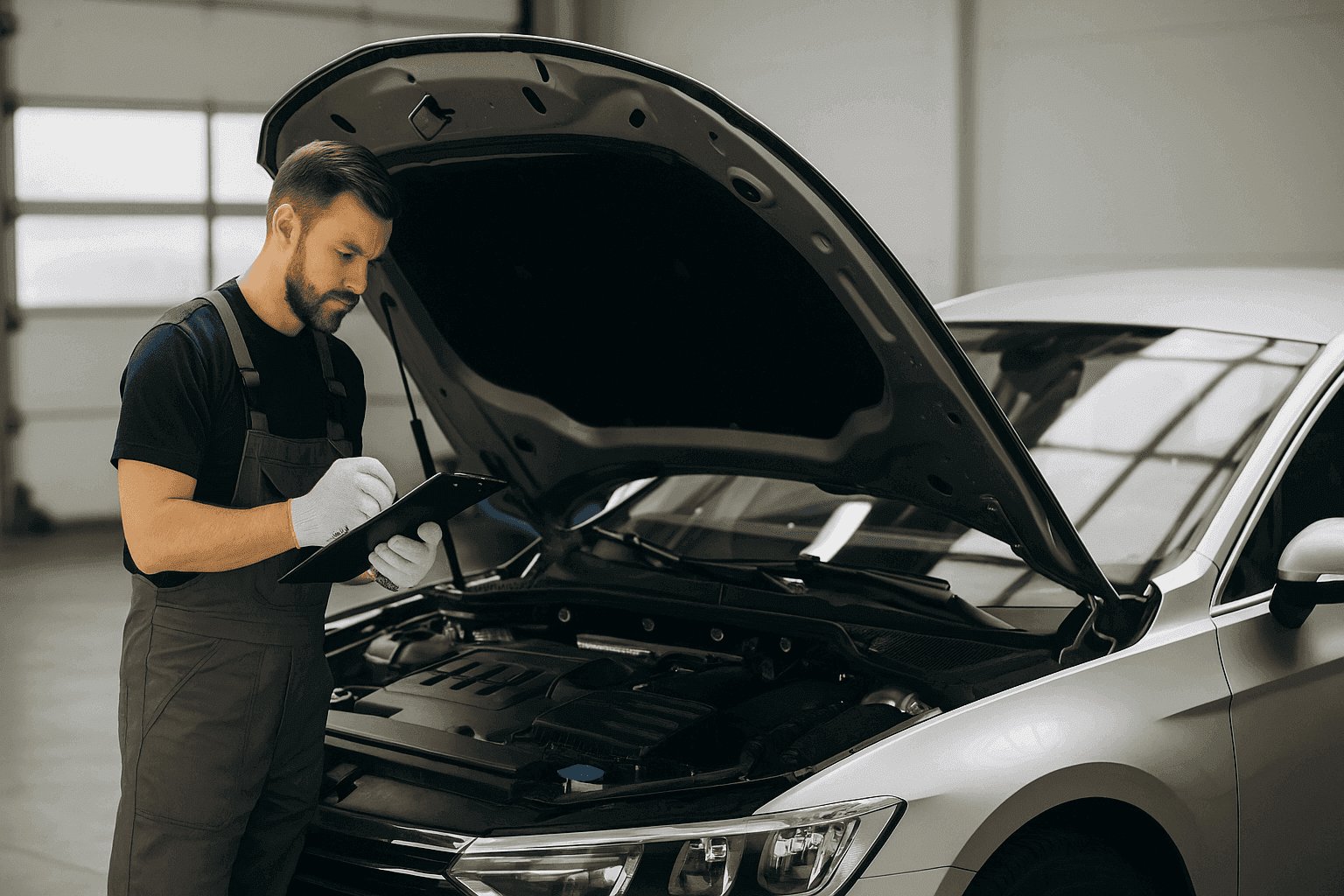
General visual inspection: exterior, interior, obvious mechanical issues.
Estimate reconditioning costs.
Record the car in an internal system or physical checklist.
2. Mechanical and safety repairs
Brakes, suspension, tyres, engine, exhaust.
Change filters, oils, basic checks.
Check manufacturer recalls.
Correct faults that affect the vehicle's reliability.
3. Exterior and interior reconditioning
Exterior: polishing, scratch removal, paintwork, wheels.
Interior: deep cleaning, upholstery repair, inspection of electrical systems.
Final detailing: cleaning and professional presentation.
4. Final quality control and test drive
Test drive.
Check electronic and safety systems.
Final visual inspection.
Record the process.
Ready to photograph, advertise and sell.
Practical checklist for used car dealerships
Receiving: documentation, history, mileage
Exterior: bodywork, paint, glass, tyres, wheels
Interior: upholstery, dashboard, electrics, air conditioning, cleaning
Mechanical: brakes, suspension, steering, battery
Engine/transmission: oil, belts, leaks
Electronics/safety: sensors, airbags, lights
Detailing: full cleaning
Test drive: driving, noises
Final check: everything reviewed, work documented, price set
How to implement this process efficiently in your dealership
Assign roles and responsibilities
Having clear owners for each stage avoids bottlenecks and ensures traceability.
Manage time and costs
Define a target "time to line". Ideally: have a car ready in 3-5 days. Track cost versus margin.
Digitalisation and tracking
Even if you are independent, digitising processes improves control. With spreadsheets or simple systems you can see timings and improve.
Prioritise suitable vehicles
Not all cars deserve the same investment. Assess demand, margin and turnover.
Benefits for your used car dealership
Higher quality → more trust and fewer complaints
Faster turnover → lower costs from stock sitting idle
Professional image → strong local reputation
More margin → greater profitability
Differentiation → you stand out from other sellers
Common mistakes you should avoid
Not thoroughly inspecting the car
Lack of process standardisation
Not controlling timings
Investing too much in low-demand cars
Not telling the customer what has been done
How to communicate the value of reconditioning to the customer
You can inform the customer simply: "This vehicle has passed our full inspection and has been reconditioned for delivery". You can also show before-and-after photos, or a basic list of the work carried out. This builds trust and can speed up the buying decision.
Conclusion
Preparing a car properly before adding it to stock is not an expense, it is an investment. For independent used car dealerships, adopting a clear inspection and reconditioning process is key to gaining agility, quality and margin.
At Dealcar, we are convinced that the details matter: a well-prepared car sells faster, better and with happier customers.
FAQ – Frequently asked questions
How long should reconditioning take?
Ideally, between 3 and 5 days, depending on the vehicle's condition.
What reconditioning cost is reasonable?
It depends on the vehicle, but it should be aligned with the expected profit margin.
Is it worth reconditioning all vehicles in the same way?
Not always. It is better to prioritise according to demand and profitability.
Can I tell the customer what has been done to the car?
Yes, and you should. It improves the perception of quality.
Why is it important to record the whole process?
To improve management, reduce errors and protect your dealership against possible complaints.
In an independent used car dealership, every vehicle that enters stock is an opportunity. But it is also a risk if it is not managed properly. At Dealcar, we know that the difference between a car that sells quickly (and with a good margin) and one that sits for months is down to the inspection and reconditioning carried out before it is shown to the customer. This article explains how to do it well: from the initial inspection to the final details that build trust and loyalty.
Why is it essential to inspect and recondition before adding it to stock?
Improving quality, customer trust and margin
When a vehicle arrives at the dealership, many things may be at stake: wear and tear, incomplete maintenance, possible hidden repairs. A thorough inspection ensures that the car meets your standards, which builds customer trust and reduces later complaints.
Reducing stock holding costs
A car that takes too long to be ready generates "holding cost": it takes up space, capital and may depreciate. The sooner it is ready for sale, the better. Each extra day in reconditioning adds unnecessary costs that erode margin.
Standing out from the competition
In a market saturated with used vehicles, a well-prepared car stands out: better photos, better impressions, fewer objections. That helps the independent dealership position itself professionally and build a reputation.
Stages of the process: from newly acquired car to vehicle ready for sale
1. Receiving and initial inspection
Verify documentation, service history, and actual mileage.
General visual inspection: exterior, interior, obvious mechanical issues.
Estimate reconditioning costs.
Record the car in an internal system or physical checklist.
2. Mechanical and safety repairs
Brakes, suspension, tyres, engine, exhaust.
Change filters, oils, basic checks.
Check manufacturer recalls.
Correct faults that affect the vehicle's reliability.
3. Exterior and interior reconditioning
Exterior: polishing, scratch removal, paintwork, wheels.
Interior: deep cleaning, upholstery repair, inspection of electrical systems.
Final detailing: cleaning and professional presentation.
4. Final quality control and test drive
Test drive.
Check electronic and safety systems.
Final visual inspection.
Record the process.
Ready to photograph, advertise and sell.
Practical checklist for used car dealerships
Receiving: documentation, history, mileage
Exterior: bodywork, paint, glass, tyres, wheels
Interior: upholstery, dashboard, electrics, air conditioning, cleaning
Mechanical: brakes, suspension, steering, battery
Engine/transmission: oil, belts, leaks
Electronics/safety: sensors, airbags, lights
Detailing: full cleaning
Test drive: driving, noises
Final check: everything reviewed, work documented, price set
How to implement this process efficiently in your dealership
Assign roles and responsibilities
Having clear owners for each stage avoids bottlenecks and ensures traceability.
Manage time and costs
Define a target "time to line". Ideally: have a car ready in 3-5 days. Track cost versus margin.
Digitalisation and tracking
Even if you are independent, digitising processes improves control. With spreadsheets or simple systems you can see timings and improve.
Prioritise suitable vehicles
Not all cars deserve the same investment. Assess demand, margin and turnover.
Benefits for your used car dealership
Higher quality → more trust and fewer complaints
Faster turnover → lower costs from stock sitting idle
Professional image → strong local reputation
More margin → greater profitability
Differentiation → you stand out from other sellers
Common mistakes you should avoid
Not thoroughly inspecting the car
Lack of process standardisation
Not controlling timings
Investing too much in low-demand cars
Not telling the customer what has been done
How to communicate the value of reconditioning to the customer
You can inform the customer simply: "This vehicle has passed our full inspection and has been reconditioned for delivery". You can also show before-and-after photos, or a basic list of the work carried out. This builds trust and can speed up the buying decision.
Conclusion
Preparing a car properly before adding it to stock is not an expense, it is an investment. For independent used car dealerships, adopting a clear inspection and reconditioning process is key to gaining agility, quality and margin.
At Dealcar, we are convinced that the details matter: a well-prepared car sells faster, better and with happier customers.
FAQ – Frequently asked questions
How long should reconditioning take?
Ideally, between 3 and 5 days, depending on the vehicle's condition.
What reconditioning cost is reasonable?
It depends on the vehicle, but it should be aligned with the expected profit margin.
Is it worth reconditioning all vehicles in the same way?
Not always. It is better to prioritise according to demand and profitability.
Can I tell the customer what has been done to the car?
Yes, and you should. It improves the perception of quality.
Why is it important to record the whole process?
To improve management, reduce errors and protect your dealership against possible complaints.