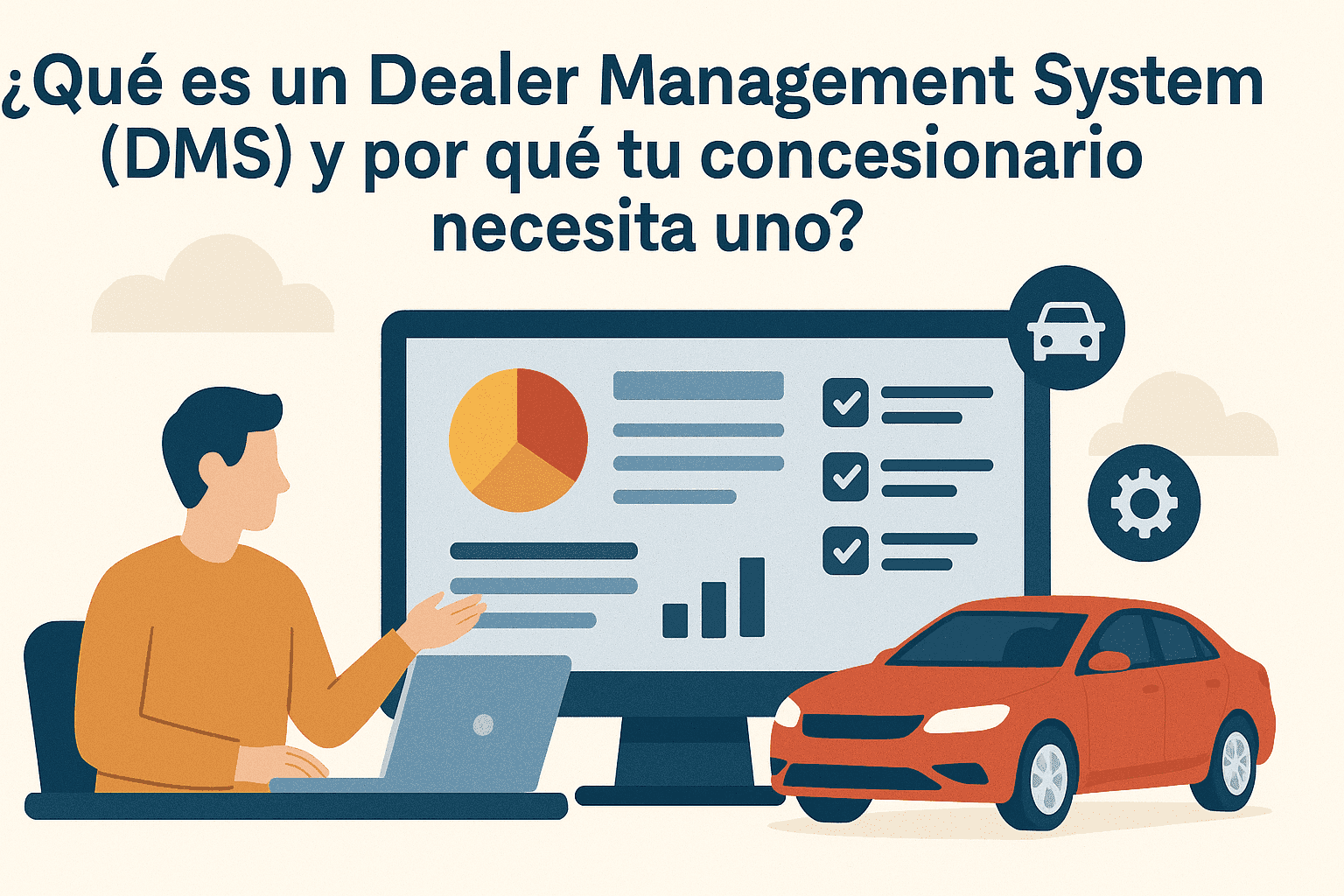
Digitalisation has stopped being an option and has become a necessity in the automotive sector. More and more car dealerships, both new and used, are adopting technological tools to optimise their day-to-day management. One of the most important is the Dealer Management System or DMS. But what exactly is a DMS, and why should you consider implementing it in your dealership?
What is a Dealer Management System (DMS)?
A Dealer Management System (DMS) is a comprehensive digital platform that allows all the operational areas of a dealership to be managed from one place. From inventory control, customer management, sales and aftersales, to accounting and administrative aspects, a DMS centralises and automates the business's key processes.
What types of dealerships use it?
Although it was initially popular among large official dealership networks, today independent dealerships, used vehicle dealerships and multi-brand workshops are also adopting DMS to gain efficiency and professionalise their management.
Main functions of a DMS
Inventory management
It allows each vehicle in stock to be recorded, categorised and tracked, from purchase to sale. You can know in real time how many cars you have, their condition, associated costs and expected profitability.
CRM and customer tracking
A good DMS includes features for lead capture, qualification and follow-up. This makes it possible not to miss sales opportunities and to maintain a proactive relationship with customers.
Financial control and accounting
From invoices to salesperson commissions, a DMS helps automate day-to-day accounting, control expenses and obtain detailed reports on profits, losses and cash flow.
Integration with portals and digital tools
Modern DMS systems connect with platforms such as classified ad portals, valuation tools, finance or warranty providers, avoiding repetitive tasks and ensuring consistency in the published information.
Benefits of using a DMS in your dealership
Time savings and fewer errors
Automating processes means fewer manual tasks, fewer human errors and more time to focus on selling.
Improved team productivity
Having all the information centralised and accessible allows each team member to work faster and in a coordinated way.
More sales and a better customer experience
With a DMS you can respond more quickly to your customers, offer them better options, follow up automatically and close sales more efficiently.
Traditional or digital management? A real comparison
What you lose if you keep using Excel and paper
Risk of errors in prices or stock
Lost opportunities due to a lack of follow-up
Inaccurate or non-existent reports
Time wasted on repetitive tasks
What a DMS automates effortlessly
Vehicle intake and removal
Lead tracking
Generation of invoices and contracts
Profitability reports by car or by salesperson
How do you choose the right DMS?
Key factors to assess
That it is easy to use and adaptable to your business
That it integrates with your current tools
That it has reliable technical support
That it is geared towards dealerships like yours
What does Dealcar offer as a specialised platform?
Dealcar is more than a DMS. It is a platform designed especially for used vehicle dealerships. It integrates inventory, CRM, listings, valuations and much more, all from a simple interface that is constantly evolving. It also provides local support and updates tailored to the Spanish market.
Conclusion
If your dealership is still managed using spreadsheets or generic software, you are probably losing time, money and opportunities. A modern DMS such as Dealcar allows you to automate processes, improve operational efficiency and, above all, sell more with less effort. The digital transformation is already under way: don't get left behind.
Frequently asked questions (FAQs)
What does DMS mean in the automotive sector?
DMS stands for Dealer Management System, a software solution that allows all the operations of a dealership to be managed from a single platform.
What benefits does a DMS bring to a dealership?
Time savings, full inventory control, customer tracking, automatic reports and greater efficiency overall.
How much does a DMS cost and is it worth it?
It depends on the provider, but in most cases it pays for itself quickly thanks to improved sales and productivity.
How do I start using a DMS like Dealcar?
You can contact Dealcar directly for a free demo and see how it adapts to your dealership's needs.
Digitalisation has stopped being an option and has become a necessity in the automotive sector. More and more car dealerships, both new and used, are adopting technological tools to optimise their day-to-day management. One of the most important is the Dealer Management System or DMS. But what exactly is a DMS, and why should you consider implementing it in your dealership?
What is a Dealer Management System (DMS)?
A Dealer Management System (DMS) is a comprehensive digital platform that allows all the operational areas of a dealership to be managed from one place. From inventory control, customer management, sales and aftersales, to accounting and administrative aspects, a DMS centralises and automates the business's key processes.
What types of dealerships use it?
Although it was initially popular among large official dealership networks, today independent dealerships, used vehicle dealerships and multi-brand workshops are also adopting DMS to gain efficiency and professionalise their management.
Main functions of a DMS
Inventory management
It allows each vehicle in stock to be recorded, categorised and tracked, from purchase to sale. You can know in real time how many cars you have, their condition, associated costs and expected profitability.
CRM and customer tracking
A good DMS includes features for lead capture, qualification and follow-up. This makes it possible not to miss sales opportunities and to maintain a proactive relationship with customers.
Financial control and accounting
From invoices to salesperson commissions, a DMS helps automate day-to-day accounting, control expenses and obtain detailed reports on profits, losses and cash flow.
Integration with portals and digital tools
Modern DMS systems connect with platforms such as classified ad portals, valuation tools, finance or warranty providers, avoiding repetitive tasks and ensuring consistency in the published information.
Benefits of using a DMS in your dealership
Time savings and fewer errors
Automating processes means fewer manual tasks, fewer human errors and more time to focus on selling.
Improved team productivity
Having all the information centralised and accessible allows each team member to work faster and in a coordinated way.
More sales and a better customer experience
With a DMS you can respond more quickly to your customers, offer them better options, follow up automatically and close sales more efficiently.
Traditional or digital management? A real comparison
What you lose if you keep using Excel and paper
Risk of errors in prices or stock
Lost opportunities due to a lack of follow-up
Inaccurate or non-existent reports
Time wasted on repetitive tasks
What a DMS automates effortlessly
Vehicle intake and removal
Lead tracking
Generation of invoices and contracts
Profitability reports by car or by salesperson
How do you choose the right DMS?
Key factors to assess
That it is easy to use and adaptable to your business
That it integrates with your current tools
That it has reliable technical support
That it is geared towards dealerships like yours
What does Dealcar offer as a specialised platform?
Dealcar is more than a DMS. It is a platform designed especially for used vehicle dealerships. It integrates inventory, CRM, listings, valuations and much more, all from a simple interface that is constantly evolving. It also provides local support and updates tailored to the Spanish market.
Conclusion
If your dealership is still managed using spreadsheets or generic software, you are probably losing time, money and opportunities. A modern DMS such as Dealcar allows you to automate processes, improve operational efficiency and, above all, sell more with less effort. The digital transformation is already under way: don't get left behind.
Frequently asked questions (FAQs)
What does DMS mean in the automotive sector?
DMS stands for Dealer Management System, a software solution that allows all the operations of a dealership to be managed from a single platform.
What benefits does a DMS bring to a dealership?
Time savings, full inventory control, customer tracking, automatic reports and greater efficiency overall.
How much does a DMS cost and is it worth it?
It depends on the provider, but in most cases it pays for itself quickly thanks to improved sales and productivity.
How do I start using a DMS like Dealcar?
You can contact Dealcar directly for a free demo and see how it adapts to your dealership's needs.