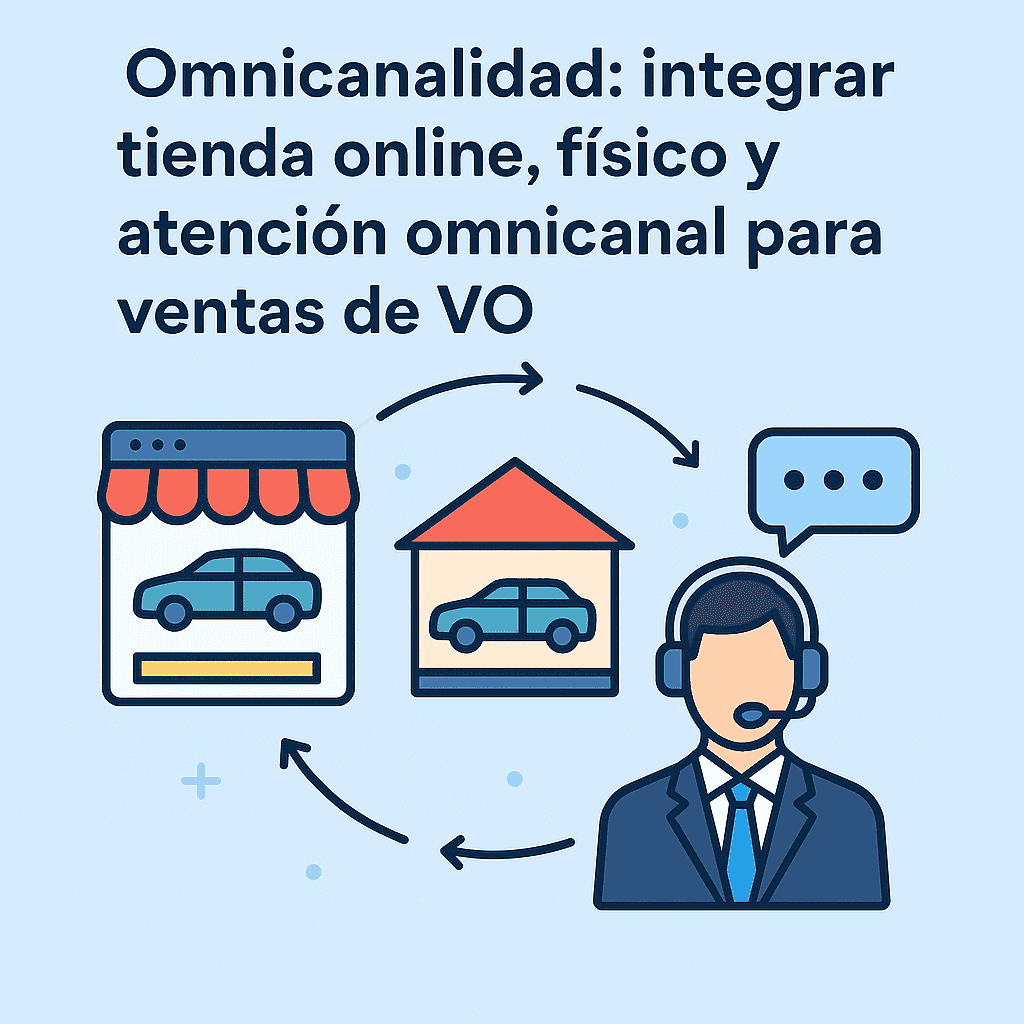
Used vehicle (VO) buyers no longer follow a single path. They research online, ask on WhatsApp, look at your social media and, if everything fits, they come to your showroom. Integrating these channels is not just an operational improvement, it is a key strategy for closing more sales. In this article we explain how to apply omnichannel retailing in your dealership to offer a unified, professional and highly effective experience.
What is omnichannel retailing and why does it matter for a dealership?
Omnichannel retailing means connecting all communication and sales channels so that the customer has a smooth and consistent experience, regardless of the touchpoint.
Key differences:
Multichannel: you have several channels (website, social media, physical showroom), but they are not connected and do not share information.
Omnichannel: the channels are integrated. What happens in one is reflected in the others, creating a seamless experience.
In the context of a dealership:
The customer can see a car on your website, make an enquiry via WhatsApp and then visit you without having to repeat the information.
Your sales team already knows their interest, preferences, questions and even browsing history or previous interactions.
This improves the experience, speeds up the buying process, reduces friction and generates more trust and sales closures.
Benefits of an omnichannel strategy for selling used cars
Increases conversion: Customers who receive a consistent experience are more likely to buy. If they feel you know them from the first contact, they trust you more.
Improves loyalty: A satisfied customer remembers seamless service. In addition, they are more likely to recommend your dealership and return in the future.
Centralises customer data: You can record the full journey of a lead: from the moment they arrived on your website, the cars they viewed, the questions they asked, all the way to the final outcome.
Streamlines internal processes: Your team does not repeat tasks or waste time with isolated data. Everyone has access to the same information in real time.
Greater control and measurement: You can see which channel converts best, which messages work, and which model attracts the most interest depending on the medium used.
How to integrate the key channels in your dealership
Website and online store
Your website should be the central hub of the digital experience. Today, more than 80% of used car buyers research online before going to the dealership.
It should include:
An up-to-date vehicle catalogue synchronised with your DMS or management software.
Full listings with photos, videos, technical details, finance, warranty and the option to reserve.
Visible forms, live chat and buttons to contact via WhatsApp or phone.
Integration with a CRM or lead platform so that every enquiry is recorded.
With Dealcar, you can have a website that meets all these requirements from day one, without any technical knowledge.
Connected physical showroom
The offline experience should continue the digital one, not start from scratch. When a lead arrives at the showroom:
The sales advisor should already have access to their details, cars viewed and previous enquiries.
They can be offered exactly the car that interested them online or similar suggestions.
If they asked for information online and did not buy, the conversation can be resumed with specific arguments.
This makes the service more professional, removes friction and conveys a high level of service.
WhatsApp and social media
These are the most immediate and personal channels. Many customers prefer to message rather than call.
How to integrate them:
Use a single number managed from a shared dashboard (for example, WhatsApp Business API).
Automate basic replies, but keep human support when needed.
Link your cars directly from WhatsApp with clickable catalogues.
Save all conversations in your CRM or in the Dealcar platform so you can follow up from any channel.
Email and SMS marketing
Although these are more traditional channels, they remain very effective for closing sales and building loyalty.
Key uses:
Automated emails after a visit or enquiry.
Appointment, service or MOT reminders.
Personalised offers based on the model enquired about or the stage of the funnel.
SMS with flash promotions or availability confirmations.
A well-segmented email strategy can greatly improve the conversion rate.
How to measure whether your omnichannel strategy works
An omnichannel strategy needs to be monitored to know whether it is generating results. These are the key metrics:
Contact sources
Which channel brings in more leads? Website, WhatsApp, social media, calls...
Which campaigns or posts generate the most engagement?
Conversion rate by channel
How many leads end up buying?
Which channel generates the best closing rates?
Response time and quality of service
How long does it take from the moment a user gets in touch until they receive a response?
How does the customer rate the service received? (reviews, NPS, etc.)
ROI by channel
Where do you invest most time and money? Which channel delivers the most real value?
With platforms like Dealcar, you can view this data in real time and make decisions based on concrete metrics.
Conclusion
Omnichannel retailing is no longer optional. Dealerships that apply it are improving their results, offering a more professional service and standing out from the competition.
By integrating your website, online support, physical showroom and messaging channels, you build a modern, convenient and consistent buying experience. This not only helps you sell more, but also build loyalty and differentiate yourself.
Dealcar allows you to apply this strategy without complications: integrating your website, CRM, leads, campaigns and communication from one place. That way you can focus on what matters: selling more and serving better.
Frequently asked questions
What is the difference between multichannel and omnichannel?
Multichannel means offering several customer service channels, but without connection between them. Omnichannel means integrating all those channels so the customer has a consistent and continuous experience.
Is it possible to sell a car 100% online?
Yes, and more and more customers prefer it. You can show the car, offer finance, sign digitally and deliver to the customer's home. You only need a well-prepared website and well-defined processes.
Which customer service channel is the most effective today?
It depends on the customer profile, but WhatsApp and a website with live chat usually lead the way. The important thing is to respond quickly, follow up and keep consistency between channels.
How do I connect WhatsApp with my stock?
Dealcar lets you integrate your stock so you can send vehicle listings via WhatsApp, with images, descriptions and contact buttons. It also saves conversations for follow-up.
Start turning more leads into sales today by integrating all your channels with an omnichannel strategy designed for modern, customer-focused dealerships.
Used vehicle (VO) buyers no longer follow a single path. They research online, ask on WhatsApp, look at your social media and, if everything fits, they come to your showroom. Integrating these channels is not just an operational improvement, it is a key strategy for closing more sales. In this article we explain how to apply omnichannel retailing in your dealership to offer a unified, professional and highly effective experience.
What is omnichannel retailing and why does it matter for a dealership?
Omnichannel retailing means connecting all communication and sales channels so that the customer has a smooth and consistent experience, regardless of the touchpoint.
Key differences:
Multichannel: you have several channels (website, social media, physical showroom), but they are not connected and do not share information.
Omnichannel: the channels are integrated. What happens in one is reflected in the others, creating a seamless experience.
In the context of a dealership:
The customer can see a car on your website, make an enquiry via WhatsApp and then visit you without having to repeat the information.
Your sales team already knows their interest, preferences, questions and even browsing history or previous interactions.
This improves the experience, speeds up the buying process, reduces friction and generates more trust and sales closures.
Benefits of an omnichannel strategy for selling used cars
Increases conversion: Customers who receive a consistent experience are more likely to buy. If they feel you know them from the first contact, they trust you more.
Improves loyalty: A satisfied customer remembers seamless service. In addition, they are more likely to recommend your dealership and return in the future.
Centralises customer data: You can record the full journey of a lead: from the moment they arrived on your website, the cars they viewed, the questions they asked, all the way to the final outcome.
Streamlines internal processes: Your team does not repeat tasks or waste time with isolated data. Everyone has access to the same information in real time.
Greater control and measurement: You can see which channel converts best, which messages work, and which model attracts the most interest depending on the medium used.
How to integrate the key channels in your dealership
Website and online store
Your website should be the central hub of the digital experience. Today, more than 80% of used car buyers research online before going to the dealership.
It should include:
An up-to-date vehicle catalogue synchronised with your DMS or management software.
Full listings with photos, videos, technical details, finance, warranty and the option to reserve.
Visible forms, live chat and buttons to contact via WhatsApp or phone.
Integration with a CRM or lead platform so that every enquiry is recorded.
With Dealcar, you can have a website that meets all these requirements from day one, without any technical knowledge.
Connected physical showroom
The offline experience should continue the digital one, not start from scratch. When a lead arrives at the showroom:
The sales advisor should already have access to their details, cars viewed and previous enquiries.
They can be offered exactly the car that interested them online or similar suggestions.
If they asked for information online and did not buy, the conversation can be resumed with specific arguments.
This makes the service more professional, removes friction and conveys a high level of service.
WhatsApp and social media
These are the most immediate and personal channels. Many customers prefer to message rather than call.
How to integrate them:
Use a single number managed from a shared dashboard (for example, WhatsApp Business API).
Automate basic replies, but keep human support when needed.
Link your cars directly from WhatsApp with clickable catalogues.
Save all conversations in your CRM or in the Dealcar platform so you can follow up from any channel.
Email and SMS marketing
Although these are more traditional channels, they remain very effective for closing sales and building loyalty.
Key uses:
Automated emails after a visit or enquiry.
Appointment, service or MOT reminders.
Personalised offers based on the model enquired about or the stage of the funnel.
SMS with flash promotions or availability confirmations.
A well-segmented email strategy can greatly improve the conversion rate.
How to measure whether your omnichannel strategy works
An omnichannel strategy needs to be monitored to know whether it is generating results. These are the key metrics:
Contact sources
Which channel brings in more leads? Website, WhatsApp, social media, calls...
Which campaigns or posts generate the most engagement?
Conversion rate by channel
How many leads end up buying?
Which channel generates the best closing rates?
Response time and quality of service
How long does it take from the moment a user gets in touch until they receive a response?
How does the customer rate the service received? (reviews, NPS, etc.)
ROI by channel
Where do you invest most time and money? Which channel delivers the most real value?
With platforms like Dealcar, you can view this data in real time and make decisions based on concrete metrics.
Conclusion
Omnichannel retailing is no longer optional. Dealerships that apply it are improving their results, offering a more professional service and standing out from the competition.
By integrating your website, online support, physical showroom and messaging channels, you build a modern, convenient and consistent buying experience. This not only helps you sell more, but also build loyalty and differentiate yourself.
Dealcar allows you to apply this strategy without complications: integrating your website, CRM, leads, campaigns and communication from one place. That way you can focus on what matters: selling more and serving better.
Frequently asked questions
What is the difference between multichannel and omnichannel?
Multichannel means offering several customer service channels, but without connection between them. Omnichannel means integrating all those channels so the customer has a consistent and continuous experience.
Is it possible to sell a car 100% online?
Yes, and more and more customers prefer it. You can show the car, offer finance, sign digitally and deliver to the customer's home. You only need a well-prepared website and well-defined processes.
Which customer service channel is the most effective today?
It depends on the customer profile, but WhatsApp and a website with live chat usually lead the way. The important thing is to respond quickly, follow up and keep consistency between channels.
How do I connect WhatsApp with my stock?
Dealcar lets you integrate your stock so you can send vehicle listings via WhatsApp, with images, descriptions and contact buttons. It also saves conversations for follow-up.
Start turning more leads into sales today by integrating all your channels with an omnichannel strategy designed for modern, customer-focused dealerships.