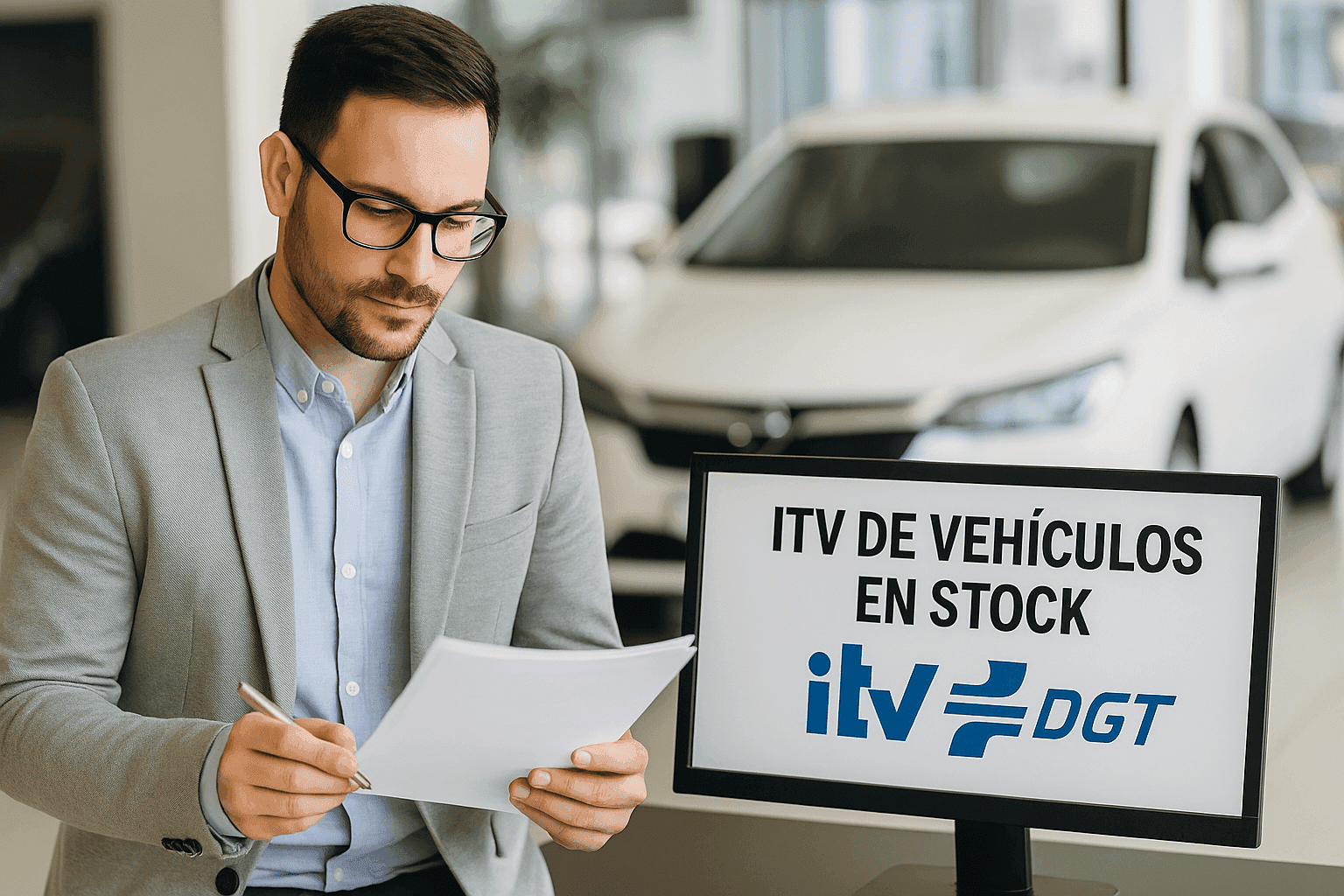
The ITV (Vehicle Inspection) is one of the most critical tasks in the day-to-day operations of a second-hand car dealership. From the moment you receive a vehicle until it is sold, keeping control of its legal status is essential to avoid penalties, delivery delays and missed sales opportunities. In this article, we review what the regulations say and share practical recommendations so you can manage your stock quickly and safely.
Is it mandatory to keep the ITV up to date on stock cars?
What the current regulations say (Spain)
According to the legislation in force in Spain, any registered vehicle that is on the public road or in a condition to be driven must have a valid ITV. There is no general exception for dealerships, which means:
If the vehicle is parked on the street or in spaces open to traffic, it must have a valid ITV and insurance.
If it is in a closed private enclosure, such as a garage, storage compound or indoor showroom, it is not required to have a current ITV, although that limits its operational use.
In addition, cars with an expired ITV cannot be used for test drives, transfers or deliveries, except with special authorisation to go to an ITV station.
Common cases in dealerships
Vehicles that arrive after a collection or part-exchange with an expired ITV.
Cars awaiting refurbishment, with no possibility of being driven.
Stock that has been on display for some time and whose ITV is about to expire or has already expired.
Imported vehicles, which require a national ITV before they can be registered.
In all these cases, having a clear internal protocol avoids surprises or unnecessary delays.
Can you sell a car with an expired ITV?
Differences between selling to a trade buyer and to a private individual
Selling to another motor trade professional: it is legal to sell a car with an expired ITV to a dealer or dealership. These types of transactions are excluded from the DGT restrictions on transfer of ownership.
Selling to a private individual: the transfer cannot be completed at the Traffic Department if the ITV is expired. The system does not allow the change of keeper unless it is stated that the car is intended for "temporary deregistration due to transfer", which complicates the process and delays the sale.
Recommendations to avoid problems
Check the ITV status as soon as each car arrives at the dealership.
If a car is approaching its ITV expiry date, book the appointment in advance.
For urgent sales, do not wait until the deal is closed to carry out the inspection.
Inform the customer clearly and leave the vehicle's status in writing at the time of delivery.
When is the right time to get the ITV done on a stock car?
Strategies based on days in stock
Less than 30 days in stock: if the car's ITV is in order, no action is needed. If it has expired but a quick sale is expected, it can be postponed, but it is advisable to book the appointment.
Between 30 and 90 days: within this window, it is worth checking the expiry date. If there are less than 2 months left, it is better to act early and get the ITV done so as not to lose a potential sale.
More than 90 days: if the vehicle still has no ITV or it has expired, getting it done becomes essential to keep it roadworthy and ready for delivery.
Special cases: import, temporary deregistration, pre-checks
Import: a car brought in from abroad cannot be registered without first passing the relevant ITV in Spain. In addition, it must have the appropriate technical documentation (COC or reduced data sheet).
Temporary deregistration: to reactivate a car that has been deregistered, it is mandatory for the ITV to be valid. This applies to vehicles awaiting repair, sale or documentary regularisation.
Questionable history or repaired faults: getting the ITV done before putting the car up for sale can increase customer confidence and help achieve a better sale price. Especially useful for vehicles with repaired accident damage or a long workshop history.
Practical tips for managing the ITV at the dealership
Digital record-keeping and follow-up
One of the best practices is to keep a digital record of all the stock's ITV dates. This can be done with:
A CRM for dealerships.
A shared Excel sheet between the sales and administration teams.
Document management apps with automated alerts.
This makes it possible to plan ahead, schedule appointments and avoid oversights that block a sale or lead to a penalty.
Agreements with nearby ITV stations
Many dealerships establish cooperation agreements with local ITV stations. This makes it possible to:
Get priority access or preferred appointments.
Reduced rates for fleets or businesses.
The possibility of coordinating inspections in batches, optimising time and resources.
Having a direct contact with a trusted station also makes follow-up easier in the event of failed inspections or minor defects that need to be corrected.
Saving time and journeys
Group several vehicles by area or by expiry date.
Use transport companies or specialist external services for transfers.
Prepare the car with an internal pre-ITV check (lights, tyres, brakes), avoiding rejections for minor faults.
What happens if a car without an ITV is parked or on display?
Possible fines and how to avoid them
A car without a valid ITV can still be fined even if it is not being driven, as long as it is on the public road:
Expired ITV: fine of up to €200.
No insurance: fine of up to €1,500 if it also does not have the minimum cover.
The best way to avoid this is to make sure that all cars without an ITV are kept in enclosed premises, with no public access.
Insurance and civil liability
Even if a car is parked, it can cause damage (for example, if it catches fire or damages another vehicle). If it has neither ITV nor insurance, the dealership may be held responsible, and the insurance will not cover the damage. That is why it is essential that any car on public display meets the legal requirements.
At Dealcar, we help you manage the ITV and more
At Dealcar, we know time is money in a dealership. That is why we offer solutions to:
Monitor the ITV status of all your vehicles.
Organise the inspection schedule proactively.
Manage documents, renewals and expiry dates.
Avoid delivery delays caused by administrative issues.
Our team is ready to take care of the whole process, so you can focus on what matters: selling.
Frequently asked questions (FAQs)
Can I deliver a car with an expired ITV if the customer accepts it?
No. Even if there is a verbal agreement, the DGT will not allow the car to be transferred to a private individual without a valid ITV.
Does an expired ITV affect the car's value?
Yes, especially if it is discovered when the sale is being completed. The buyer may ask for a discount or walk away. Getting the ITV done can increase confidence and justify the price.
Can a car be transferred without an ITV and then have it done later?
Only if a "temporary deregistration due to transfer" is carried out, which is not advisable for private sales because of its complexity and limitations.
Is there any specific type of ITV for used cars in dealerships?
No. The ITV is the same for all vehicles according to their type, age and technical characteristics. However, dealerships can prepare the vehicle in advance to ensure it passes without issues.
The ITV (Vehicle Inspection) is one of the most critical tasks in the day-to-day operations of a second-hand car dealership. From the moment you receive a vehicle until it is sold, keeping control of its legal status is essential to avoid penalties, delivery delays and missed sales opportunities. In this article, we review what the regulations say and share practical recommendations so you can manage your stock quickly and safely.
Is it mandatory to keep the ITV up to date on stock cars?
What the current regulations say (Spain)
According to the legislation in force in Spain, any registered vehicle that is on the public road or in a condition to be driven must have a valid ITV. There is no general exception for dealerships, which means:
If the vehicle is parked on the street or in spaces open to traffic, it must have a valid ITV and insurance.
If it is in a closed private enclosure, such as a garage, storage compound or indoor showroom, it is not required to have a current ITV, although that limits its operational use.
In addition, cars with an expired ITV cannot be used for test drives, transfers or deliveries, except with special authorisation to go to an ITV station.
Common cases in dealerships
Vehicles that arrive after a collection or part-exchange with an expired ITV.
Cars awaiting refurbishment, with no possibility of being driven.
Stock that has been on display for some time and whose ITV is about to expire or has already expired.
Imported vehicles, which require a national ITV before they can be registered.
In all these cases, having a clear internal protocol avoids surprises or unnecessary delays.
Can you sell a car with an expired ITV?
Differences between selling to a trade buyer and to a private individual
Selling to another motor trade professional: it is legal to sell a car with an expired ITV to a dealer or dealership. These types of transactions are excluded from the DGT restrictions on transfer of ownership.
Selling to a private individual: the transfer cannot be completed at the Traffic Department if the ITV is expired. The system does not allow the change of keeper unless it is stated that the car is intended for "temporary deregistration due to transfer", which complicates the process and delays the sale.
Recommendations to avoid problems
Check the ITV status as soon as each car arrives at the dealership.
If a car is approaching its ITV expiry date, book the appointment in advance.
For urgent sales, do not wait until the deal is closed to carry out the inspection.
Inform the customer clearly and leave the vehicle's status in writing at the time of delivery.
When is the right time to get the ITV done on a stock car?
Strategies based on days in stock
Less than 30 days in stock: if the car's ITV is in order, no action is needed. If it has expired but a quick sale is expected, it can be postponed, but it is advisable to book the appointment.
Between 30 and 90 days: within this window, it is worth checking the expiry date. If there are less than 2 months left, it is better to act early and get the ITV done so as not to lose a potential sale.
More than 90 days: if the vehicle still has no ITV or it has expired, getting it done becomes essential to keep it roadworthy and ready for delivery.
Special cases: import, temporary deregistration, pre-checks
Import: a car brought in from abroad cannot be registered without first passing the relevant ITV in Spain. In addition, it must have the appropriate technical documentation (COC or reduced data sheet).
Temporary deregistration: to reactivate a car that has been deregistered, it is mandatory for the ITV to be valid. This applies to vehicles awaiting repair, sale or documentary regularisation.
Questionable history or repaired faults: getting the ITV done before putting the car up for sale can increase customer confidence and help achieve a better sale price. Especially useful for vehicles with repaired accident damage or a long workshop history.
Practical tips for managing the ITV at the dealership
Digital record-keeping and follow-up
One of the best practices is to keep a digital record of all the stock's ITV dates. This can be done with:
A CRM for dealerships.
A shared Excel sheet between the sales and administration teams.
Document management apps with automated alerts.
This makes it possible to plan ahead, schedule appointments and avoid oversights that block a sale or lead to a penalty.
Agreements with nearby ITV stations
Many dealerships establish cooperation agreements with local ITV stations. This makes it possible to:
Get priority access or preferred appointments.
Reduced rates for fleets or businesses.
The possibility of coordinating inspections in batches, optimising time and resources.
Having a direct contact with a trusted station also makes follow-up easier in the event of failed inspections or minor defects that need to be corrected.
Saving time and journeys
Group several vehicles by area or by expiry date.
Use transport companies or specialist external services for transfers.
Prepare the car with an internal pre-ITV check (lights, tyres, brakes), avoiding rejections for minor faults.
What happens if a car without an ITV is parked or on display?
Possible fines and how to avoid them
A car without a valid ITV can still be fined even if it is not being driven, as long as it is on the public road:
Expired ITV: fine of up to €200.
No insurance: fine of up to €1,500 if it also does not have the minimum cover.
The best way to avoid this is to make sure that all cars without an ITV are kept in enclosed premises, with no public access.
Insurance and civil liability
Even if a car is parked, it can cause damage (for example, if it catches fire or damages another vehicle). If it has neither ITV nor insurance, the dealership may be held responsible, and the insurance will not cover the damage. That is why it is essential that any car on public display meets the legal requirements.
At Dealcar, we help you manage the ITV and more
At Dealcar, we know time is money in a dealership. That is why we offer solutions to:
Monitor the ITV status of all your vehicles.
Organise the inspection schedule proactively.
Manage documents, renewals and expiry dates.
Avoid delivery delays caused by administrative issues.
Our team is ready to take care of the whole process, so you can focus on what matters: selling.
Frequently asked questions (FAQs)
Can I deliver a car with an expired ITV if the customer accepts it?
No. Even if there is a verbal agreement, the DGT will not allow the car to be transferred to a private individual without a valid ITV.
Does an expired ITV affect the car's value?
Yes, especially if it is discovered when the sale is being completed. The buyer may ask for a discount or walk away. Getting the ITV done can increase confidence and justify the price.
Can a car be transferred without an ITV and then have it done later?
Only if a "temporary deregistration due to transfer" is carried out, which is not advisable for private sales because of its complexity and limitations.
Is there any specific type of ITV for used cars in dealerships?
No. The ITV is the same for all vehicles according to their type, age and technical characteristics. However, dealerships can prepare the vehicle in advance to ensure it passes without issues.