Content marketing is not just for big brands. Used car dealerships can harness the power of content to attract, persuade and convert their potential buyers. In this article, we explain how to use valuable content at every stage of the sales funnel and how tools like Dealcar can help you measure and optimise the whole process, even if you are just getting started.
What is the sales funnel and how does it apply in a dealership?
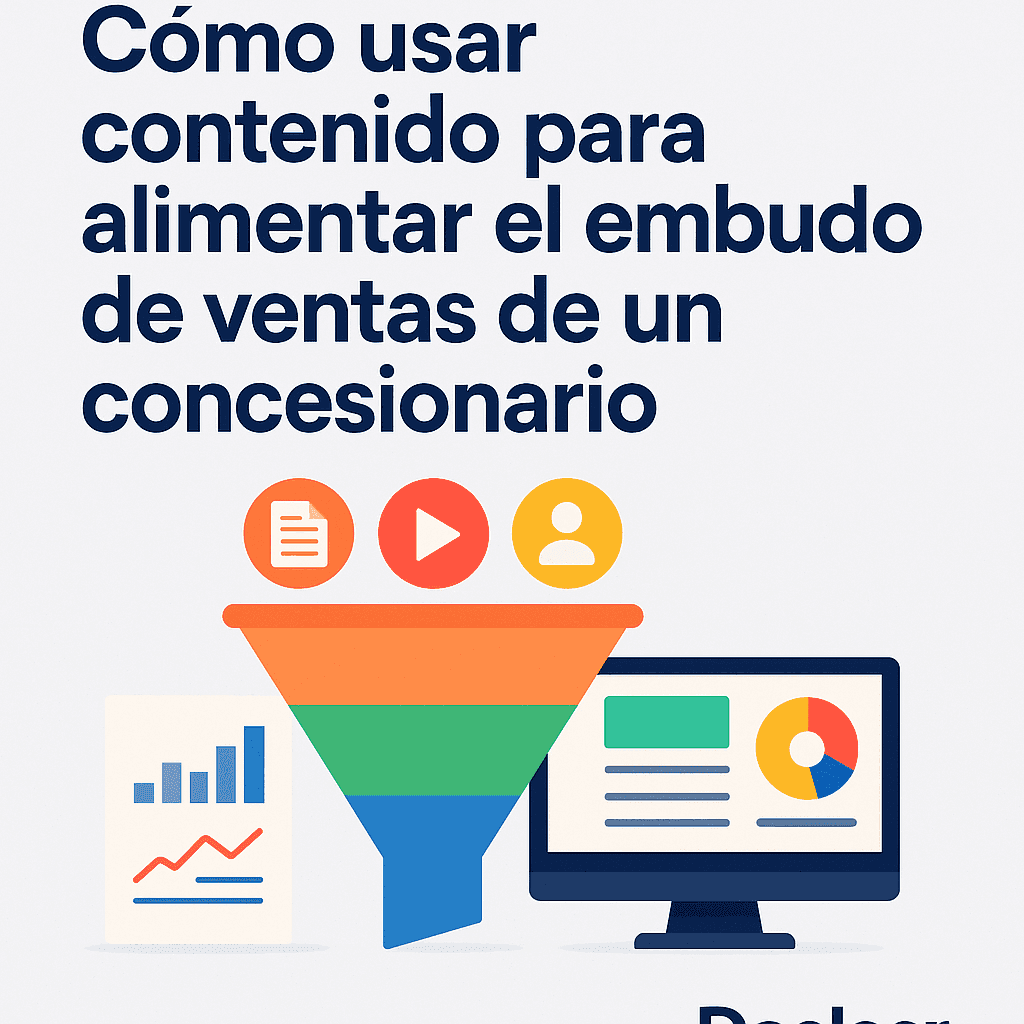
The sales funnel is a model that represents the stages a potential customer goes through from discovering your dealership to making a purchase. It is divided into three main stages:
Attraction: capturing the attention of people who do not yet know your business or have shown any clear intention to buy.
Consideration: educating, informing and building trust so that the user sees your offer as a real option.
Decision: making it easier to convert them into a customer with closing arguments and removing barriers.
Applied example: Someone searches for "used family car" on Google. They land on a blog article of yours (attraction), browse the available models and download a finance guide (consideration), then receive an email with an offer and decide to visit you (decision).
Attraction stage: get discovered
Content that ranks on Google
The best way to attract visits is to create useful, well-optimised content that answers real user questions. Here are some ideas:
"What used car is best for large families?"
"Advantages of buying a second-hand hybrid car"
"Guide to buying a used car in [city name]"
Key actions:
Use long-tail keywords with informational intent.
Structure your text with H2s and lists to make it easier to read.
Add images and link to product pages.
A regularly updated blog not only attracts traffic, but also positions your brand as an expert.
Social media that entertains and informs
Social media helps you gain visibility and build a community of people interested in your cars or your expertise.
Effective content:
Reels showing standout models from stock with key features.
Useful tips: "how to finance your first car", "mistakes when buying a used car".
Behind the scenes: show your team, the handover process, or how you refurbish vehicles.
Posting regularly and replying to messages creates a friendly, trustworthy image.
Consideration stage: turn interest into trust
Complete, well-written product pages
The car listings on your website should be much more than a price and a few photos. They need to answer all the potential buyer’s questions:
High-quality photographs from different angles, including the interior.
Video tours or video test drives to highlight the car’s strengths.
Descriptions that do not just repeat technical data, but explain real benefits for the user.
Reviews and testimonials from other buyers of that model or similar ones.
Frequently asked questions such as: "Has it been checked?", "Is finance available?", "What warranty is included?"
This type of content reduces friction and improves the conversion rate.
Downloadable resources
Offering exclusive content in exchange for an email address is an effective tactic for generating qualified leads.
Examples:
Checklist: "10 things to check before buying a used car"
Mini guide: "How to understand finance options"
Comparison: "Diesel vs petrol vs hybrid in 2025"
Once the lead enters your database, you can keep nurturing them with relevant content.
Decision stage: drive conversion
Personalised emails and follow-up
Once the contact is interested, email marketing lets you move them to the next step with the right content at the right time.
Types of emails:
Reminder of viewed cars: "Are you still interested in this SUV?"
Personalised offers: limited discounts, payment options
Persuasive content: warranties, free trials, customer testimonials
Automation: You can schedule sequences based on behaviour (visits, clicks, downloads) using tools such as those integrated by Dealcar.
Testimonials and success stories
Content generated by other customers acts as social proof. Including it on your website and social media helps reinforce the decision.
Effective formats:
Short videos recorded at the dealership after sale
Screenshots of reviews on Google or social media
Real stories: "Juan needed a car within 10 days and found it here"
These messages should be visible in key areas such as vehicle listings, contact forms and the homepage.
How to measure the impact of content in the funnel
Every piece of content should have a measurable objective. Analyse these indicators to see whether your strategy is delivering results:
Attraction: blog visits, average time per article, new users.
Consideration: clicks on product pages, downloads, social media interactions.
Decision: leads generated, email opens, forms submitted, calls received.
Dealcar offers integrated dashboards where you can view these metrics without needing additional tools. This way you know which content drives more sales and where to adjust your efforts.
Conclusion
Well-made content does not just attract traffic; it accompanies the buyer at every step of the process. Adapting what you publish according to the customer’s stage is key to closing more sales.
With tools like Dealcar you can centralise your website, manage leads, automate emails and see what works in real time. That way, every piece of content you publish feeds your sales funnel in a natural, measurable way.
Frequently asked questions
What type of content attracts the most visits to a dealership?
Articles that answer common questions, videos of available models, educational content about buying, finance or maintenance, and local content that mentions your city.
How can I tell whether my content is working?
You should measure visits, downloads, forms, interactions and associated sales. Tools like Dealcar or Google Analytics let you analyse the entire funnel.
Do I need to have a blog to use content marketing?
It is not essential, but it is highly recommended. A blog generates constant organic visits and positions you as a local authority in your sector.
What is the difference between attracting visits and generating sales?
Attracting visits is the first step. Generating sales means nurturing those users with useful content, trust, follow-up and a clear, persuasive digital experience.
Start transforming your sales funnel today with content that informs, connects and converts! Your dealership has a lot to say, and your future customers are looking for that information.
Content marketing is not just for big brands. Used car dealerships can harness the power of content to attract, persuade and convert their potential buyers. In this article, we explain how to use valuable content at every stage of the sales funnel and how tools like Dealcar can help you measure and optimise the whole process, even if you are just getting started.
What is the sales funnel and how does it apply in a dealership?
The sales funnel is a model that represents the stages a potential customer goes through from discovering your dealership to making a purchase. It is divided into three main stages:
Attraction: capturing the attention of people who do not yet know your business or have shown any clear intention to buy.
Consideration: educating, informing and building trust so that the user sees your offer as a real option.
Decision: making it easier to convert them into a customer with closing arguments and removing barriers.
Applied example: Someone searches for "used family car" on Google. They land on a blog article of yours (attraction), browse the available models and download a finance guide (consideration), then receive an email with an offer and decide to visit you (decision).
Attraction stage: get discovered
Content that ranks on Google
The best way to attract visits is to create useful, well-optimised content that answers real user questions. Here are some ideas:
"What used car is best for large families?"
"Advantages of buying a second-hand hybrid car"
"Guide to buying a used car in [city name]"
Key actions:
Use long-tail keywords with informational intent.
Structure your text with H2s and lists to make it easier to read.
Add images and link to product pages.
A regularly updated blog not only attracts traffic, but also positions your brand as an expert.
Social media that entertains and informs
Social media helps you gain visibility and build a community of people interested in your cars or your expertise.
Effective content:
Reels showing standout models from stock with key features.
Useful tips: "how to finance your first car", "mistakes when buying a used car".
Behind the scenes: show your team, the handover process, or how you refurbish vehicles.
Posting regularly and replying to messages creates a friendly, trustworthy image.
Consideration stage: turn interest into trust
Complete, well-written product pages
The car listings on your website should be much more than a price and a few photos. They need to answer all the potential buyer’s questions:
High-quality photographs from different angles, including the interior.
Video tours or video test drives to highlight the car’s strengths.
Descriptions that do not just repeat technical data, but explain real benefits for the user.
Reviews and testimonials from other buyers of that model or similar ones.
Frequently asked questions such as: "Has it been checked?", "Is finance available?", "What warranty is included?"
This type of content reduces friction and improves the conversion rate.
Downloadable resources
Offering exclusive content in exchange for an email address is an effective tactic for generating qualified leads.
Examples:
Checklist: "10 things to check before buying a used car"
Mini guide: "How to understand finance options"
Comparison: "Diesel vs petrol vs hybrid in 2025"
Once the lead enters your database, you can keep nurturing them with relevant content.
Decision stage: drive conversion
Personalised emails and follow-up
Once the contact is interested, email marketing lets you move them to the next step with the right content at the right time.
Types of emails:
Reminder of viewed cars: "Are you still interested in this SUV?"
Personalised offers: limited discounts, payment options
Persuasive content: warranties, free trials, customer testimonials
Automation: You can schedule sequences based on behaviour (visits, clicks, downloads) using tools such as those integrated by Dealcar.
Testimonials and success stories
Content generated by other customers acts as social proof. Including it on your website and social media helps reinforce the decision.
Effective formats:
Short videos recorded at the dealership after sale
Screenshots of reviews on Google or social media
Real stories: "Juan needed a car within 10 days and found it here"
These messages should be visible in key areas such as vehicle listings, contact forms and the homepage.
How to measure the impact of content in the funnel
Every piece of content should have a measurable objective. Analyse these indicators to see whether your strategy is delivering results:
Attraction: blog visits, average time per article, new users.
Consideration: clicks on product pages, downloads, social media interactions.
Decision: leads generated, email opens, forms submitted, calls received.
Dealcar offers integrated dashboards where you can view these metrics without needing additional tools. This way you know which content drives more sales and where to adjust your efforts.
Conclusion
Well-made content does not just attract traffic; it accompanies the buyer at every step of the process. Adapting what you publish according to the customer’s stage is key to closing more sales.
With tools like Dealcar you can centralise your website, manage leads, automate emails and see what works in real time. That way, every piece of content you publish feeds your sales funnel in a natural, measurable way.
Frequently asked questions
What type of content attracts the most visits to a dealership?
Articles that answer common questions, videos of available models, educational content about buying, finance or maintenance, and local content that mentions your city.
How can I tell whether my content is working?
You should measure visits, downloads, forms, interactions and associated sales. Tools like Dealcar or Google Analytics let you analyse the entire funnel.
Do I need to have a blog to use content marketing?
It is not essential, but it is highly recommended. A blog generates constant organic visits and positions you as a local authority in your sector.
What is the difference between attracting visits and generating sales?
Attracting visits is the first step. Generating sales means nurturing those users with useful content, trust, follow-up and a clear, persuasive digital experience.
Start transforming your sales funnel today with content that informs, connects and converts! Your dealership has a lot to say, and your future customers are looking for that information.