Contents
The options you have for selling your car in Spain
Selling on classifieds portals: Wallapop, Coches.net and Milanuncios
Selling to direct-buy companies: Compramostucoche and similar
Selling directly to a dealership
Selling through a platform with dealership bidding
Comparison table: price, time and effort
Which is the best option depending on your situation
Frequently asked questions
When you decide to sell your car, the first real question is not "how much should I list it for", but where you list it. The channel you choose will determine how much you get, how long it takes and how much effort you put in. And the difference between choosing well or badly can be hundreds, even thousands, of euros.
The Spanish market offers several options with very different models. Some give you convenience in exchange for a lower price. Others give you the best price, but demand time and patience. And a few manage to combine speed and a good price, as long as you understand how they work.
In this article we analyse each one with real data so you can decide where to sell your car at the best price according to what matters most to you: money, speed or peace of mind.
The options you have for selling your car in Spain
The used-car sales market has diversified a lot in recent years. It is no longer just about putting a sign in the windscreen or posting an ad on a portal. Today there are four main channels, each with a different operating model.
Classified ads portals (Wallapop, Cochesnet, Milanuncios, AutoScout24), direct-buy companies such as "we buy your car" (Compramostucoche, Flexicar, Clicars), direct sale to dealerships in your area and platforms that connect your car with multiple dealerships so they can compete for it.
Each channel has its advantages and limitations. The key is to understand what you give up and what you gain in each case.
Selling on classifieds portals: Wallapop, Coches.net and Milanuncios
It's the best-known option and the one most people think of first. You post an ad with photos, a description and a price, and wait for interested buyers to get in touch.
What works well. You have visibility among thousands of potential buyers. You control the asking price and negotiation. If your car is in high demand (popular models, low mileage, good condition), you can get a good price.
What doesn't work so well. The process is slow. The average sale on generalist portals is around 30-60 days, and it can take much longer if the car is not especially appealing. During that time you'll receive calls from tyre-kickers, viewings that never materialise and offers far below what you're asking.
Each portal also has its own profile. Wallapop attracts buyers looking for bargains, which usually translates into aggressive offers and a lot of haggling. If you want to know the process in detail, consult our complete guide to selling your car on Wallapop. Coches.net has a more car-focused audience, but charges to feature ads if you want real visibility. Milanuncios works as a generalist, with a high volume of traffic but also a lot of noise.
The direct cost varies. Posting on Wallapop is free for basic ads, but featured options are paid. On Coches.net, plans for private sellers start at around 20-30 euros. On Milanuncios, the model is similar with freemium options.
The indirect cost is the time invested: managing ads on three portals at once, replying to messages, arranging viewings and negotiating with each interested party.
Selling to direct-buy companies: Compramostucoche and similar
The model is simple: you go to the website, enter your car's details, receive an online valuation and, if you're interested, arrange an appointment for them to inspect the vehicle and give you a final offer.
What works well. It's quick and convenient. In many cases you can complete the deal in under 48 hours. You don't have to post ads, you don't receive calls from strangers and the company handles most of the paperwork.
What doesn't work so well. You receive a single offer, and that offer is calculated so the company has enough margin to resell the car. There is no competition, no bidding, no chance to compare. If you don't like the price, your only option is to turn it down.
In practice, the offers from these companies are usually between 10% and 20% below market value. That's the price of convenience. For mid-range cars valued at around 12,000 euros, that can mean between 1,200 and 2,400 euros less than you could get with other options.
Another point to bear in mind: the online valuation you receive initially is only an estimate. The actual offer comes after the in-person inspection, and in many cases it is lower than the initial estimate. This creates frustration, because the seller arrives at the appointment with expectations that are then not met.
If you're considering this route, it's worth understanding how these companies work and what you need to know before accepting.
Selling directly to a dealership
You can go to any used-car dealership in your area and ask whether they're interested in buying your vehicle. Many dealerships buy cars from private owners regularly, especially if the model has quick stock turnover commercially.
What works well. If you find a dealership that needs exactly your type of car, you can get a competitive price. Dealerships specialising in certain segments (SUVs, premium cars, city cars) tend to pay more than generalists for the models they want.
What doesn't work so well. You would have to visit several dealerships to compare offers, which means travelling and time. Each dealership will do its own valuation, and there is no guarantee that any will match your expectations. If you only visit one or two, you're in the same situation as with direct-buy companies: few reference points and little bargaining power.
The theoretical advantage of this channel (getting a good price from a professional buyer) only materialises when you have several offers on the table. The practical problem is that obtaining those offers manually requires quite a lot of effort.
Selling through a platform with dealership bidding
This model solves the main problem of the previous options: the lack of competition between buyers. Instead of you searching for the buyer, multiple professional buyers compete for your car.
The process is straightforward. You upload your vehicle's details to the platform (make, model, year, mileage, condition, photos) and interested dealerships send you offers. You compare them and decide which to accept. If none of them convinces you, you're under no obligation.
What works well. It combines speed, convenience and a good price. Because there is real competition between buyers, the offers tend to align with market value or even exceed it when several dealerships need the same type of car. You don't post ads, you don't receive calls from tyre-kickers and you don't negotiate with strangers.
What you should bear in mind. The outcome depends on the vehicle. Cars in high demand (popular models, reasonable mileage, good condition) generate more bids and better offers. Cars with more difficult characteristics (very high mileage, no MOT, significant damage) may receive less interest, although they still tend to get more competitive offers than those from a direct-buy company.
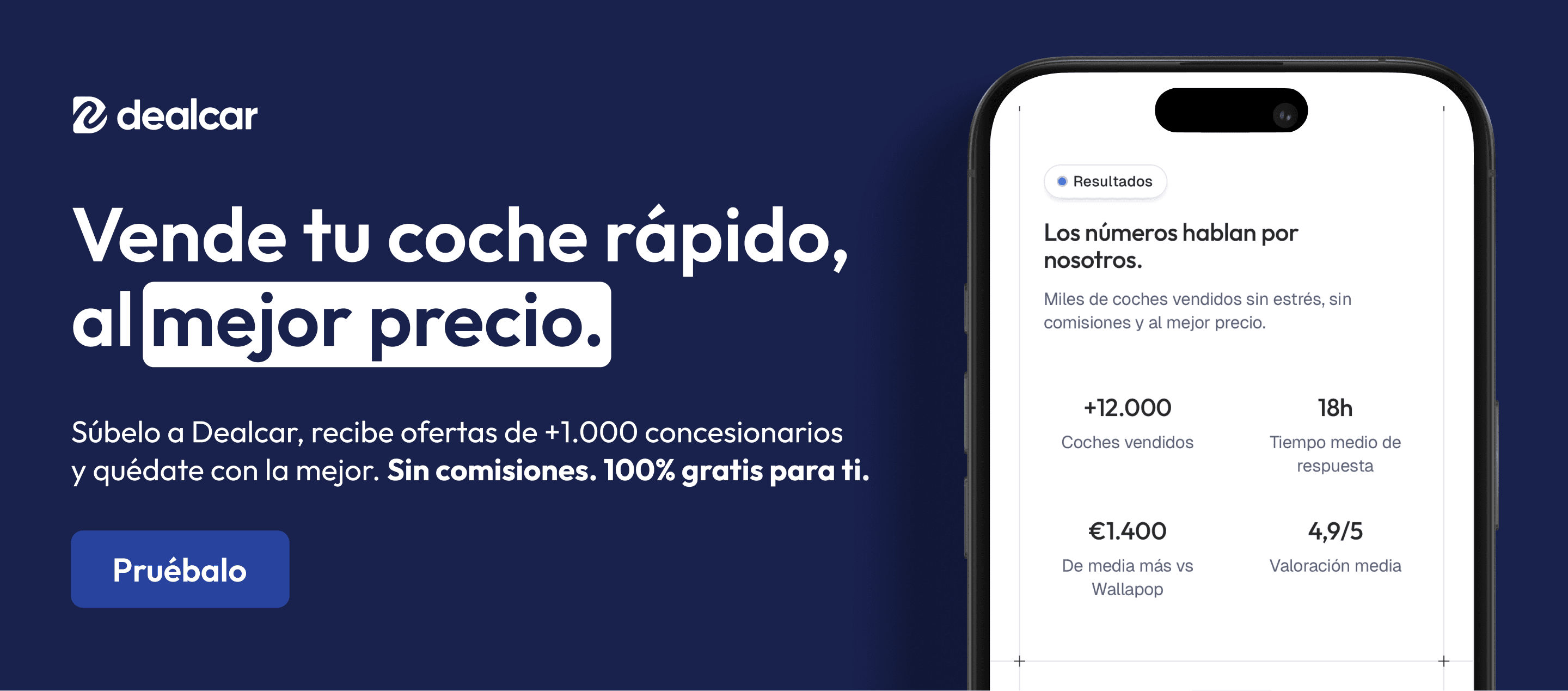
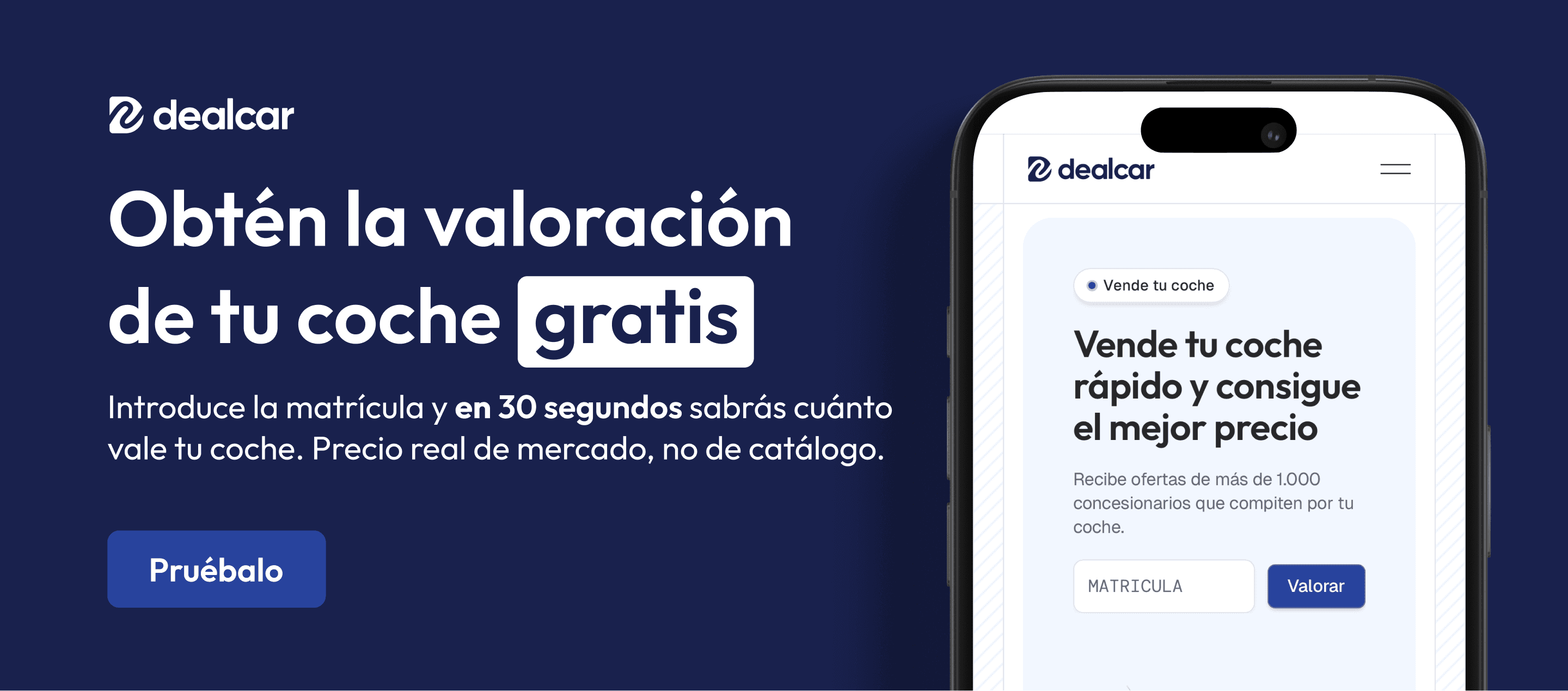
This is the model used by Dealcar to connect private sellers with more than 1,000 dealerships. The private seller uploads their car once and the dealerships bid for it, without the seller having to do anything more than compare and choose.
Comparison table: price, time and effort
Channel | Expected price | Sale time | Effort | Cost to seller | Risk |
|---|---|---|---|---|---|
Portals (Wallapop, Coches.net) | Variable (depends on negotiation) | 30-90 days | High | Free or low (featured ads) | Medium (scams, non-payment) |
Compramostucoche and similar | 10-20% below market | 2-5 days | Low | Free | Low |
Direct dealership | Variable (depends on how many you visit) | 1-2 weeks | Medium | Free | Low |
Bidding platform (Dealcar) | Market price or higher | 2-7 days | Very low | Free | Low |
Which is the best option depending on your situation
There is no universally best option. The choice depends on what you prioritise.
If you prioritise price and have time. Portals can give you a good result, but you need patience, good photos and bargaining ability. If your car is one that many people are looking for, you can get a high price. If not, prepare for weeks of waiting.
If you prioritise speed and don't mind losing some price. Direct-buy companies close quickly. Accept that you'll get less than on other channels. It's a legitimate option when you need cash quickly.
If you want the best possible price without spending weeks. Platforms with dealership bidding are the option that best balances price and speed. By creating real competition between professional buyers, the price adjusts to the market without you having to negotiate.
If your car has any complication (outstanding finance, high mileage, damage or missing MOT), first check which channels accept that type of vehicle. Professional dealerships tend to be more flexible than private buyers in these cases.
What does apply in all scenarios is the basic principle: the more offers you have, the better your position to negotiate or compare. Don't accept the first offer without something to compare it against.
Dealcar: sell your car quickly and at the best price
More than 1,000 professional dealerships are already competing for private sellers' cars through Dealcar. You upload your car once, receive real offers and decide which to accept. No ads, no calls, no haggling.
If you want to know where to sell your car at the best price, receive offers from dealerships at dealcar.io.
Frequently asked questions
Is it better to sell my car on Wallapop or to a dealership?
It depends on how much time you have and on the type of car. On Wallapop you can get a high price if you have patience and a car that's in demand, but the process is slow and requires handling calls and viewings. A dealership is faster and safer, especially if you receive several offers to compare.
Do direct-buy companies pay well?
Direct-buy companies (Compramostucoche, Flexicar…) prioritise speed over price. Their offers are usually between 10% and 20% below market value. It's convenient, but if you want to maximise the price, it's worth comparing with other options before accepting.
Can I sell my car on several sites at once?
Yes, you can post on portals and at the same time ask for offers on dealership platforms. In fact, it's advisable to do so to have more price references. Just be careful not to accept two offers at the same time.
How many offers should I receive before deciding?
There is no magic number, but with three or four offers you already have a solid reference for the real value of your car in the current market. With only one offer, you have nothing to compare against.
What documents do I need to sell my car?
At minimum: the owner's ID, the registration certificate, the technical data sheet and a valid MOT. If the car has outstanding finance, you'll need to clear it or reach an agreement with the finance provider before the sale.
At minimum you'll need the owner's ID, the registration certificate, the technical data sheet and a valid MOT. You can consult the complete guide to the paperwork for selling a car in Spain.
Contents
The options you have for selling your car in Spain
Selling on classifieds portals: Wallapop, Coches.net and Milanuncios
Selling to direct-buy companies: Compramostucoche and similar
Selling directly to a dealership
Selling through a platform with dealership bidding
Comparison table: price, time and effort
Which is the best option depending on your situation
Frequently asked questions
When you decide to sell your car, the first real question is not "how much should I list it for", but where you list it. The channel you choose will determine how much you get, how long it takes and how much effort you put in. And the difference between choosing well or badly can be hundreds, even thousands, of euros.
The Spanish market offers several options with very different models. Some give you convenience in exchange for a lower price. Others give you the best price, but demand time and patience. And a few manage to combine speed and a good price, as long as you understand how they work.
In this article we analyse each one with real data so you can decide where to sell your car at the best price according to what matters most to you: money, speed or peace of mind.
The options you have for selling your car in Spain
The used-car sales market has diversified a lot in recent years. It is no longer just about putting a sign in the windscreen or posting an ad on a portal. Today there are four main channels, each with a different operating model.
Classified ads portals (Wallapop, Cochesnet, Milanuncios, AutoScout24), direct-buy companies such as "we buy your car" (Compramostucoche, Flexicar, Clicars), direct sale to dealerships in your area and platforms that connect your car with multiple dealerships so they can compete for it.
Each channel has its advantages and limitations. The key is to understand what you give up and what you gain in each case.
Selling on classifieds portals: Wallapop, Coches.net and Milanuncios
It's the best-known option and the one most people think of first. You post an ad with photos, a description and a price, and wait for interested buyers to get in touch.
What works well. You have visibility among thousands of potential buyers. You control the asking price and negotiation. If your car is in high demand (popular models, low mileage, good condition), you can get a good price.
What doesn't work so well. The process is slow. The average sale on generalist portals is around 30-60 days, and it can take much longer if the car is not especially appealing. During that time you'll receive calls from tyre-kickers, viewings that never materialise and offers far below what you're asking.
Each portal also has its own profile. Wallapop attracts buyers looking for bargains, which usually translates into aggressive offers and a lot of haggling. If you want to know the process in detail, consult our complete guide to selling your car on Wallapop. Coches.net has a more car-focused audience, but charges to feature ads if you want real visibility. Milanuncios works as a generalist, with a high volume of traffic but also a lot of noise.
The direct cost varies. Posting on Wallapop is free for basic ads, but featured options are paid. On Coches.net, plans for private sellers start at around 20-30 euros. On Milanuncios, the model is similar with freemium options.
The indirect cost is the time invested: managing ads on three portals at once, replying to messages, arranging viewings and negotiating with each interested party.
Selling to direct-buy companies: Compramostucoche and similar
The model is simple: you go to the website, enter your car's details, receive an online valuation and, if you're interested, arrange an appointment for them to inspect the vehicle and give you a final offer.
What works well. It's quick and convenient. In many cases you can complete the deal in under 48 hours. You don't have to post ads, you don't receive calls from strangers and the company handles most of the paperwork.
What doesn't work so well. You receive a single offer, and that offer is calculated so the company has enough margin to resell the car. There is no competition, no bidding, no chance to compare. If you don't like the price, your only option is to turn it down.
In practice, the offers from these companies are usually between 10% and 20% below market value. That's the price of convenience. For mid-range cars valued at around 12,000 euros, that can mean between 1,200 and 2,400 euros less than you could get with other options.
Another point to bear in mind: the online valuation you receive initially is only an estimate. The actual offer comes after the in-person inspection, and in many cases it is lower than the initial estimate. This creates frustration, because the seller arrives at the appointment with expectations that are then not met.
If you're considering this route, it's worth understanding how these companies work and what you need to know before accepting.
Selling directly to a dealership
You can go to any used-car dealership in your area and ask whether they're interested in buying your vehicle. Many dealerships buy cars from private owners regularly, especially if the model has quick stock turnover commercially.
What works well. If you find a dealership that needs exactly your type of car, you can get a competitive price. Dealerships specialising in certain segments (SUVs, premium cars, city cars) tend to pay more than generalists for the models they want.
What doesn't work so well. You would have to visit several dealerships to compare offers, which means travelling and time. Each dealership will do its own valuation, and there is no guarantee that any will match your expectations. If you only visit one or two, you're in the same situation as with direct-buy companies: few reference points and little bargaining power.
The theoretical advantage of this channel (getting a good price from a professional buyer) only materialises when you have several offers on the table. The practical problem is that obtaining those offers manually requires quite a lot of effort.
Selling through a platform with dealership bidding
This model solves the main problem of the previous options: the lack of competition between buyers. Instead of you searching for the buyer, multiple professional buyers compete for your car.
The process is straightforward. You upload your vehicle's details to the platform (make, model, year, mileage, condition, photos) and interested dealerships send you offers. You compare them and decide which to accept. If none of them convinces you, you're under no obligation.
What works well. It combines speed, convenience and a good price. Because there is real competition between buyers, the offers tend to align with market value or even exceed it when several dealerships need the same type of car. You don't post ads, you don't receive calls from tyre-kickers and you don't negotiate with strangers.
What you should bear in mind. The outcome depends on the vehicle. Cars in high demand (popular models, reasonable mileage, good condition) generate more bids and better offers. Cars with more difficult characteristics (very high mileage, no MOT, significant damage) may receive less interest, although they still tend to get more competitive offers than those from a direct-buy company.
This is the model used by Dealcar to connect private sellers with more than 1,000 dealerships. The private seller uploads their car once and the dealerships bid for it, without the seller having to do anything more than compare and choose.
Comparison table: price, time and effort
Channel | Expected price | Sale time | Effort | Cost to seller | Risk |
|---|---|---|---|---|---|
Portals (Wallapop, Coches.net) | Variable (depends on negotiation) | 30-90 days | High | Free or low (featured ads) | Medium (scams, non-payment) |
Compramostucoche and similar | 10-20% below market | 2-5 days | Low | Free | Low |
Direct dealership | Variable (depends on how many you visit) | 1-2 weeks | Medium | Free | Low |
Bidding platform (Dealcar) | Market price or higher | 2-7 days | Very low | Free | Low |
Which is the best option depending on your situation
There is no universally best option. The choice depends on what you prioritise.
If you prioritise price and have time. Portals can give you a good result, but you need patience, good photos and bargaining ability. If your car is one that many people are looking for, you can get a high price. If not, prepare for weeks of waiting.
If you prioritise speed and don't mind losing some price. Direct-buy companies close quickly. Accept that you'll get less than on other channels. It's a legitimate option when you need cash quickly.
If you want the best possible price without spending weeks. Platforms with dealership bidding are the option that best balances price and speed. By creating real competition between professional buyers, the price adjusts to the market without you having to negotiate.
If your car has any complication (outstanding finance, high mileage, damage or missing MOT), first check which channels accept that type of vehicle. Professional dealerships tend to be more flexible than private buyers in these cases.
What does apply in all scenarios is the basic principle: the more offers you have, the better your position to negotiate or compare. Don't accept the first offer without something to compare it against.
Dealcar: sell your car quickly and at the best price
More than 1,000 professional dealerships are already competing for private sellers' cars through Dealcar. You upload your car once, receive real offers and decide which to accept. No ads, no calls, no haggling.
If you want to know where to sell your car at the best price, receive offers from dealerships at dealcar.io.
Frequently asked questions
Is it better to sell my car on Wallapop or to a dealership?
It depends on how much time you have and on the type of car. On Wallapop you can get a high price if you have patience and a car that's in demand, but the process is slow and requires handling calls and viewings. A dealership is faster and safer, especially if you receive several offers to compare.
Do direct-buy companies pay well?
Direct-buy companies (Compramostucoche, Flexicar…) prioritise speed over price. Their offers are usually between 10% and 20% below market value. It's convenient, but if you want to maximise the price, it's worth comparing with other options before accepting.
Can I sell my car on several sites at once?
Yes, you can post on portals and at the same time ask for offers on dealership platforms. In fact, it's advisable to do so to have more price references. Just be careful not to accept two offers at the same time.
How many offers should I receive before deciding?
There is no magic number, but with three or four offers you already have a solid reference for the real value of your car in the current market. With only one offer, you have nothing to compare against.
What documents do I need to sell my car?
At minimum: the owner's ID, the registration certificate, the technical data sheet and a valid MOT. If the car has outstanding finance, you'll need to clear it or reach an agreement with the finance provider before the sale.
At minimum you'll need the owner's ID, the registration certificate, the technical data sheet and a valid MOT. You can consult the complete guide to the paperwork for selling a car in Spain.