Contents
What direct-buy car companies are
How the process works step by step
How much these companies really pay
The real advantages of selling this way
What they do not tell you: the limitations of the model
The main companies in Spain
The alternative: several dealerships compete for your car
Frequently asked questions
If you have ever looked for how to sell your car quickly, you will probably have seen ads from companies that promise to buy it within 24 hours, with no hassle and at a fair price. Compramostucoche, Flexicar, Clicars, OcasionPlus. The names change, but the message is always similar: "we buy your car".
The proposition sounds appealing, especially if you are tired of posting adverts and dealing with tyre-kickers. But before you agree, it is worth understanding how this model works inside: where the price they offer comes from, what margin they apply, and what alternatives you have if what you are looking for is not only to sell quickly, but also at the best possible price.
What direct-buy car companies are
These are companies that buy cars from private owners and then resell them, either directly to the public or through dealerships. Their business model is based on buying below market value and selling with a margin.
It is not a new model. Dealerships have been buying cars from private owners for decades. What these companies have done is digitise and scale the process: online form, automatic valuation, in-person inspection and fixed offer. All designed so that the seller perceives speed and convenience.
The difference compared with selling your car on a classifieds portal is that here you are not looking for a buyer. The company is the buyer. You enter your car’s details, they give you a price and you decide whether to accept it or not.
How the process works step by step
The process is very similar in all companies of this type, with small variations.
Step 1: Online valuation. You go to the website, enter the make, model, year, mileage and general condition of the vehicle. Within minutes you receive a price estimate. This figure is indicative, not binding.
Step 2: In-person inspection. If the price seems reasonable, you arrange an appointment (at their premises or at home, depending on the company) for an expert to inspect the car physically. They check the mechanical condition, bodywork, interior, tyres and paperwork.
Step 3: Final offer. After the inspection, the company makes you a real offer. This is when many sellers are surprised, because the final offer is usually lower than the online estimate. The most common reasons are wear and tear that was not reflected in the form, small bumps or scratches, and the condition of the tyres or brakes.
Step 4: Acceptance and payment. If you accept, you sign the paperwork and the company handles the payment (normally by bank transfer within 24-48 hours) and the change of ownership. You do not have to deal with anything else.
The whole process can be completed in 2-5 days. In some cases, even in 24-48 hours if there are no complications.
How much these companies really pay
This is the question that matters. And the answer is not the one you see in the advertising.
Direct-buy companies need margin to cover their operating costs (staff, premises, marketing, logistics) and make a profit when reselling the car. That margin comes out of the price they pay you.
In practice, the offers from these companies are usually between 10% and 25% below the vehicle’s market value. For a car that could sell on the open market for 15,000 euros, that means receiving between 11,250 and 13,500 euros.
The range is wide because it depends on the type of car. Models with high turnover in the market (Seat Leon, Volkswagen Golf, Toyota Corolla, Peugeot 3008) usually receive offers closer to market value, because the company knows it will resell them quickly. Cars with lower demand or complicated characteristics (high mileage, questionable history, brands with less demand) receive steeper discounts.
To know whether an offer is below market value, you first need a reliable reference. Check how to find out how much your car is worth with the most accurate methods.
Another factor that influences it is the seller’s urgency. The model is designed to attract people who prioritise speed over price. And the companies know it.
The real advantages of selling this way
It would be unfair to say that this model has no advantages, because it does. For certain seller profiles, it can be the most practical option.
Speed. It is, by far, the fastest way to turn your car into money. If you need urgent cash flow (an unexpected expense, a purchase that cannot wait), closing within 48 hours has real value.
Convenience. You do not post adverts, you do not receive calls, you do not arrange viewings, and you do not negotiate with strangers. The process is packaged so that you do as little as possible.
Payment security. When selling to an established company, the risk of non-payment or fraud is practically zero. Payment is made by bank transfer and is usually formalised by contract.
Paperwork handling. The company takes care of the change of ownership, the notification to the DGT and the document management. After signing, you do not have to worry about anything.
If you prefer to handle the paperwork yourself, see our complete guide to paperwork for selling a car in Spain.
What they do not tell you: the limitations of the model
The advantages are real, but they come with a cost that is not always obvious.
A single offer, with no competition. This is the key point. When you sell to one of these companies, you receive a single price, calculated by the buyer to maximise its margin. There is no bidding, no alternative, no competitive pressure. If you do not like the price, your only option is to reject it and start again somewhere else.
The online valuation is not the real offer. Many of these companies use the online valuation as a hook to capture the seller. The figure shown on screen is usually higher than the one they finally offer after the inspection. This is frustrating, because you go to the appointment with an expectation that is then not met.
Pressure to close on the spot. Some companies make the offer conditional on accepting it immediately or within a very short period (24-48 hours). This limits your ability to compare with other options and pushes you to make a quick decision without references.
Not every car is of interest. Although the websites give the impression that they buy any car, in practice the offers for vehicles with high mileage, less popular brands or cars with mechanical issues can be very low or may not be made at all.
The main companies in Spain
Compramostucoche. One of the best-known in the Spanish market. Online process with in-person inspection. Focused on quick sales. User reviews are mixed: a good experience in terms of speed and paperwork, but frequent criticism because of the difference between the online valuation and the final offer.
Flexicar. A group with more than 180 locations in Spain. It offers both direct purchase and the sale of used vehicles. Its advantage is geographic coverage. On the downside, being a large group with high operating costs, the margin it needs can be reflected in more conservative offers.
Clicars. Digital model with home inspection in some areas. Agile process and well designed technologically. Similar in price to the other companies in the sector.
OcasionPlus. A multi-brand dealership network that also buys from private owners. The experience may vary depending on the outlet, as each location may have some autonomy over the offer.
All of them work on the same basic principle: they make you an offer and, if you accept it, they take the car away. The difference between them lies more in the user experience and geographic coverage than in the final price, which in all cases is below market value.
If you want to compare all the options on the market, not just direct-buy ones, see our analysis of where to sell your car at the best price.
The alternative: several dealerships compete for your car
The "we buy your car" model makes sense when you prioritise speed above everything else. But if what you want is to sell quickly without giving up a competitive price, there is an alternative that solves the main limitation of these companies: the lack of competition.
Instead of receiving a single offer from a company that needs to maximise its margin, you can have multiple dealerships compete with each other for your car. The mechanism is simple: you upload your vehicle’s information once and interested dealerships send you real offers. You compare them and decide.
The difference in price can be significant. When a dealership knows it is competing against others for the same car, its offer moves upwards. It cannot afford to offer 20% below market value, because it knows another dealership will offer more.
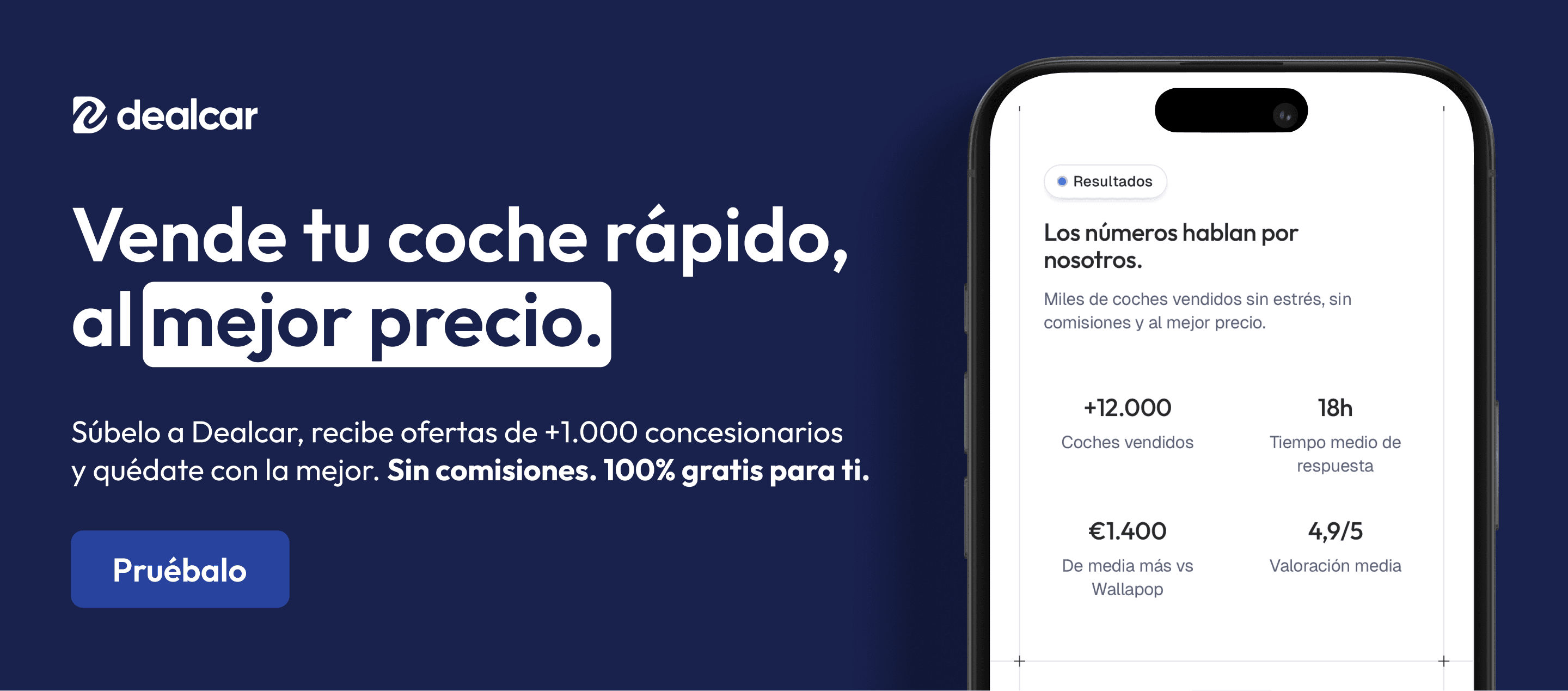
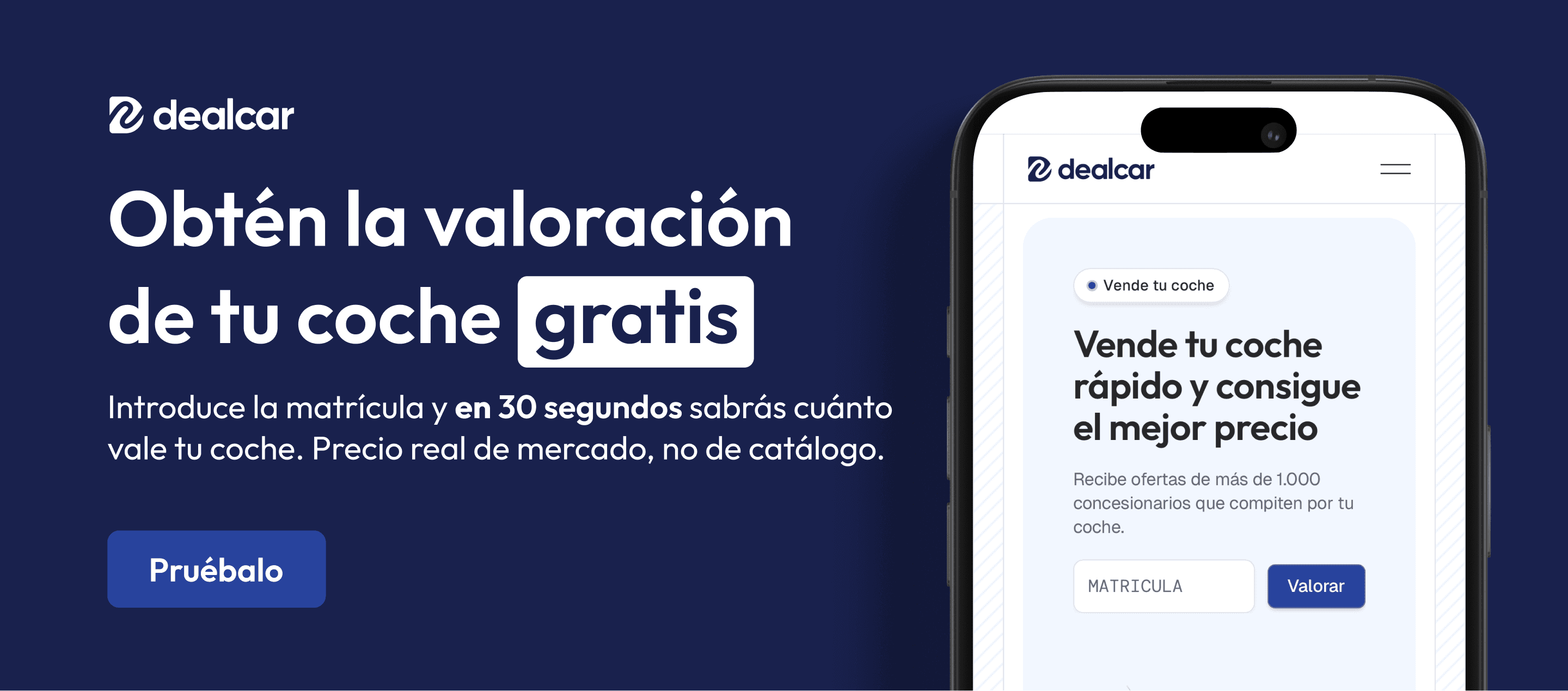
This is the model used by Dealcar. More than 1,000 professional dealerships compete for private owners’ cars. The service is free for the seller, offers arrive within 24-48 hours and the buying dealership takes care of all the paperwork. The convenience is the same as with direct-buy companies, but with the advantage that the price is set by competition, not by a single company.
Aspect | Direct-buy company | Bidding platform (Dealcar) |
|---|---|---|
Number of offers | 1 | Multiple |
Expected price | 10-25% below market | Market price or above |
Speed | 2-5 days | 2-7 days |
Seller effort | Low | Very low |
Paperwork handling | The company | The buying dealership |
Cost to the seller | Free | Free |
Dealcar: sell your car quickly and at the best price
More than 1,000 professional dealerships compete for private owners’ cars through Dealcar. Do not accept a single offer blindly. Upload your car, receive real offers from several dealerships and choose the best one.
If you want to sell your car without giving up the price, receive offers from dealerships at dealcar.io.
Frequently asked questions
Do direct-buy car companies pay well?
They pay quickly, but not necessarily well. Their offers are usually between 10% and 25% below market value. It is the price of convenience and speed. If you want to maximise the price, it is worth comparing other options before accepting.
Why is the final offer lower than the online valuation?
The online valuation is an estimate based on generic data. The real offer is adjusted after the in-person inspection, where wear, bumps or issues that the form does not capture are identified. Some companies also use the high valuation as a hook to attract the seller.
Can I negotiate the price with these companies?
In general, no. The model is designed as a fixed offer: take it or leave it. Some companies may have a small amount of room for adjustment, but real negotiation is not part of the process.
What happens if I reject the offer?
Nothing. There is no commitment or penalty. You can reject the offer and look for other options. What you do lose is the time spent on the inspection.
Is it better to sell to one of these companies or on Wallapop?
It depends on what you prioritise. The companies give you speed and convenience in exchange for a lower price. Wallapop gives you the chance to get a higher price, but in exchange for weeks of arranging, calls and viewings. The best price-speed balance is found on platforms where several dealerships compete for your car.
Contents
What direct-buy car companies are
How the process works step by step
How much these companies really pay
The real advantages of selling this way
What they do not tell you: the limitations of the model
The main companies in Spain
The alternative: several dealerships compete for your car
Frequently asked questions
If you have ever looked for how to sell your car quickly, you will probably have seen ads from companies that promise to buy it within 24 hours, with no hassle and at a fair price. Compramostucoche, Flexicar, Clicars, OcasionPlus. The names change, but the message is always similar: "we buy your car".
The proposition sounds appealing, especially if you are tired of posting adverts and dealing with tyre-kickers. But before you agree, it is worth understanding how this model works inside: where the price they offer comes from, what margin they apply, and what alternatives you have if what you are looking for is not only to sell quickly, but also at the best possible price.
What direct-buy car companies are
These are companies that buy cars from private owners and then resell them, either directly to the public or through dealerships. Their business model is based on buying below market value and selling with a margin.
It is not a new model. Dealerships have been buying cars from private owners for decades. What these companies have done is digitise and scale the process: online form, automatic valuation, in-person inspection and fixed offer. All designed so that the seller perceives speed and convenience.
The difference compared with selling your car on a classifieds portal is that here you are not looking for a buyer. The company is the buyer. You enter your car’s details, they give you a price and you decide whether to accept it or not.
How the process works step by step
The process is very similar in all companies of this type, with small variations.
Step 1: Online valuation. You go to the website, enter the make, model, year, mileage and general condition of the vehicle. Within minutes you receive a price estimate. This figure is indicative, not binding.
Step 2: In-person inspection. If the price seems reasonable, you arrange an appointment (at their premises or at home, depending on the company) for an expert to inspect the car physically. They check the mechanical condition, bodywork, interior, tyres and paperwork.
Step 3: Final offer. After the inspection, the company makes you a real offer. This is when many sellers are surprised, because the final offer is usually lower than the online estimate. The most common reasons are wear and tear that was not reflected in the form, small bumps or scratches, and the condition of the tyres or brakes.
Step 4: Acceptance and payment. If you accept, you sign the paperwork and the company handles the payment (normally by bank transfer within 24-48 hours) and the change of ownership. You do not have to deal with anything else.
The whole process can be completed in 2-5 days. In some cases, even in 24-48 hours if there are no complications.
How much these companies really pay
This is the question that matters. And the answer is not the one you see in the advertising.
Direct-buy companies need margin to cover their operating costs (staff, premises, marketing, logistics) and make a profit when reselling the car. That margin comes out of the price they pay you.
In practice, the offers from these companies are usually between 10% and 25% below the vehicle’s market value. For a car that could sell on the open market for 15,000 euros, that means receiving between 11,250 and 13,500 euros.
The range is wide because it depends on the type of car. Models with high turnover in the market (Seat Leon, Volkswagen Golf, Toyota Corolla, Peugeot 3008) usually receive offers closer to market value, because the company knows it will resell them quickly. Cars with lower demand or complicated characteristics (high mileage, questionable history, brands with less demand) receive steeper discounts.
To know whether an offer is below market value, you first need a reliable reference. Check how to find out how much your car is worth with the most accurate methods.
Another factor that influences it is the seller’s urgency. The model is designed to attract people who prioritise speed over price. And the companies know it.
The real advantages of selling this way
It would be unfair to say that this model has no advantages, because it does. For certain seller profiles, it can be the most practical option.
Speed. It is, by far, the fastest way to turn your car into money. If you need urgent cash flow (an unexpected expense, a purchase that cannot wait), closing within 48 hours has real value.
Convenience. You do not post adverts, you do not receive calls, you do not arrange viewings, and you do not negotiate with strangers. The process is packaged so that you do as little as possible.
Payment security. When selling to an established company, the risk of non-payment or fraud is practically zero. Payment is made by bank transfer and is usually formalised by contract.
Paperwork handling. The company takes care of the change of ownership, the notification to the DGT and the document management. After signing, you do not have to worry about anything.
If you prefer to handle the paperwork yourself, see our complete guide to paperwork for selling a car in Spain.
What they do not tell you: the limitations of the model
The advantages are real, but they come with a cost that is not always obvious.
A single offer, with no competition. This is the key point. When you sell to one of these companies, you receive a single price, calculated by the buyer to maximise its margin. There is no bidding, no alternative, no competitive pressure. If you do not like the price, your only option is to reject it and start again somewhere else.
The online valuation is not the real offer. Many of these companies use the online valuation as a hook to capture the seller. The figure shown on screen is usually higher than the one they finally offer after the inspection. This is frustrating, because you go to the appointment with an expectation that is then not met.
Pressure to close on the spot. Some companies make the offer conditional on accepting it immediately or within a very short period (24-48 hours). This limits your ability to compare with other options and pushes you to make a quick decision without references.
Not every car is of interest. Although the websites give the impression that they buy any car, in practice the offers for vehicles with high mileage, less popular brands or cars with mechanical issues can be very low or may not be made at all.
The main companies in Spain
Compramostucoche. One of the best-known in the Spanish market. Online process with in-person inspection. Focused on quick sales. User reviews are mixed: a good experience in terms of speed and paperwork, but frequent criticism because of the difference between the online valuation and the final offer.
Flexicar. A group with more than 180 locations in Spain. It offers both direct purchase and the sale of used vehicles. Its advantage is geographic coverage. On the downside, being a large group with high operating costs, the margin it needs can be reflected in more conservative offers.
Clicars. Digital model with home inspection in some areas. Agile process and well designed technologically. Similar in price to the other companies in the sector.
OcasionPlus. A multi-brand dealership network that also buys from private owners. The experience may vary depending on the outlet, as each location may have some autonomy over the offer.
All of them work on the same basic principle: they make you an offer and, if you accept it, they take the car away. The difference between them lies more in the user experience and geographic coverage than in the final price, which in all cases is below market value.
If you want to compare all the options on the market, not just direct-buy ones, see our analysis of where to sell your car at the best price.
The alternative: several dealerships compete for your car
The "we buy your car" model makes sense when you prioritise speed above everything else. But if what you want is to sell quickly without giving up a competitive price, there is an alternative that solves the main limitation of these companies: the lack of competition.
Instead of receiving a single offer from a company that needs to maximise its margin, you can have multiple dealerships compete with each other for your car. The mechanism is simple: you upload your vehicle’s information once and interested dealerships send you real offers. You compare them and decide.
The difference in price can be significant. When a dealership knows it is competing against others for the same car, its offer moves upwards. It cannot afford to offer 20% below market value, because it knows another dealership will offer more.
This is the model used by Dealcar. More than 1,000 professional dealerships compete for private owners’ cars. The service is free for the seller, offers arrive within 24-48 hours and the buying dealership takes care of all the paperwork. The convenience is the same as with direct-buy companies, but with the advantage that the price is set by competition, not by a single company.
Aspect | Direct-buy company | Bidding platform (Dealcar) |
|---|---|---|
Number of offers | 1 | Multiple |
Expected price | 10-25% below market | Market price or above |
Speed | 2-5 days | 2-7 days |
Seller effort | Low | Very low |
Paperwork handling | The company | The buying dealership |
Cost to the seller | Free | Free |
Dealcar: sell your car quickly and at the best price
More than 1,000 professional dealerships compete for private owners’ cars through Dealcar. Do not accept a single offer blindly. Upload your car, receive real offers from several dealerships and choose the best one.
If you want to sell your car without giving up the price, receive offers from dealerships at dealcar.io.
Frequently asked questions
Do direct-buy car companies pay well?
They pay quickly, but not necessarily well. Their offers are usually between 10% and 25% below market value. It is the price of convenience and speed. If you want to maximise the price, it is worth comparing other options before accepting.
Why is the final offer lower than the online valuation?
The online valuation is an estimate based on generic data. The real offer is adjusted after the in-person inspection, where wear, bumps or issues that the form does not capture are identified. Some companies also use the high valuation as a hook to attract the seller.
Can I negotiate the price with these companies?
In general, no. The model is designed as a fixed offer: take it or leave it. Some companies may have a small amount of room for adjustment, but real negotiation is not part of the process.
What happens if I reject the offer?
Nothing. There is no commitment or penalty. You can reject the offer and look for other options. What you do lose is the time spent on the inspection.
Is it better to sell to one of these companies or on Wallapop?
It depends on what you prioritise. The companies give you speed and convenience in exchange for a lower price. Wallapop gives you the chance to get a higher price, but in exchange for weeks of arranging, calls and viewings. The best price-speed balance is found on platforms where several dealerships compete for your car.