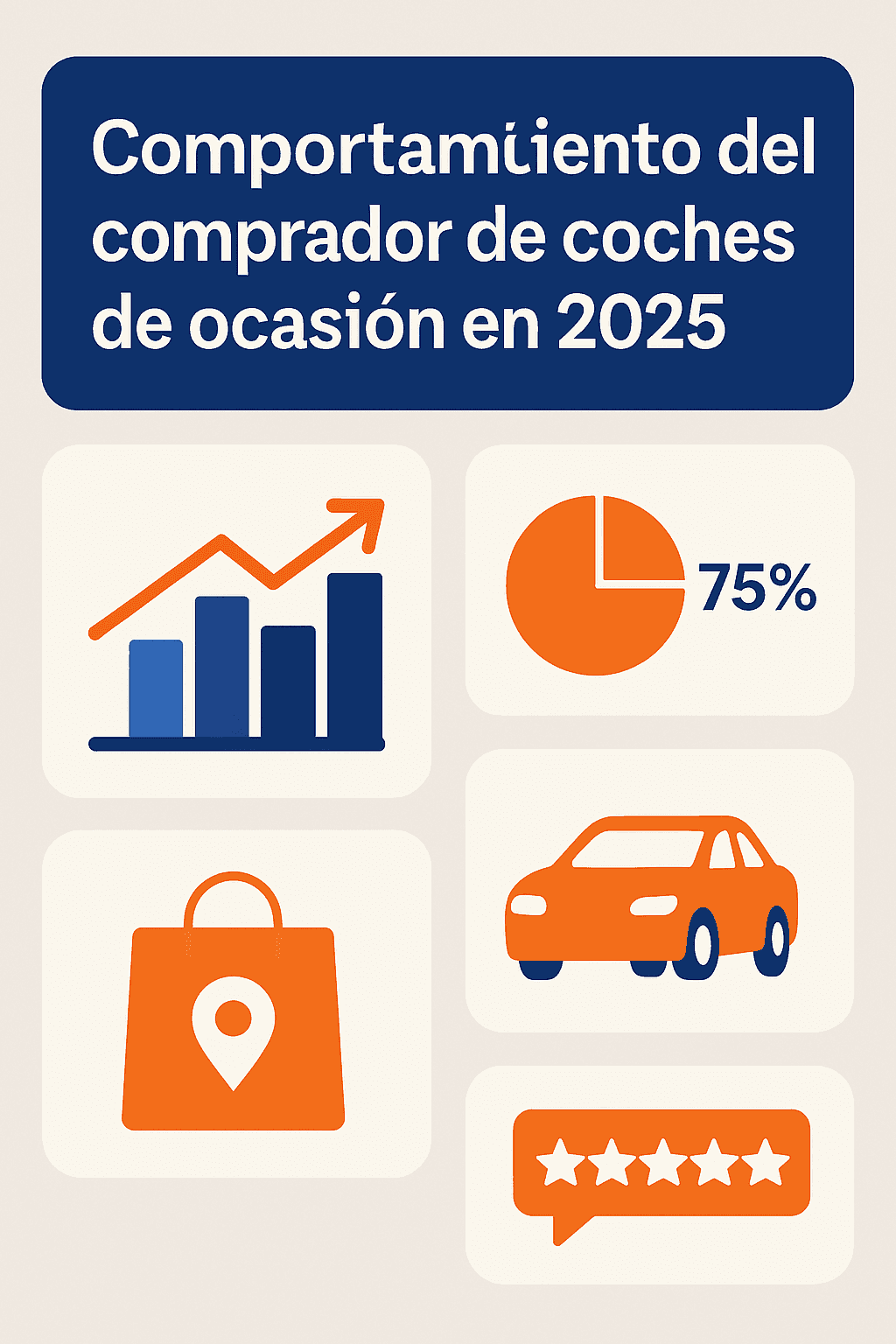
The used vehicle market (VO) is evolving at great speed. The way consumers discover, research and buy cars has changed dramatically in recent years, driven by digitalisation, new service expectations and intensive mobile use. Understanding this behaviour is no longer optional for dealers: it is a strategic necessity.
In this guide based on the latest industry statistics, we show you how buyers think, search and decide in 2025, and most importantly: how your dealership can adapt its processes to attract more customers and close more sales with the help of Dealcar.
1. Buyers research online first (and a lot)
92 % of car buyers research online before visiting a dealership.
78 % use their smartphone as their main search tool.
Most consult between 4 and 6 websites before making a decision.
What does this mean for your dealership?
Your website is your first salesperson. It must be fast, easy to use on mobile, with efficient filters, quality photos, videos and clear information. If the customer can't find what they're looking for in seconds, they leave.
With Dealcar, you can have a mobile-optimised website, with smart search, fast loading and listings that really convert.
2. Proximity and local presence still matter
44 % of car buyers do not travel more than 8 km (5 miles) to visit a dealership.
Searches for “near me” on Google continue to grow year on year.
How do you make the most of it?
You need to dominate local SEO. Optimise your Google Business Profile listing, include maps, genuine reviews and make sure your website clearly mentions your location and service areas.
Dealcar helps you rank locally, including tools to highlight your vehicles on Google with structured data and SEO settings.
3. The physical dealership is still decisive
Although the journey starts online, 89 % of sales are still closed in store.
The customer expects a consistent experience: what they saw online must match what they find in your dealership.
Recommended action
Connect the digital and in-person experience. Your sales staff should have access to the customer's digital history to offer personalised service from the first physical contact.
With Dealcar, you can see the full lead journey: car visited, entry channel, interest shown, WhatsApp interactions and more.
4. Response time is critical
50 % of buyers choose the first dealership that responds.
But only 61 % of dealerships respond in under 15 minutes.
Every hour that passes drastically reduces the likelihood of conversion.
Practical solution
Automate the first response. Set up workflows that assign leads by type of interest, entry channel or geographic area and respond with helpful messages.
Dealcar allows you to configure automations that respond, assign and generate internal tasks in seconds, improving your conversion rate.
5. Online reputation matters more than ever
88 % of buyers trust online reviews as much as personal recommendations.
67 % consult 3 or more review platforms before deciding.
What to do
Ask all your satisfied customers for reviews.
Always respond, even to negative ones, in a professional tone.
Show testimonials and ratings on your website and social media.
With Dealcar you can integrate reviews into your vehicle listings and centralise the visibility of your online reputation.
6. Video is the content that converts best
75 % of buyers say video influenced their final decision.
Listings with video generate up to 35 % more leads.
Key recommendations
Record virtual tours: exterior, interior, engine, details.
Use short videos (Reels, TikTok, Shorts) to highlight vehicles and promotions.
Share videos via WhatsApp when responding to an enquiry.
Dealcar allows you to upload videos to your listings and share them from the same platform, optimising every interaction.
7. Omnichannel: connecting all touchpoints
71 % of buyers expect an integrated experience between website, social media, WhatsApp and store.
Only 43 % of dealerships offer a truly omnichannel experience.
What it means and how to apply it
The customer doesn't differentiate between channels. For them, your brand is one. That's why you must ensure that:
What they see on social media is also on the website.
If they ask by WhatsApp, the in-store salesperson knows.
If they reserved a car online, it is available when they arrive.
Dealcar brings together your website, your leads, your support and your statistics so the experience flows.
Practical recommendations for modern dealerships
Professional mobile-optimised website with complete listings.
Local SEO worked on, with reviews and an active Google Business Profile.
Lead automation with workflows and response in less than 1 minute.
Video in listings and social media as standard, not as an extra.
Unified and consistent presence across all channels.
Metrics and traceability panel for each lead to make real decisions.
Conclusion
The data don't lie: the 2025 customer is already here and their behaviour is clear. They research online, expect speed, seek trust and value consistency. The good news is that you don't need to be a large group to offer an excellent experience.
With the right tools, like those offered by Dealcar, any dealership can adapt and compete in this new environment.
Your website, your leads, your videos, your data... all in one place. More agility, more conversion, more sales.
Frequently asked questions
Why should I adapt my dealership to the new buyer behaviour?
Because ignoring it leaves you out of the game. Adapting allows you to connect better, sell more and stand out.
How long do buyers research before deciding?
On average, between 2 and 4 weeks, dedicating several hours a week to comparing models, prices and dealerships.
Which channel gives me the best conversion?
WhatsApp and web forms, but the key is to have all channels well integrated.
Can I compete with large dealerships if I'm small?
Yes. With clear digital processes, good service and tools like Dealcar, you can offer an equal or better experience.
The used vehicle market (VO) is evolving at great speed. The way consumers discover, research and buy cars has changed dramatically in recent years, driven by digitalisation, new service expectations and intensive mobile use. Understanding this behaviour is no longer optional for dealers: it is a strategic necessity.
In this guide based on the latest industry statistics, we show you how buyers think, search and decide in 2025, and most importantly: how your dealership can adapt its processes to attract more customers and close more sales with the help of Dealcar.
1. Buyers research online first (and a lot)
92 % of car buyers research online before visiting a dealership.
78 % use their smartphone as their main search tool.
Most consult between 4 and 6 websites before making a decision.
What does this mean for your dealership?
Your website is your first salesperson. It must be fast, easy to use on mobile, with efficient filters, quality photos, videos and clear information. If the customer can't find what they're looking for in seconds, they leave.
With Dealcar, you can have a mobile-optimised website, with smart search, fast loading and listings that really convert.
2. Proximity and local presence still matter
44 % of car buyers do not travel more than 8 km (5 miles) to visit a dealership.
Searches for “near me” on Google continue to grow year on year.
How do you make the most of it?
You need to dominate local SEO. Optimise your Google Business Profile listing, include maps, genuine reviews and make sure your website clearly mentions your location and service areas.
Dealcar helps you rank locally, including tools to highlight your vehicles on Google with structured data and SEO settings.
3. The physical dealership is still decisive
Although the journey starts online, 89 % of sales are still closed in store.
The customer expects a consistent experience: what they saw online must match what they find in your dealership.
Recommended action
Connect the digital and in-person experience. Your sales staff should have access to the customer's digital history to offer personalised service from the first physical contact.
With Dealcar, you can see the full lead journey: car visited, entry channel, interest shown, WhatsApp interactions and more.
4. Response time is critical
50 % of buyers choose the first dealership that responds.
But only 61 % of dealerships respond in under 15 minutes.
Every hour that passes drastically reduces the likelihood of conversion.
Practical solution
Automate the first response. Set up workflows that assign leads by type of interest, entry channel or geographic area and respond with helpful messages.
Dealcar allows you to configure automations that respond, assign and generate internal tasks in seconds, improving your conversion rate.
5. Online reputation matters more than ever
88 % of buyers trust online reviews as much as personal recommendations.
67 % consult 3 or more review platforms before deciding.
What to do
Ask all your satisfied customers for reviews.
Always respond, even to negative ones, in a professional tone.
Show testimonials and ratings on your website and social media.
With Dealcar you can integrate reviews into your vehicle listings and centralise the visibility of your online reputation.
6. Video is the content that converts best
75 % of buyers say video influenced their final decision.
Listings with video generate up to 35 % more leads.
Key recommendations
Record virtual tours: exterior, interior, engine, details.
Use short videos (Reels, TikTok, Shorts) to highlight vehicles and promotions.
Share videos via WhatsApp when responding to an enquiry.
Dealcar allows you to upload videos to your listings and share them from the same platform, optimising every interaction.
7. Omnichannel: connecting all touchpoints
71 % of buyers expect an integrated experience between website, social media, WhatsApp and store.
Only 43 % of dealerships offer a truly omnichannel experience.
What it means and how to apply it
The customer doesn't differentiate between channels. For them, your brand is one. That's why you must ensure that:
What they see on social media is also on the website.
If they ask by WhatsApp, the in-store salesperson knows.
If they reserved a car online, it is available when they arrive.
Dealcar brings together your website, your leads, your support and your statistics so the experience flows.
Practical recommendations for modern dealerships
Professional mobile-optimised website with complete listings.
Local SEO worked on, with reviews and an active Google Business Profile.
Lead automation with workflows and response in less than 1 minute.
Video in listings and social media as standard, not as an extra.
Unified and consistent presence across all channels.
Metrics and traceability panel for each lead to make real decisions.
Conclusion
The data don't lie: the 2025 customer is already here and their behaviour is clear. They research online, expect speed, seek trust and value consistency. The good news is that you don't need to be a large group to offer an excellent experience.
With the right tools, like those offered by Dealcar, any dealership can adapt and compete in this new environment.
Your website, your leads, your videos, your data... all in one place. More agility, more conversion, more sales.
Frequently asked questions
Why should I adapt my dealership to the new buyer behaviour?
Because ignoring it leaves you out of the game. Adapting allows you to connect better, sell more and stand out.
How long do buyers research before deciding?
On average, between 2 and 4 weeks, dedicating several hours a week to comparing models, prices and dealerships.
Which channel gives me the best conversion?
WhatsApp and web forms, but the key is to have all channels well integrated.
Can I compete with large dealerships if I'm small?
Yes. With clear digital processes, good service and tools like Dealcar, you can offer an equal or better experience.