In the used vehicle market, the terms "used", "nearly new" and "pre-registered" are often confused by both customers and professionals. For a dealership, knowing and correctly communicating these differences not only avoids misunderstandings, but also improves the sales experience and strengthens buyer confidence.
Definition of each type of vehicle
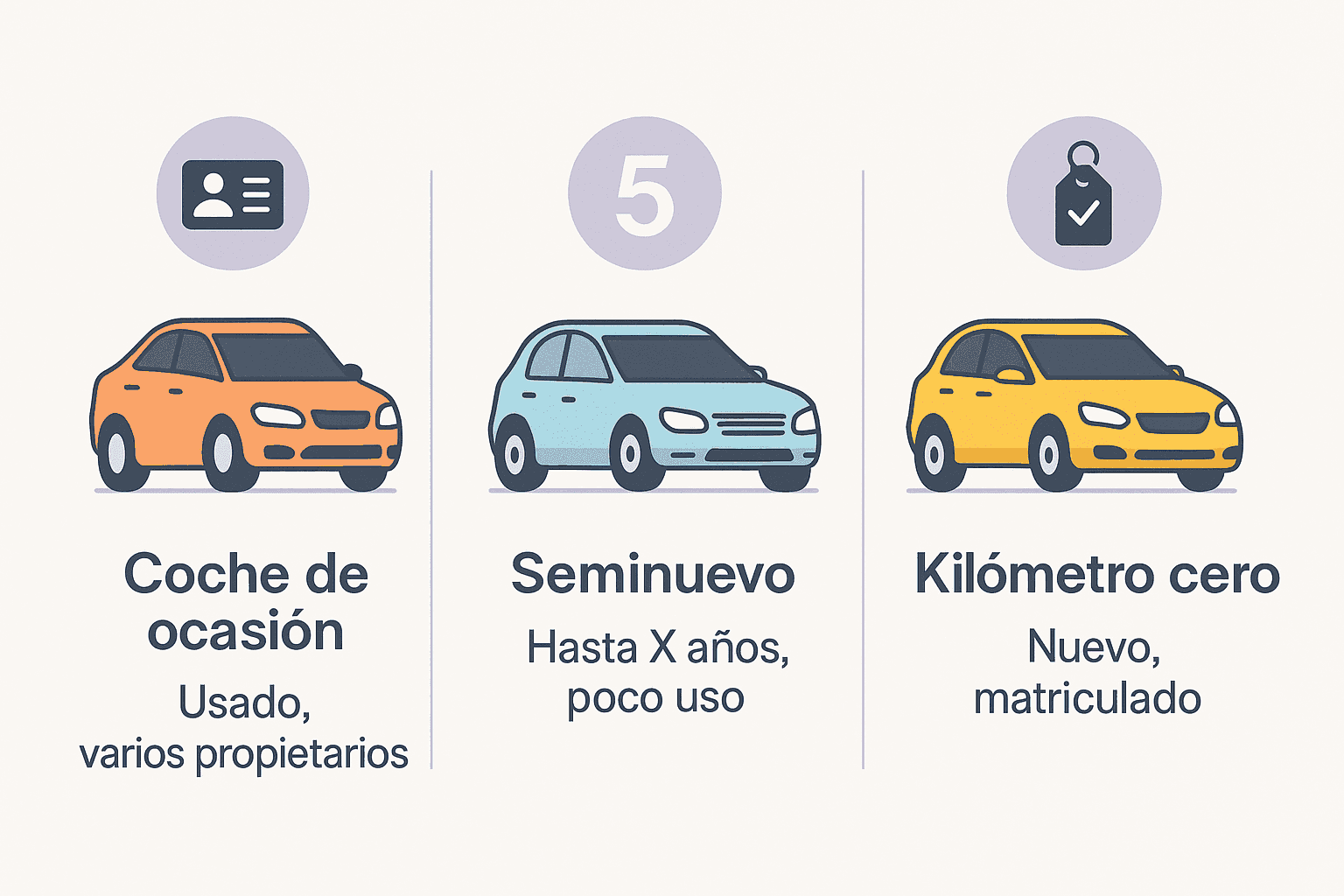
Used car
Vehicle over 1 year old and with one or more previous owners.
Variable mileage, often between 30,000 and 150,000 km.
It has usually been used intensively and may require reconditioning.
Nearly new car
Vehicle less than 3 years old and with fewer than 30,000 km.
In many cases, it has had a single owner or has been a management or leasing car.
Excellent condition, with a legal warranty and an optional extended one.
Pre-registered car (0 km)
New vehicle registered by the dealership to meet sales targets.
Has fewer than 100 km, although it may have been on display.
Lower price than a new car but with similar advantages.
Comparison table: used vs nearly new vs 0 km
Feature | Used | Nearly new | Pre-registered |
|---|---|---|---|
Age | +1 year | 6 months to 3 years | 0 to 12 months |
Mileage | +30,000 km | Up to 30,000 km | Less than 100 km |
No. of owners | 1 or more | 1 (occasionally 2) | None |
Warranty | Legal (minimum 1 year) | Legal + extended | Manufacturer's warranty |
Price | Lowest | Intermediate | High (but discounted) |
Overall condition | Good to very good | Very good/excellent | Practically new |
Advantages and disadvantages for the dealership
Used cars
Advantages: Higher unit margin, easy access to varied stock.
Disadvantages: Higher reconditioning cost, longer selling time, more demanding customer.
Nearly new cars
Advantages: Faster sale, high perceived value, good balance between price and condition.
Disadvantages: Lower margin than used, more competition between dealerships.
Pre-registered cars
Advantages: Immaculate condition, good financing, easy to sell as "new at a better price".
Disadvantages: High acquisition cost, limited stock, possible loss of value due to registration.
When it makes sense to prioritise each type of car
Used: Ideal when aiming for a high margin and there is capacity to recondition in-house. Very useful in rural areas or with a more price-sensitive audience.
Nearly new: Perfect for urban customers, young families and buyers who want safety and reliability without paying for a new car.
0 km: Recommended for end-of-quarter campaigns, finance promotions or online showcases. It is the perfect hook for capturing qualified leads.
Sales strategy by vehicle type
Used: Works well with outlet campaigns or flash promotions. Pay close attention to presentation and transparency (report, detailed photos, inspections).
Nearly new: Highlight warranty and provenance. Go for consultative selling and lead nurturing with comparisons.
0 km: Position it as "new without the wait". Use it as the entry vehicle on the website or showroom, especially if it can be financed at a good rate.
How to explain these differences to the customer
Avoid jargon. Use simple comparisons: "new with registration", "used but like new", etc.
Emphasise warranties and provenance. This builds trust and reduces doubts.
Adapt the message to the customer's profile. Price, usage, financing and availability are key.
Practical example
“This pre-registered car is like new but already registered, which is why it has a reduced price.”
“This nearly new car is only 18 months old, has had one owner and includes extended warranty: perfect if you're looking to save without compromising on features.”
“This used car is older, but it has been inspected and certified: it is a great option if you're looking for a keen price.”
Best practices for classifying and selling each type
In the digital showroom: Create clear filters and labels on the website or listings platform: "Certified 0 km", "Nearly new with warranty", etc.
At the physical point of sale: Visually separate the areas by type to simplify the customer experience.
In commercial communication: Align the team's sales pitch with the customer's profile and expectations.
Common mistakes that create distrust
Calling a car "nearly new" when it is over 5 years old or has 80,000 km.
Not explaining that a 0 km car is already registered and may be close to a reduced warranty period.
Posting photos without showing the vehicle's real condition.
Market data in Spain (2024-2025)
Used cars account for around 60% of the used vehicle market.
Nearly new cars are growing in demand, now representing 25-30% of the market.
0 km cars have fallen slightly after the pandemic, although they remain strong in online channels and finance-led offers.
Frequently asked questions (FAQ)
What exactly is a nearly new car?
A car less than 3 years old, with low mileage, in excellent condition and with an extended warranty.
And what is a pre-registered car?
It is a new car registered by the dealership with very few miles on the clock, usually on display or for test drives.
Which offers the best margin for the dealership?
It depends on the type of customer and channel, but used cars usually offer the highest gross margin.
What does a customer expect when buying each type?
Used: Good price and transparency.
Nearly new: Good condition and warranty.
0 km: Almost new product with a discount.
Conclusion
Understanding the differences between a used car, a nearly new car and a pre-registered car is essential for the modern dealership. It not only allows the sales strategy to be adjusted, but also improves communication with the customer and increases conversion at the point of sale or on the online channel.
In the used vehicle market, the terms "used", "nearly new" and "pre-registered" are often confused by both customers and professionals. For a dealership, knowing and correctly communicating these differences not only avoids misunderstandings, but also improves the sales experience and strengthens buyer confidence.
Definition of each type of vehicle
Used car
Vehicle over 1 year old and with one or more previous owners.
Variable mileage, often between 30,000 and 150,000 km.
It has usually been used intensively and may require reconditioning.
Nearly new car
Vehicle less than 3 years old and with fewer than 30,000 km.
In many cases, it has had a single owner or has been a management or leasing car.
Excellent condition, with a legal warranty and an optional extended one.
Pre-registered car (0 km)
New vehicle registered by the dealership to meet sales targets.
Has fewer than 100 km, although it may have been on display.
Lower price than a new car but with similar advantages.
Comparison table: used vs nearly new vs 0 km
Feature | Used | Nearly new | Pre-registered |
|---|---|---|---|
Age | +1 year | 6 months to 3 years | 0 to 12 months |
Mileage | +30,000 km | Up to 30,000 km | Less than 100 km |
No. of owners | 1 or more | 1 (occasionally 2) | None |
Warranty | Legal (minimum 1 year) | Legal + extended | Manufacturer's warranty |
Price | Lowest | Intermediate | High (but discounted) |
Overall condition | Good to very good | Very good/excellent | Practically new |
Advantages and disadvantages for the dealership
Used cars
Advantages: Higher unit margin, easy access to varied stock.
Disadvantages: Higher reconditioning cost, longer selling time, more demanding customer.
Nearly new cars
Advantages: Faster sale, high perceived value, good balance between price and condition.
Disadvantages: Lower margin than used, more competition between dealerships.
Pre-registered cars
Advantages: Immaculate condition, good financing, easy to sell as "new at a better price".
Disadvantages: High acquisition cost, limited stock, possible loss of value due to registration.
When it makes sense to prioritise each type of car
Used: Ideal when aiming for a high margin and there is capacity to recondition in-house. Very useful in rural areas or with a more price-sensitive audience.
Nearly new: Perfect for urban customers, young families and buyers who want safety and reliability without paying for a new car.
0 km: Recommended for end-of-quarter campaigns, finance promotions or online showcases. It is the perfect hook for capturing qualified leads.
Sales strategy by vehicle type
Used: Works well with outlet campaigns or flash promotions. Pay close attention to presentation and transparency (report, detailed photos, inspections).
Nearly new: Highlight warranty and provenance. Go for consultative selling and lead nurturing with comparisons.
0 km: Position it as "new without the wait". Use it as the entry vehicle on the website or showroom, especially if it can be financed at a good rate.
How to explain these differences to the customer
Avoid jargon. Use simple comparisons: "new with registration", "used but like new", etc.
Emphasise warranties and provenance. This builds trust and reduces doubts.
Adapt the message to the customer's profile. Price, usage, financing and availability are key.
Practical example
“This pre-registered car is like new but already registered, which is why it has a reduced price.”
“This nearly new car is only 18 months old, has had one owner and includes extended warranty: perfect if you're looking to save without compromising on features.”
“This used car is older, but it has been inspected and certified: it is a great option if you're looking for a keen price.”
Best practices for classifying and selling each type
In the digital showroom: Create clear filters and labels on the website or listings platform: "Certified 0 km", "Nearly new with warranty", etc.
At the physical point of sale: Visually separate the areas by type to simplify the customer experience.
In commercial communication: Align the team's sales pitch with the customer's profile and expectations.
Common mistakes that create distrust
Calling a car "nearly new" when it is over 5 years old or has 80,000 km.
Not explaining that a 0 km car is already registered and may be close to a reduced warranty period.
Posting photos without showing the vehicle's real condition.
Market data in Spain (2024-2025)
Used cars account for around 60% of the used vehicle market.
Nearly new cars are growing in demand, now representing 25-30% of the market.
0 km cars have fallen slightly after the pandemic, although they remain strong in online channels and finance-led offers.
Frequently asked questions (FAQ)
What exactly is a nearly new car?
A car less than 3 years old, with low mileage, in excellent condition and with an extended warranty.
And what is a pre-registered car?
It is a new car registered by the dealership with very few miles on the clock, usually on display or for test drives.
Which offers the best margin for the dealership?
It depends on the type of customer and channel, but used cars usually offer the highest gross margin.
What does a customer expect when buying each type?
Used: Good price and transparency.
Nearly new: Good condition and warranty.
0 km: Almost new product with a discount.
Conclusion
Understanding the differences between a used car, a nearly new car and a pre-registered car is essential for the modern dealership. It not only allows the sales strategy to be adjusted, but also improves communication with the customer and increases conversion at the point of sale or on the online channel.