In the world of car dealerships, making decisions without data is like driving blindfolded. Measuring performance every week makes it possible to quickly spot what is working and what is not, respond in time and keep improving continuously.
A weekly frequency is ideal because it allows agile adjustments without waiting for the month to end. It helps you identify spikes or sudden drops, better understand market behaviour and keep your team aligned around clear, measurable goals. Ultimately, it is a way to professionalise management without losing flexibility.
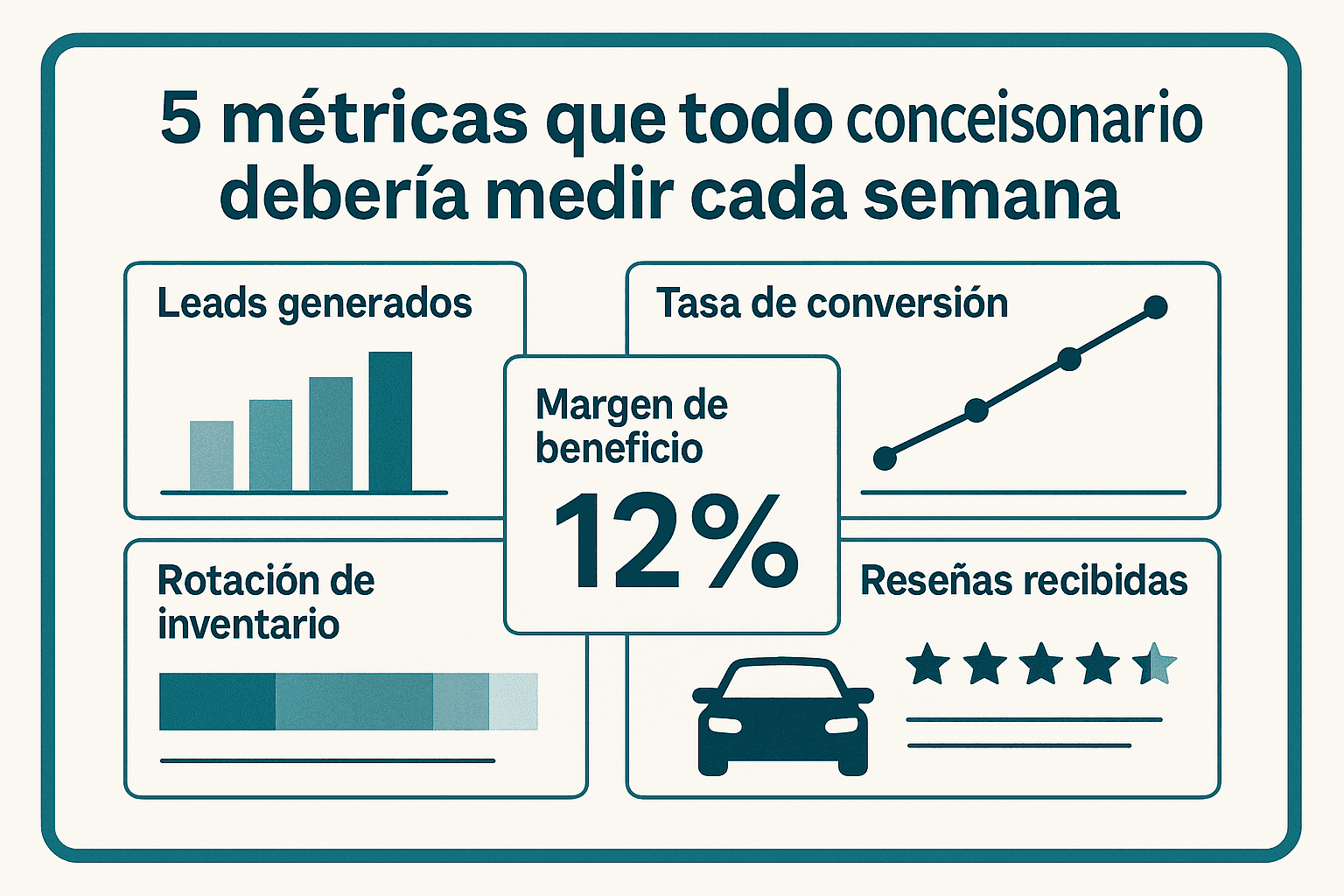
The 5 key metrics for dealerships
1. Number of leads generated
This is the starting point of every sale. A lead is anyone who shows interest in buying a vehicle, whether by visiting the dealership, filling in a form on the website or calling by phone. This metric shows you the effectiveness of your marketing efforts and visibility.
How do you measure it? Use your CRM, online forms, social media and also a manual log for in-person contacts. Automating this collection saves you time and reduces errors.
Tip: Distinguish between digital leads (web, social media, WhatsApp) and in-person leads (walk-ins, trade fairs, etc.) to identify which channels are generating the most real sales opportunities.
Dig deeper: If you notice a drop in leads, review your active campaigns, advertising spend, SEO positioning or even your opening hours.
2. Lead-to-sale conversion rate
It is not enough to generate lots of leads; you have to convert them. This metric tells you how effective your sales team is at closing deals.
Formula: (Number of sales / Number of leads) x 100
Healthy indicator: A rate above 10% is usually positive in dealerships, although it can vary by market segment and vehicle type.
How can you improve it? Train your team in closing techniques, follow up promptly, respond quickly to digital leads and analyse why opportunities are being lost (lack of stock, uncompetitive prices, response times, etc.).
Practical example: If you generate 100 leads a week but only sell 5 cars, you are leaving many opportunities on the table. A 2-3% improvement in this rate can mean thousands of euros extra each month.
3. Average inventory turnover time
Measures how long a car stays in your stock before being sold. The longer it stays, the higher the costs in space, maintenance and immobilised capital.
Example: If a car remains in inventory for more than 60 days, it may be affecting your cash flow and reducing your room for manoeuvre for new acquisitions.
Tools: Inventory management systems, dynamic Excel spreadsheets or integrated platforms such as Dealcar. The important thing is that you can view the average time and the time per unit.
Critical indicators: An average time above 45-60 days may indicate problems with pricing, poor promotion or low turnover of models that are not in demand.
Suggestion: Review the oldest units every week and apply strategies such as price adjustments, specific campaigns or relocating the car in the physical or digital showroom.
4. Profit margin per vehicle sold
It is vital to know how much you really earn from each sale. This metric helps you avoid the trap of volume without profitability.
Basic calculation: Sale price - (purchase price + associated costs such as reconditioning, MOT, commission, transport, etc.)
What should you look for? Although a unit may sell quickly, if the margin is too low, you are not building a sustainable business. Assess whether your promotional campaigns are reducing the margin more than is acceptable.
Strategy: Set a minimum margin per deal and review the averages weekly. A healthy margin allows you to invest in marketing, staff and a better customer experience.
Tip: Also review the margin by vehicle type, supplier or segment (small cars, SUVs, electric vehicles). There you may find valuable patterns to optimise your stock purchases.
5. Quantity and quality of reviews generated
Reviews are the new "word of mouth". They have a direct impact on your reputation, the trust you generate and your search engine ranking (local SEO).
Why measure them? Because they reflect your customers' perception and their level of satisfaction. They also influence the purchase decisions of future visitors. A dealership with many positive reviews is seen as trustworthy.
How do you measure it? Review your Google Business profile, social media, buying and selling platforms (such as Coches.net, Milanuncios) and post-sale surveys if you implement them.
Practical tip: Do not just count the quantity; also analyse the quality. Do they speak positively about the service? Do they mention salespeople by name? Would they recommend your dealership? All of that is reputational capital.
Action: Create a system to ask for reviews naturally and after the sale, for example via WhatsApp or email. Offer excellent service and the customer will feel more inclined to leave a positive opinion.
Useful tools for monitoring these metrics
CRM for dealerships such as HubSpot, Salesforce or specialised automotive platforms.
Google Analytics to analyse traffic and web conversions.
Dashboards in Google Data Studio or dynamic Excel with charts and alerts.
Automotive management software such as Dealcar, which allows you to centralise leads, sales, inventory and more, all in one place.
Tips for implementing a weekly tracking system
Assign a person in charge: Someone on the team should be responsible for collecting and presenting the data.
Hold a short meeting every week: 15-20 minutes to review key metrics, spot trends and make decisions.
Compare with previous weeks: That way you can see whether you are improving, stagnating or getting worse.
Visualise with simple charts: It helps the team understand the data and feel motivated to improve.
Act: Measuring is not enough. Define concrete actions every week based on the results.
Conclusion
Measuring is improving. Implementing a weekly tracking system for these 5 metrics will give you a real competitive advantage. You do not need expensive tools, just consistency, focus and the will to improve every week.
Success does not come only from selling more, but from selling better, with data in hand and smart decisions.
Start this week, adjust your processes, involve your team, and you will see the results reflected in your sales and your reputation.
Frequently asked questions (FAQs)
What is a key metric for a dealership?
A key metric (or KPI) is a piece of data that reflects the performance of a critical part of the business, such as sales, marketing or customer service. They help you make decisions based on real evidence.
How many metrics should a dealership track?
Ideally between 5 and 10. Too many can dilute focus, too few can leave you blind to problems. The 5 in this article cover essential areas.
How often should metrics be reviewed?
A weekly review allows you to make quick adjustments and not miss opportunities. It also creates a culture of continuous improvement within the team.
In the world of car dealerships, making decisions without data is like driving blindfolded. Measuring performance every week makes it possible to quickly spot what is working and what is not, respond in time and keep improving continuously.
A weekly frequency is ideal because it allows agile adjustments without waiting for the month to end. It helps you identify spikes or sudden drops, better understand market behaviour and keep your team aligned around clear, measurable goals. Ultimately, it is a way to professionalise management without losing flexibility.
The 5 key metrics for dealerships
1. Number of leads generated
This is the starting point of every sale. A lead is anyone who shows interest in buying a vehicle, whether by visiting the dealership, filling in a form on the website or calling by phone. This metric shows you the effectiveness of your marketing efforts and visibility.
How do you measure it? Use your CRM, online forms, social media and also a manual log for in-person contacts. Automating this collection saves you time and reduces errors.
Tip: Distinguish between digital leads (web, social media, WhatsApp) and in-person leads (walk-ins, trade fairs, etc.) to identify which channels are generating the most real sales opportunities.
Dig deeper: If you notice a drop in leads, review your active campaigns, advertising spend, SEO positioning or even your opening hours.
2. Lead-to-sale conversion rate
It is not enough to generate lots of leads; you have to convert them. This metric tells you how effective your sales team is at closing deals.
Formula: (Number of sales / Number of leads) x 100
Healthy indicator: A rate above 10% is usually positive in dealerships, although it can vary by market segment and vehicle type.
How can you improve it? Train your team in closing techniques, follow up promptly, respond quickly to digital leads and analyse why opportunities are being lost (lack of stock, uncompetitive prices, response times, etc.).
Practical example: If you generate 100 leads a week but only sell 5 cars, you are leaving many opportunities on the table. A 2-3% improvement in this rate can mean thousands of euros extra each month.
3. Average inventory turnover time
Measures how long a car stays in your stock before being sold. The longer it stays, the higher the costs in space, maintenance and immobilised capital.
Example: If a car remains in inventory for more than 60 days, it may be affecting your cash flow and reducing your room for manoeuvre for new acquisitions.
Tools: Inventory management systems, dynamic Excel spreadsheets or integrated platforms such as Dealcar. The important thing is that you can view the average time and the time per unit.
Critical indicators: An average time above 45-60 days may indicate problems with pricing, poor promotion or low turnover of models that are not in demand.
Suggestion: Review the oldest units every week and apply strategies such as price adjustments, specific campaigns or relocating the car in the physical or digital showroom.
4. Profit margin per vehicle sold
It is vital to know how much you really earn from each sale. This metric helps you avoid the trap of volume without profitability.
Basic calculation: Sale price - (purchase price + associated costs such as reconditioning, MOT, commission, transport, etc.)
What should you look for? Although a unit may sell quickly, if the margin is too low, you are not building a sustainable business. Assess whether your promotional campaigns are reducing the margin more than is acceptable.
Strategy: Set a minimum margin per deal and review the averages weekly. A healthy margin allows you to invest in marketing, staff and a better customer experience.
Tip: Also review the margin by vehicle type, supplier or segment (small cars, SUVs, electric vehicles). There you may find valuable patterns to optimise your stock purchases.
5. Quantity and quality of reviews generated
Reviews are the new "word of mouth". They have a direct impact on your reputation, the trust you generate and your search engine ranking (local SEO).
Why measure them? Because they reflect your customers' perception and their level of satisfaction. They also influence the purchase decisions of future visitors. A dealership with many positive reviews is seen as trustworthy.
How do you measure it? Review your Google Business profile, social media, buying and selling platforms (such as Coches.net, Milanuncios) and post-sale surveys if you implement them.
Practical tip: Do not just count the quantity; also analyse the quality. Do they speak positively about the service? Do they mention salespeople by name? Would they recommend your dealership? All of that is reputational capital.
Action: Create a system to ask for reviews naturally and after the sale, for example via WhatsApp or email. Offer excellent service and the customer will feel more inclined to leave a positive opinion.
Useful tools for monitoring these metrics
CRM for dealerships such as HubSpot, Salesforce or specialised automotive platforms.
Google Analytics to analyse traffic and web conversions.
Dashboards in Google Data Studio or dynamic Excel with charts and alerts.
Automotive management software such as Dealcar, which allows you to centralise leads, sales, inventory and more, all in one place.
Tips for implementing a weekly tracking system
Assign a person in charge: Someone on the team should be responsible for collecting and presenting the data.
Hold a short meeting every week: 15-20 minutes to review key metrics, spot trends and make decisions.
Compare with previous weeks: That way you can see whether you are improving, stagnating or getting worse.
Visualise with simple charts: It helps the team understand the data and feel motivated to improve.
Act: Measuring is not enough. Define concrete actions every week based on the results.
Conclusion
Measuring is improving. Implementing a weekly tracking system for these 5 metrics will give you a real competitive advantage. You do not need expensive tools, just consistency, focus and the will to improve every week.
Success does not come only from selling more, but from selling better, with data in hand and smart decisions.
Start this week, adjust your processes, involve your team, and you will see the results reflected in your sales and your reputation.
Frequently asked questions (FAQs)
What is a key metric for a dealership?
A key metric (or KPI) is a piece of data that reflects the performance of a critical part of the business, such as sales, marketing or customer service. They help you make decisions based on real evidence.
How many metrics should a dealership track?
Ideally between 5 and 10. Too many can dilute focus, too few can leave you blind to problems. The 5 in this article cover essential areas.
How often should metrics be reviewed?
A weekly review allows you to make quick adjustments and not miss opportunities. It also creates a culture of continuous improvement within the team.