Buying a second-hand car can be a great opportunity to save money, but it also carries certain risks. Hidden damage, mileage tampering or incomplete history are relatively common problems in the used-car market.
To reduce these risks, more and more buyers and dealerships use vehicle history-check tools. One of the best known is CarVertical.
In this complete guide we explain what CarVertical is, how it works, what information its report includes and when it is worth using it before buying a used car.
In addition, we'll look at how dealerships can use this type of report to build trust and sell more used vehicles.
CarVertical is an online platform that allows you to check a vehicle's history using its chassis number (VIN).
The tool gathers data from multiple sources, such as:
Traffic records
Insurers
Workshops
International databases
Technical inspections
Police records
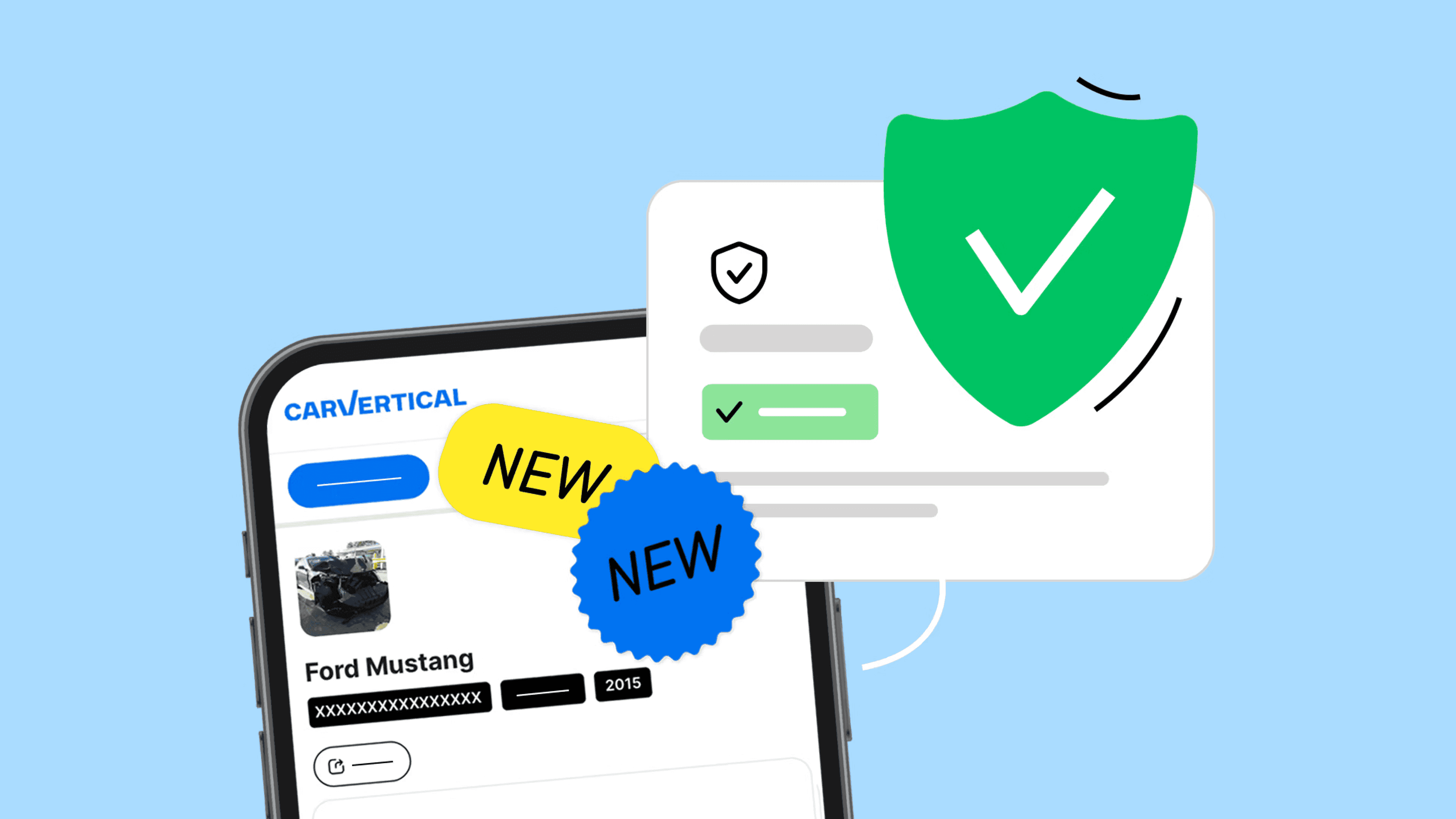
With all this information, CarVertical generates a vehicle history report that helps you understand its past before buying it.
The platform's main aim is to bring transparency to the second-hand car market, allowing buyers and sellers to check key information about a vehicle in just a few minutes.
CarVertical is currently used in dozens of countries and is especially useful for checking imported cars, where the history can be harder to verify.
What CarVertical is for
The CarVertical report can detect many of the most common problems in the used-car market.
Its main uses include:
1. Detecting mileage tampering
Odometer fraud remains one of the most common problems in the used-car market.
The report compares historical vehicle records and can detect mileage inconsistencies.
2. Finding out whether the car has been in accidents
Often, significant damage is not mentioned in the sales advert.
CarVertical can show accident records, repairs or structural damage.
3. Checking whether the vehicle has been stolen
The system also checks stolen-vehicle databases.
This helps to avoid buying cars with legal issues.
4. Learning the car's international history
This is especially useful for imported vehicles, as the system checks databases from different countries.
How CarVertical works
CarVertical's operation is fairly straightforward and is based on three main steps.
1. Entering the chassis number (VIN)
To generate the report, you need to enter the VIN (Vehicle Identification Number).
The VIN is a unique 17-character code that identifies each vehicle.
With this number, you can trace the car's history across different records.
2. Database analysis
Once the VIN has been entered, the platform analyses data from multiple sources:
public bodies
insurers
workshops
technical inspections
accident records
vehicle auctions
The information is cross-referenced to reconstruct the vehicle's history.
3. Generating the history report
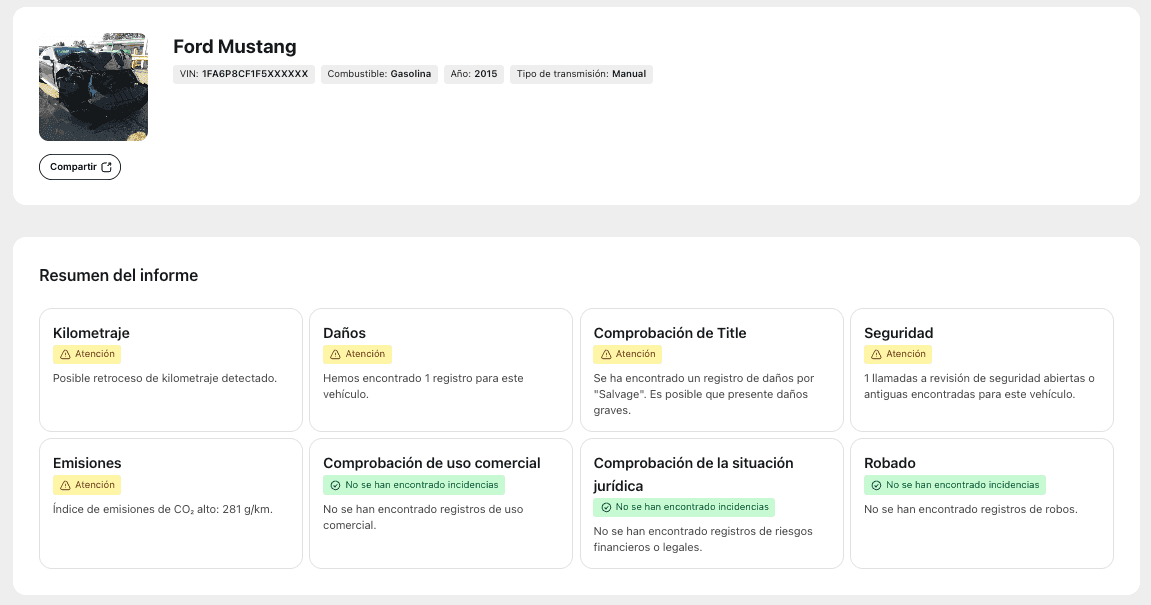
After analysing the available data, CarVertical generates a comprehensive report that includes different sections of the car's history.
The report can be viewed online in just a few minutes.
What information a CarVertical report includes
The report content may vary depending on the vehicle and the records available, but it normally includes information such as the following.
Accident history
The report may show records of accidents or structural damage reported by insurers or workshops.
In some cases, repair estimates are also included
If you want to delve deeper into this topic, here we explain how to tell if a car has been in an accident before buying it.
Mileage history
One of the most important sections is the mileage history.
If the system detects inconsistencies between different records, it can indicate possible odometer tampering.
Ownership history
In some cases the report can show changes in ownership or the countries in which the car has been registered.
This helps identify imported vehicles.
Stolen records
The report also checks stolen vehicle databases.
This makes it possible to check whether the car has any legal issues.
Historical photos
Some reports include old photographs of the vehicle, for example from auctions or write-offs.
These images can reveal damage that does not appear in the sales advert.
If you want to go further into how to check a vehicle's past, you can consult this guide on how to review the maintenance history of a used car.
CarVertical vs Carfax: which tool is better?
There are also other tools such as the Carfax report or DGT records to check a vehicle's history.
The two best-known platforms for checking vehicle history are CarVertical and Carfax.
Although both offer similar reports, there are some differences.
Feature | CarVertical | Carfax |
|---|---|---|
International coverage | Very broad | More limited |
Use of blockchain technology | Yes | No |
Accident information | Yes | Yes |
Mileage history | Yes | Yes |
Historical photos | Yes | Some |
Price | Generally more affordable | More expensive |
In general, CarVertical is especially useful for imported vehicles, while Carfax has a greater historical presence in some markets.
Is CarVertical reliable?
One of the most frequently asked questions is whether CarVertical is reliable.
The platform gathers data from multiple public and private sources, which makes it possible to reconstruct much of a vehicle's history.
However, it is important to bear in mind that:
the report depends on the data available
some countries have more records than others
not all incidents are recorded
For this reason, experts recommend using history reports as a complement to a vehicle inspection.
When it is worth using CarVertical
There are several risks of buying a used car, so requesting a report can be especially advisable in situations such as these:
buying a second-hand car
buying an imported car
vehicles with suspiciously low prices
cars without a maintenance history
private sales
In these cases, checking the vehicle's history can prevent significant problems.
How dealerships can use history reports
History reports are not only useful for private buyers. They can also add a lot of value to used-car dealerships.
Building trust in the sales process
Showing the vehicle's history to the customer demonstrates transparency.
This reduces buyer doubts and makes the purchase decision easier.
Differentiating yourself from other dealerships
Many buyers value a dealership providing complete information about the vehicle.
Including a history report can become a differentiating factor against the competition.
Reducing conflicts after the sale
When the customer knows the car's history before buying it, later problems are reduced.
This improves customer satisfaction and the dealership's reputation.
Conclusion
Now that you know what CarVertical is, it is clear why it has become an increasingly used tool in the used-car market.
Checking a vehicle's history before buying it makes it possible to detect fraud, identify possible accidents and make more informed decisions.
For buyers and dealerships, this type of report represents an additional layer of security and transparency in the used-car buying process.
You can also consult our guide on what to check before buying a car to resell.
Frequently asked questions about CarVertical
What is CarVertical?
CarVertical is a platform that generates vehicle history reports using the chassis number (VIN) and data from different international databases.
How does CarVertical work?
The user enters the vehicle's VIN, the system checks different records and generates a report with information about accidents, mileage, owners or theft records.
How much does a CarVertical report cost?
The price usually varies depending on the country and available promotions, but normally a report costs between 15 and 25 euros.
Is CarVertical free?
No. CarVertical reports are paid for, although promotions or discounts are sometimes available.
Can CarVertical be used with imported cars?
Yes. In fact, it is especially useful for imported cars because it checks international databases.
Check the history of any car with CarVertical from Dealcar
If you are buying or selling a used car, checking the vehicle's history is one of the best ways to avoid fraud and make informed decisions.
Dealcar is the official CarVertical partner, so you can request the history report directly from the Dealcar platform and check the vehicle information before completing a transaction.
Buying a second-hand car can be a great opportunity to save money, but it also carries certain risks. Hidden damage, mileage tampering or incomplete history are relatively common problems in the used-car market.
To reduce these risks, more and more buyers and dealerships use vehicle history-check tools. One of the best known is CarVertical.
In this complete guide we explain what CarVertical is, how it works, what information its report includes and when it is worth using it before buying a used car.
In addition, we'll look at how dealerships can use this type of report to build trust and sell more used vehicles.
CarVertical is an online platform that allows you to check a vehicle's history using its chassis number (VIN).
The tool gathers data from multiple sources, such as:
Traffic records
Insurers
Workshops
International databases
Technical inspections
Police records
With all this information, CarVertical generates a vehicle history report that helps you understand its past before buying it.
The platform's main aim is to bring transparency to the second-hand car market, allowing buyers and sellers to check key information about a vehicle in just a few minutes.
CarVertical is currently used in dozens of countries and is especially useful for checking imported cars, where the history can be harder to verify.
What CarVertical is for
The CarVertical report can detect many of the most common problems in the used-car market.
Its main uses include:
1. Detecting mileage tampering
Odometer fraud remains one of the most common problems in the used-car market.
The report compares historical vehicle records and can detect mileage inconsistencies.
2. Finding out whether the car has been in accidents
Often, significant damage is not mentioned in the sales advert.
CarVertical can show accident records, repairs or structural damage.
3. Checking whether the vehicle has been stolen
The system also checks stolen-vehicle databases.
This helps to avoid buying cars with legal issues.
4. Learning the car's international history
This is especially useful for imported vehicles, as the system checks databases from different countries.
How CarVertical works
CarVertical's operation is fairly straightforward and is based on three main steps.
1. Entering the chassis number (VIN)
To generate the report, you need to enter the VIN (Vehicle Identification Number).
The VIN is a unique 17-character code that identifies each vehicle.
With this number, you can trace the car's history across different records.
2. Database analysis
Once the VIN has been entered, the platform analyses data from multiple sources:
public bodies
insurers
workshops
technical inspections
accident records
vehicle auctions
The information is cross-referenced to reconstruct the vehicle's history.
3. Generating the history report
After analysing the available data, CarVertical generates a comprehensive report that includes different sections of the car's history.
The report can be viewed online in just a few minutes.
What information a CarVertical report includes
The report content may vary depending on the vehicle and the records available, but it normally includes information such as the following.
Accident history
The report may show records of accidents or structural damage reported by insurers or workshops.
In some cases, repair estimates are also included
If you want to delve deeper into this topic, here we explain how to tell if a car has been in an accident before buying it.
Mileage history
One of the most important sections is the mileage history.
If the system detects inconsistencies between different records, it can indicate possible odometer tampering.
Ownership history
In some cases the report can show changes in ownership or the countries in which the car has been registered.
This helps identify imported vehicles.
Stolen records
The report also checks stolen vehicle databases.
This makes it possible to check whether the car has any legal issues.
Historical photos
Some reports include old photographs of the vehicle, for example from auctions or write-offs.
These images can reveal damage that does not appear in the sales advert.
If you want to go further into how to check a vehicle's past, you can consult this guide on how to review the maintenance history of a used car.
CarVertical vs Carfax: which tool is better?
There are also other tools such as the Carfax report or DGT records to check a vehicle's history.
The two best-known platforms for checking vehicle history are CarVertical and Carfax.
Although both offer similar reports, there are some differences.
Feature | CarVertical | Carfax |
|---|---|---|
International coverage | Very broad | More limited |
Use of blockchain technology | Yes | No |
Accident information | Yes | Yes |
Mileage history | Yes | Yes |
Historical photos | Yes | Some |
Price | Generally more affordable | More expensive |
In general, CarVertical is especially useful for imported vehicles, while Carfax has a greater historical presence in some markets.
Is CarVertical reliable?
One of the most frequently asked questions is whether CarVertical is reliable.
The platform gathers data from multiple public and private sources, which makes it possible to reconstruct much of a vehicle's history.
However, it is important to bear in mind that:
the report depends on the data available
some countries have more records than others
not all incidents are recorded
For this reason, experts recommend using history reports as a complement to a vehicle inspection.
When it is worth using CarVertical
There are several risks of buying a used car, so requesting a report can be especially advisable in situations such as these:
buying a second-hand car
buying an imported car
vehicles with suspiciously low prices
cars without a maintenance history
private sales
In these cases, checking the vehicle's history can prevent significant problems.
How dealerships can use history reports
History reports are not only useful for private buyers. They can also add a lot of value to used-car dealerships.
Building trust in the sales process
Showing the vehicle's history to the customer demonstrates transparency.
This reduces buyer doubts and makes the purchase decision easier.
Differentiating yourself from other dealerships
Many buyers value a dealership providing complete information about the vehicle.
Including a history report can become a differentiating factor against the competition.
Reducing conflicts after the sale
When the customer knows the car's history before buying it, later problems are reduced.
This improves customer satisfaction and the dealership's reputation.
Conclusion
Now that you know what CarVertical is, it is clear why it has become an increasingly used tool in the used-car market.
Checking a vehicle's history before buying it makes it possible to detect fraud, identify possible accidents and make more informed decisions.
For buyers and dealerships, this type of report represents an additional layer of security and transparency in the used-car buying process.
You can also consult our guide on what to check before buying a car to resell.
Frequently asked questions about CarVertical
What is CarVertical?
CarVertical is a platform that generates vehicle history reports using the chassis number (VIN) and data from different international databases.
How does CarVertical work?
The user enters the vehicle's VIN, the system checks different records and generates a report with information about accidents, mileage, owners or theft records.
How much does a CarVertical report cost?
The price usually varies depending on the country and available promotions, but normally a report costs between 15 and 25 euros.
Is CarVertical free?
No. CarVertical reports are paid for, although promotions or discounts are sometimes available.
Can CarVertical be used with imported cars?
Yes. In fact, it is especially useful for imported cars because it checks international databases.
Check the history of any car with CarVertical from Dealcar
If you are buying or selling a used car, checking the vehicle's history is one of the best ways to avoid fraud and make informed decisions.
Dealcar is the official CarVertical partner, so you can request the history report directly from the Dealcar platform and check the vehicle information before completing a transaction.