Contents
Two ways of selling, two completely different experiences
The traditional model: publish and wait
The inverted model: receive offers without publishing
Direct comparison with real data
Why does the offer-receiving model achieve a better price?
When it makes sense to publish an advert
When it makes sense to receive offers
Can both models be combined?
Frequently asked questions
Selling a car in Spain has always been done the same way: you publish an advert with photos and price, wait for someone to be interested, deal with calls and viewings, negotiate and, if you're lucky, close the deal. It's the model everyone knows. The one on Wallapop, Coches.net, Milanuncios.
But there is an alternative model that turns the process completely on its head: instead of you looking for the buyer, the buyers compete for your car. You publish nothing, you receive no calls from window-shoppers, you do no viewings and you negotiate with no one. Professional buyers see your car and send you offers. You compare them and decide.
These are two radically different selling experiences, with very different results in price, time and effort too. In this article we compare them objectively so you can choose the one that works best for you.
The traditional model: publish and wait
This is the model that has dominated the market ever since classified portals existed. You do all the work: you prepare the car, take photos, write the description, choose the price, publish on one or more portals and wait for buyers to arrive.
How it works in practice
Day 1-2. You wash the car, take photos, write the description and publish it on Wallapop, Coches.net or Milanuncios. If you want visibility, you pay to feature the advert.
Week 1-2. Messages start coming in. Some ask things that are already in the advert. Others make offers 25% below your price without having seen the car. A few seem genuinely interested. You arrange viewings.
Week 2-4. The viewings begin. Some buyers don't show up. Others come, look at the car and say "I'll call you later" (they don't call). Someone makes you a reasonable offer, but below what you expected. You negotiate.
Week 4-8. If you still haven't closed, you start thinking about lowering the price. The advert has dropped down the portal rankings. New contacts are less frequent. The pressure grows.
Week 6-12. You accept an offer that you would probably have rejected on day one. You close out of exhaustion more than conviction. You handle the contract, payment and the paperwork with the DGT.
Accepting out of exhaustion is one of the most common mistakes that make you sell your car for less money.
What you gain with this model
Total control over the process. You decide the price, who you sell to and under what conditions. If your car is in high demand and you set the price well, you can get a competitive result.
What you lose
Time (weeks or months), energy (calls, failed viewings, haggling), money (every week without selling is depreciation) and safety (the risk of scams or non-payment between private individuals is real).
If you decide to publish on portals, it's worth knowing the risks. See our complete guide to selling your car on Wallapop.
The inverted model: receive offers without publishing
This model works the other way round. Instead of you looking for the buyer, buyers look for cars like yours. You enter your vehicle details once and interested buyers send you offers. You don't publish, you don't manage viewings and you don't negotiate with strangers.
How it works in practice
Minute 1-5. You enter the platform, type in the registration number and the basic details of your car (model, mileage, condition). You receive an initial valuation.
Hours 1-18. Your car is shown to a network of professional buyers. Those interested in your type of vehicle send offers. These are not estimates: they are real purchase offers.
Day 1-3. You have several offers on the table. You compare prices, conditions and timeframes. You choose the best one. If none of them convince you, you turn them all down at no cost.
Day 3-7. If you accept an offer, the professional buyer handles everything: bank transfer payment (before you hand over the keys), collection of the car from your home and the paperwork (transfer, DGT, documentation).
What you gain with this model
Speed (offers within hours, completion in days), competitive price (competition between buyers pushes the offer up), convenience (you don't publish, you don't do viewings, you don't negotiate) and safety (verified buyers, guaranteed payment before handover).
What you lose
Control over who the final buyer is (it's a professional, not a private individual you choose). And if your car has very specific features that a private buyer would pay above market for (classic car, special edition with niche demand), the professional bidding model may not capture that emotional value.
Direct comparison with real data
Aspect | Publish an advert | Receive offers |
|---|---|---|
Who does the work | You (photos, advert, viewings, negotiation) | The platform and the buyers |
Time until first offer | Days or weeks | Less than 18 hours on average |
Total time to sell | 30-90 days on average | 4-7 days on average |
No. of offers you receive | Unpredictable (it can be 0 or many) | Multiple (depends on the car) |
Price achieved | Variable (depends on negotiation) | On average, €1,400 more than Wallapop |
Seller effort | High | Very low |
Risk of scams/non-payment | Medium-high (between private individuals) | Low (verified buyers) |
Paperwork management | You | The professional buyer |
Collection of the car | The buyer comes or you take it there | At home |
Cost | Free (basic) or paid (featured) | Free |
Why does the offer-receiving model achieve a better price?
The answer is simple: simultaneous competition.
When you publish an advert, buyers arrive one by one. Each negotiation is individual. The buyer in front of you doesn't know whether there are other interested parties (and normally there aren't any at that exact moment). They negotiate the price down because they can.
When you receive offers from multiple professional buyers at the same time, each one knows they are competing against the others. A dealer who needs a Seat León for stock and knows that four other dealers want it too cannot afford to offer 15% below market value. If they do, someone else will take it.
The difference between a valuation and a real offer is key to understanding this mechanism. See online valuation vs real offer: differences."
It's the same principle that works in an auction: when there are several bidders, the price rises. Not because the seller pressures them, but because the buyers don't want to miss out.
This mechanism is especially powerful with high-demand cars (compact SUVs, hybrids, popular low-mileage models), where many dealers need the same type of vehicle for their stock. In these cases, competition is intense and the offers can even exceed online valuations.
When it makes sense to publish an advert
The publish model works best when certain conditions are met.
You have a niche car with collector demand. Classic cars, limited editions, models with a fan following. These cars can achieve emotional prices from a private buyer looking for that exact vehicle. A professional dealer is not going to pay an emotional premium.
Your car has a modification or customisation that a private buyer would value. Aftermarket equipment, specific builds, unusual configurations. The private buyer who is looking for exactly that may pay more than a professional.
You have plenty of time and enjoy the process. Some people enjoy negotiating, showing their car and managing the sale. If that's you, publishing gives you the satisfaction of total control.
You want to try to get a price above market. If you're not in a hurry, you can publish at a high price and wait. It might work if your car is especially attractive. But if it doesn't, you'll have lost weeks that you could have used in another way.
When it makes sense to receive offers
The offer-receiving model works best in most common situations.
Your car is a popular model with steady demand. Compact SUVs, city cars, mid-range saloons, hybrids. These are the cars dealers need for stock and actively compete for.
You want to sell quickly without sacrificing price. Offers arrive in hours, not weeks. And because there is competition, the price does not drop because of the speed.
You don't want to manage the process. No photos, no adverts, no calls, no viewings, no negotiation, no paperwork. You upload the details once and compare offers.
You need a reliable price reference. Even if you don't end up selling this way, competing dealer offers are the most accurate reference for your car's real value.
Your car has some complication. Outstanding finance, high mileage, low emissions label, damage. Professional dealers are more flexible than private buyers and are used to dealing with these situations.
If your car has outstanding finance, professional dealers manage the cancellation. See how to sell a car with finance.
Can both models be combined?
Yes, and in fact it's a smart strategy.
You can request offers from dealers through Dealcar and at the same time publish your car on Wallapop or Coches.net. Dealer offers give you a price floor (you know that, at the very least, you can sell for that amount). If a private buyer offers you more, you close with them. If not, you close with the best dealer.
This combination gives you the best of both worlds: the reference price from professional competition and the chance to capture an extra premium from a particularly interested private buyer. Without the pressure of relying solely on portals or the uncertainty of not knowing what your car is really worth.
The only thing you should avoid is accepting two offers at the same time. If you receive a good offer from a dealer and a private buyer at the same time, choose one and let the other party know.
Combining both models is part of the strategy to get the best price for your car.
Dealcar: receive offers without publishing adverts
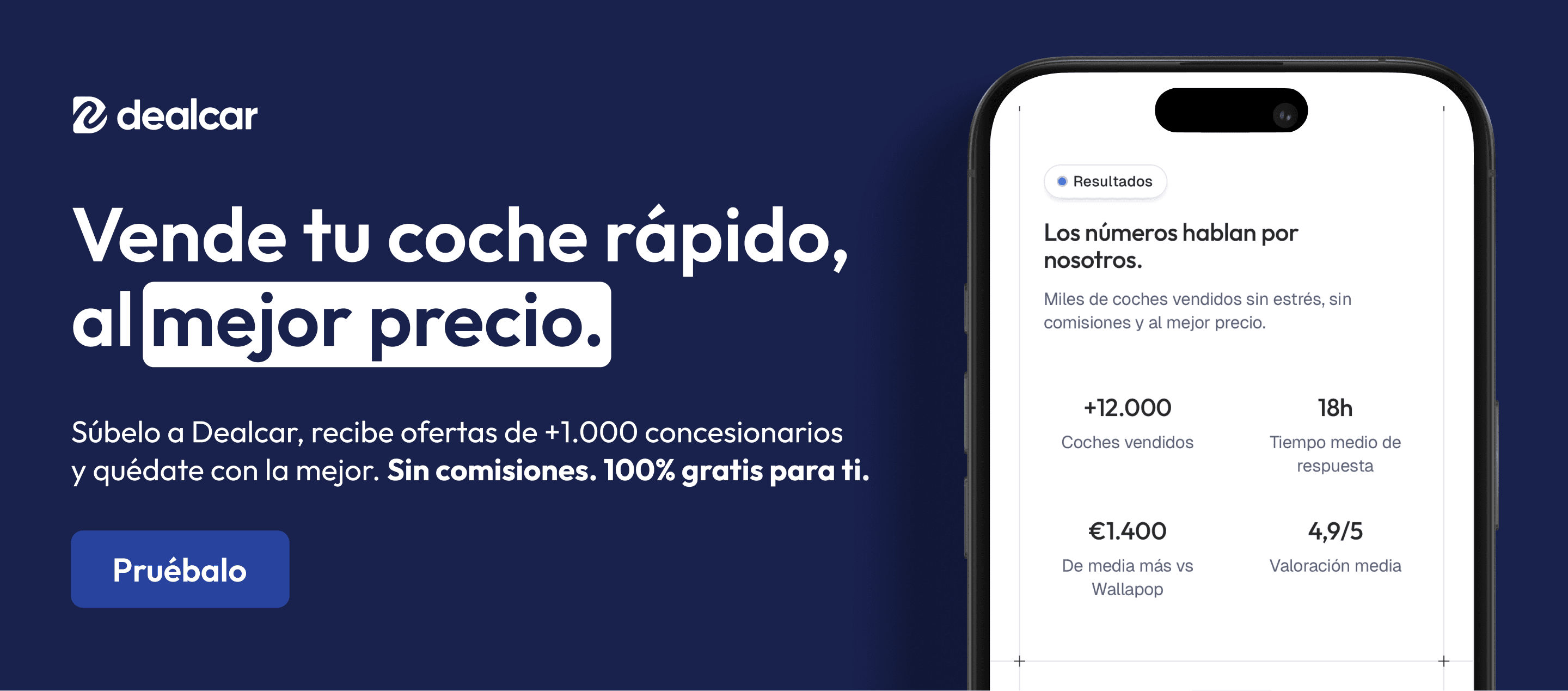
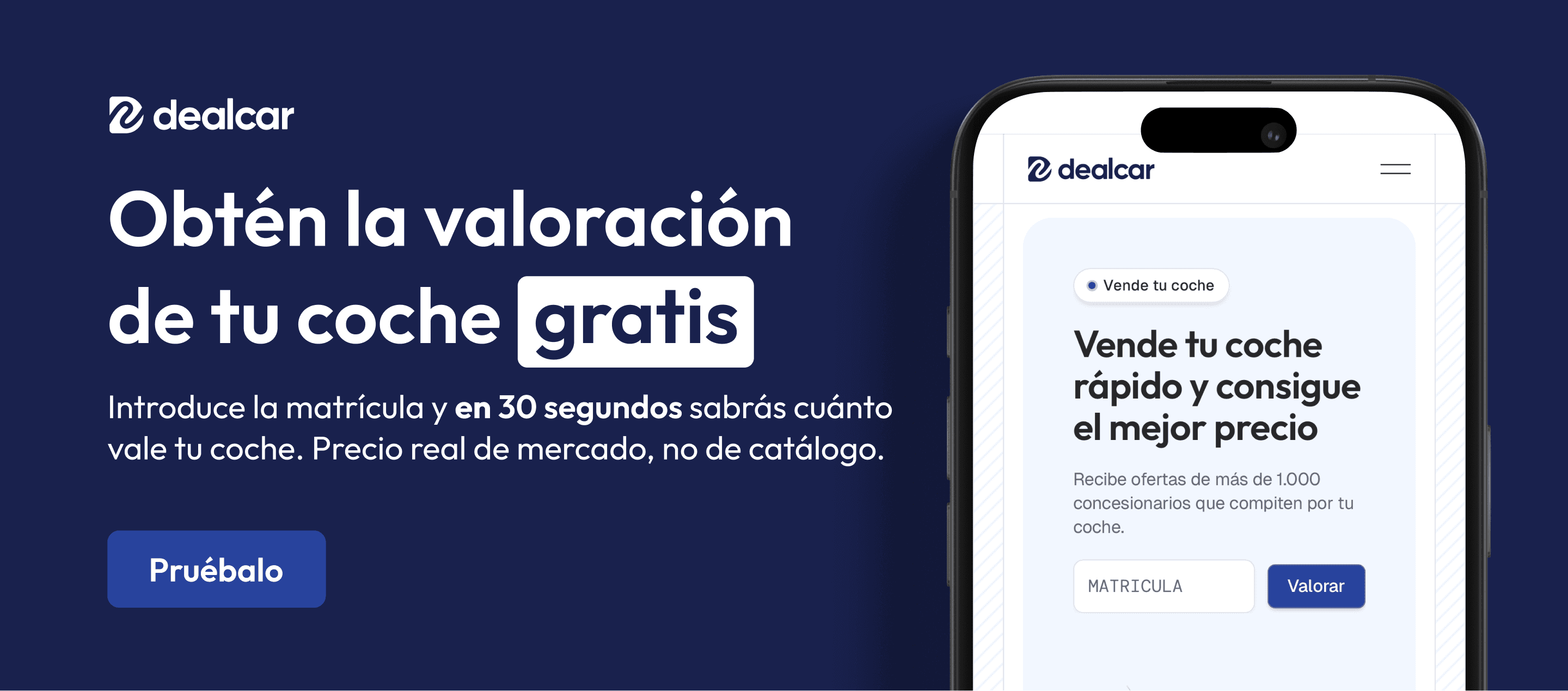
Dealcar is the platform that makes the offer-receiving model possible. You value your car for free in less than 30 seconds and more than 1,000 verified professional dealers and traders compete with one another to buy it. On average, the first offers arrive in less than 18 hours.
100% free for you. No commissions or hidden costs.
You get paid before handing over the keys. Bank transfer before you hand over the car.
They collect the car from your home. No travel needed.
No paperwork. The dealer handles the transfer, the DGT and all the admin.
On average, €1,400 more than selling on Wallapop.
More than 12,000 cars sold and an average rating of 4.9 out of 5.
Use Dealcar's free valuation tool.
Frequently asked questions
Why does receiving offers give a better price than publishing an advert?
Because it creates simultaneous competition between buyers. When several dealers bid for the same car at the same time, offers go up. When you publish an advert, buyers arrive one by one and negotiate without competition.
Can I publish on Wallapop and ask for offers on Dealcar at the same time?
Yes. There is no exclusivity in either of them. In fact, it's a good strategy: Dealcar offers give you a price floor to compare with any offer you receive from a private buyer.
What if I prefer to sell to a private buyer?
If a private buyer offers you more than the dealers, sell to the private buyer. Dealcar offers commit you to nothing. You can use them as a reference and then decide which route to close through.
What type of cars does receiving offers work best for?
It works especially well with cars in steady demand: SUVs, compact cars, hybrids, popular models with reasonable mileage. The more professional demand there is for your type of car, the more offers you receive and the more competitive they are.
Is there any case where publishing is clearly better?
Yes. Classic cars, limited editions, niche models with collector demand and vehicles with modifications valued by a specific audience. In these cases, a private buyer may pay an emotional price that a professional dealer will not.
Contents
Two ways of selling, two completely different experiences
The traditional model: publish and wait
The inverted model: receive offers without publishing
Direct comparison with real data
Why does the offer-receiving model achieve a better price?
When it makes sense to publish an advert
When it makes sense to receive offers
Can both models be combined?
Frequently asked questions
Selling a car in Spain has always been done the same way: you publish an advert with photos and price, wait for someone to be interested, deal with calls and viewings, negotiate and, if you're lucky, close the deal. It's the model everyone knows. The one on Wallapop, Coches.net, Milanuncios.
But there is an alternative model that turns the process completely on its head: instead of you looking for the buyer, the buyers compete for your car. You publish nothing, you receive no calls from window-shoppers, you do no viewings and you negotiate with no one. Professional buyers see your car and send you offers. You compare them and decide.
These are two radically different selling experiences, with very different results in price, time and effort too. In this article we compare them objectively so you can choose the one that works best for you.
The traditional model: publish and wait
This is the model that has dominated the market ever since classified portals existed. You do all the work: you prepare the car, take photos, write the description, choose the price, publish on one or more portals and wait for buyers to arrive.
How it works in practice
Day 1-2. You wash the car, take photos, write the description and publish it on Wallapop, Coches.net or Milanuncios. If you want visibility, you pay to feature the advert.
Week 1-2. Messages start coming in. Some ask things that are already in the advert. Others make offers 25% below your price without having seen the car. A few seem genuinely interested. You arrange viewings.
Week 2-4. The viewings begin. Some buyers don't show up. Others come, look at the car and say "I'll call you later" (they don't call). Someone makes you a reasonable offer, but below what you expected. You negotiate.
Week 4-8. If you still haven't closed, you start thinking about lowering the price. The advert has dropped down the portal rankings. New contacts are less frequent. The pressure grows.
Week 6-12. You accept an offer that you would probably have rejected on day one. You close out of exhaustion more than conviction. You handle the contract, payment and the paperwork with the DGT.
Accepting out of exhaustion is one of the most common mistakes that make you sell your car for less money.
What you gain with this model
Total control over the process. You decide the price, who you sell to and under what conditions. If your car is in high demand and you set the price well, you can get a competitive result.
What you lose
Time (weeks or months), energy (calls, failed viewings, haggling), money (every week without selling is depreciation) and safety (the risk of scams or non-payment between private individuals is real).
If you decide to publish on portals, it's worth knowing the risks. See our complete guide to selling your car on Wallapop.
The inverted model: receive offers without publishing
This model works the other way round. Instead of you looking for the buyer, buyers look for cars like yours. You enter your vehicle details once and interested buyers send you offers. You don't publish, you don't manage viewings and you don't negotiate with strangers.
How it works in practice
Minute 1-5. You enter the platform, type in the registration number and the basic details of your car (model, mileage, condition). You receive an initial valuation.
Hours 1-18. Your car is shown to a network of professional buyers. Those interested in your type of vehicle send offers. These are not estimates: they are real purchase offers.
Day 1-3. You have several offers on the table. You compare prices, conditions and timeframes. You choose the best one. If none of them convince you, you turn them all down at no cost.
Day 3-7. If you accept an offer, the professional buyer handles everything: bank transfer payment (before you hand over the keys), collection of the car from your home and the paperwork (transfer, DGT, documentation).
What you gain with this model
Speed (offers within hours, completion in days), competitive price (competition between buyers pushes the offer up), convenience (you don't publish, you don't do viewings, you don't negotiate) and safety (verified buyers, guaranteed payment before handover).
What you lose
Control over who the final buyer is (it's a professional, not a private individual you choose). And if your car has very specific features that a private buyer would pay above market for (classic car, special edition with niche demand), the professional bidding model may not capture that emotional value.
Direct comparison with real data
Aspect | Publish an advert | Receive offers |
|---|---|---|
Who does the work | You (photos, advert, viewings, negotiation) | The platform and the buyers |
Time until first offer | Days or weeks | Less than 18 hours on average |
Total time to sell | 30-90 days on average | 4-7 days on average |
No. of offers you receive | Unpredictable (it can be 0 or many) | Multiple (depends on the car) |
Price achieved | Variable (depends on negotiation) | On average, €1,400 more than Wallapop |
Seller effort | High | Very low |
Risk of scams/non-payment | Medium-high (between private individuals) | Low (verified buyers) |
Paperwork management | You | The professional buyer |
Collection of the car | The buyer comes or you take it there | At home |
Cost | Free (basic) or paid (featured) | Free |
Why does the offer-receiving model achieve a better price?
The answer is simple: simultaneous competition.
When you publish an advert, buyers arrive one by one. Each negotiation is individual. The buyer in front of you doesn't know whether there are other interested parties (and normally there aren't any at that exact moment). They negotiate the price down because they can.
When you receive offers from multiple professional buyers at the same time, each one knows they are competing against the others. A dealer who needs a Seat León for stock and knows that four other dealers want it too cannot afford to offer 15% below market value. If they do, someone else will take it.
The difference between a valuation and a real offer is key to understanding this mechanism. See online valuation vs real offer: differences."
It's the same principle that works in an auction: when there are several bidders, the price rises. Not because the seller pressures them, but because the buyers don't want to miss out.
This mechanism is especially powerful with high-demand cars (compact SUVs, hybrids, popular low-mileage models), where many dealers need the same type of vehicle for their stock. In these cases, competition is intense and the offers can even exceed online valuations.
When it makes sense to publish an advert
The publish model works best when certain conditions are met.
You have a niche car with collector demand. Classic cars, limited editions, models with a fan following. These cars can achieve emotional prices from a private buyer looking for that exact vehicle. A professional dealer is not going to pay an emotional premium.
Your car has a modification or customisation that a private buyer would value. Aftermarket equipment, specific builds, unusual configurations. The private buyer who is looking for exactly that may pay more than a professional.
You have plenty of time and enjoy the process. Some people enjoy negotiating, showing their car and managing the sale. If that's you, publishing gives you the satisfaction of total control.
You want to try to get a price above market. If you're not in a hurry, you can publish at a high price and wait. It might work if your car is especially attractive. But if it doesn't, you'll have lost weeks that you could have used in another way.
When it makes sense to receive offers
The offer-receiving model works best in most common situations.
Your car is a popular model with steady demand. Compact SUVs, city cars, mid-range saloons, hybrids. These are the cars dealers need for stock and actively compete for.
You want to sell quickly without sacrificing price. Offers arrive in hours, not weeks. And because there is competition, the price does not drop because of the speed.
You don't want to manage the process. No photos, no adverts, no calls, no viewings, no negotiation, no paperwork. You upload the details once and compare offers.
You need a reliable price reference. Even if you don't end up selling this way, competing dealer offers are the most accurate reference for your car's real value.
Your car has some complication. Outstanding finance, high mileage, low emissions label, damage. Professional dealers are more flexible than private buyers and are used to dealing with these situations.
If your car has outstanding finance, professional dealers manage the cancellation. See how to sell a car with finance.
Can both models be combined?
Yes, and in fact it's a smart strategy.
You can request offers from dealers through Dealcar and at the same time publish your car on Wallapop or Coches.net. Dealer offers give you a price floor (you know that, at the very least, you can sell for that amount). If a private buyer offers you more, you close with them. If not, you close with the best dealer.
This combination gives you the best of both worlds: the reference price from professional competition and the chance to capture an extra premium from a particularly interested private buyer. Without the pressure of relying solely on portals or the uncertainty of not knowing what your car is really worth.
The only thing you should avoid is accepting two offers at the same time. If you receive a good offer from a dealer and a private buyer at the same time, choose one and let the other party know.
Combining both models is part of the strategy to get the best price for your car.
Dealcar: receive offers without publishing adverts
Dealcar is the platform that makes the offer-receiving model possible. You value your car for free in less than 30 seconds and more than 1,000 verified professional dealers and traders compete with one another to buy it. On average, the first offers arrive in less than 18 hours.
100% free for you. No commissions or hidden costs.
You get paid before handing over the keys. Bank transfer before you hand over the car.
They collect the car from your home. No travel needed.
No paperwork. The dealer handles the transfer, the DGT and all the admin.
On average, €1,400 more than selling on Wallapop.
More than 12,000 cars sold and an average rating of 4.9 out of 5.
Use Dealcar's free valuation tool.
Frequently asked questions
Why does receiving offers give a better price than publishing an advert?
Because it creates simultaneous competition between buyers. When several dealers bid for the same car at the same time, offers go up. When you publish an advert, buyers arrive one by one and negotiate without competition.
Can I publish on Wallapop and ask for offers on Dealcar at the same time?
Yes. There is no exclusivity in either of them. In fact, it's a good strategy: Dealcar offers give you a price floor to compare with any offer you receive from a private buyer.
What if I prefer to sell to a private buyer?
If a private buyer offers you more than the dealers, sell to the private buyer. Dealcar offers commit you to nothing. You can use them as a reference and then decide which route to close through.
What type of cars does receiving offers work best for?
It works especially well with cars in steady demand: SUVs, compact cars, hybrids, popular models with reasonable mileage. The more professional demand there is for your type of car, the more offers you receive and the more competitive they are.
Is there any case where publishing is clearly better?
Yes. Classic cars, limited editions, niche models with collector demand and vehicles with modifications valued by a specific audience. In these cases, a private buyer may pay an emotional price that a professional dealer will not.


