🛠️ Introduction
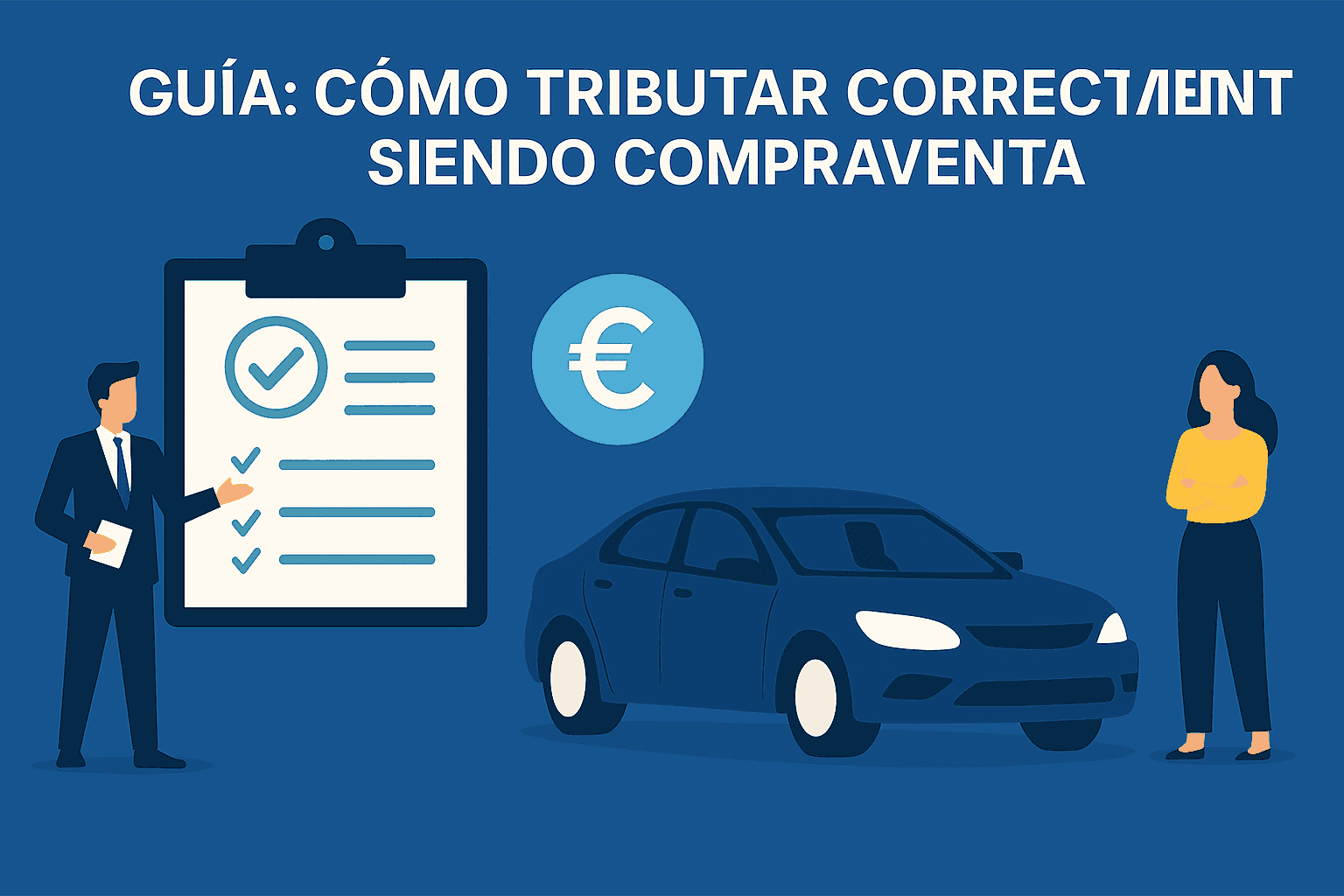
Are you a used-car dealer and not sure exactly how you should be taxed? The confusion between VAT, REBU, Income Tax or Corporation Tax is very common. This guide will help you understand which taxes you need to declare, how to do it properly and what mistakes to avoid, whether you are self-employed or run a limited company.
1. Types of taxes that affect a dealer
📌 Main taxes:
VAT or REBU (depending on how you buy and sell)
Personal Income Tax if you are self-employed
Corporation Tax if you are a limited company
IAE (Business Activity Tax), compulsory for high turnover
Local taxes (vehicle tax, municipal fees if you manage stock on public roads)
2. General VAT or REBU? How to choose and apply it correctly
VAT type | When it applies | How it is calculated | What you need |
|---|---|---|---|
General VAT (21%) | When you buy from businesses, leasing companies or outside the EU | On the total sale price | Invoice with itemised VAT |
REBU | When you buy from private individuals or other dealers under REBU | You only tax the profit margin | Simplified invoice and REBU ledgers |
Key advice: You must select REBU when registering with the tax office. If you do not, the tax office will assume you are taxed under normal VAT.
3. Personal Income Tax or Corporation Tax: depending on your legal form
If you are self-employed:
You are taxed under Personal Income Tax (IRPF). Net profit is taxed in bands (from 19% to 47%).
You must file:
Form 130 (quarterly instalment payments)
Form 100 (annual tax return)
If you are a limited company:
You are taxed under Corporation Tax: fixed 25% on net profit.
You must file:
Form 200 (annual return)
Form 202 (quarterly advance payments)
Applicable deductions: accounting fees, fuel, local rent, digital tools such as Dealcar, etc.
4. Books and invoicing: what the tax office requires
Whether you are self-employed or a limited company, you must keep certain accounting records, especially if you apply REBU:
Mandatory ledger | When is it required? |
|---|---|
Income and expense ledger | Self-employed |
Ledger of issued and received invoices | Self-employed and limited companies |
REBU purchases and sales ledger | If you are taxed under REBU |
Correct REBU invoice:
It must not show VAT separately.
It must include "Transaction covered by the special scheme for used goods (REBU)".
5. Common mistakes when being taxed as a dealer
❌ Applying REBU without meeting the conditions (for example, with cars bought from businesses with VAT)
❌ Not declaring the actual margin or not keeping REBU ledgers
❌ Not deducting usual expenses (insurance, petrol, tools)
❌ Not checking the forms before sending them or filing them late
✅ Practical conclusion
Correct taxation as a dealer is not just about paying tax: it is about optimising your profit legally.
Apply general VAT or REBU depending on the car's origin.
Pay tax through Personal Income Tax or Corporation Tax depending on whether you are self-employed or a limited company.
Keep your books up to date and invoice properly.
Deduct expenses whenever they are properly supported.
Want to keep control of your margins and invoicing without the hassle?
With Dealcar you can automate REBU ledgers, manage profits and organise your sales.
👉 Request a demo and forget about the numbers.
🛠️ Introduction
Are you a used-car dealer and not sure exactly how you should be taxed? The confusion between VAT, REBU, Income Tax or Corporation Tax is very common. This guide will help you understand which taxes you need to declare, how to do it properly and what mistakes to avoid, whether you are self-employed or run a limited company.
1. Types of taxes that affect a dealer
📌 Main taxes:
VAT or REBU (depending on how you buy and sell)
Personal Income Tax if you are self-employed
Corporation Tax if you are a limited company
IAE (Business Activity Tax), compulsory for high turnover
Local taxes (vehicle tax, municipal fees if you manage stock on public roads)
2. General VAT or REBU? How to choose and apply it correctly
VAT type | When it applies | How it is calculated | What you need |
|---|---|---|---|
General VAT (21%) | When you buy from businesses, leasing companies or outside the EU | On the total sale price | Invoice with itemised VAT |
REBU | When you buy from private individuals or other dealers under REBU | You only tax the profit margin | Simplified invoice and REBU ledgers |
Key advice: You must select REBU when registering with the tax office. If you do not, the tax office will assume you are taxed under normal VAT.
3. Personal Income Tax or Corporation Tax: depending on your legal form
If you are self-employed:
You are taxed under Personal Income Tax (IRPF). Net profit is taxed in bands (from 19% to 47%).
You must file:
Form 130 (quarterly instalment payments)
Form 100 (annual tax return)
If you are a limited company:
You are taxed under Corporation Tax: fixed 25% on net profit.
You must file:
Form 200 (annual return)
Form 202 (quarterly advance payments)
Applicable deductions: accounting fees, fuel, local rent, digital tools such as Dealcar, etc.
4. Books and invoicing: what the tax office requires
Whether you are self-employed or a limited company, you must keep certain accounting records, especially if you apply REBU:
Mandatory ledger | When is it required? |
|---|---|
Income and expense ledger | Self-employed |
Ledger of issued and received invoices | Self-employed and limited companies |
REBU purchases and sales ledger | If you are taxed under REBU |
Correct REBU invoice:
It must not show VAT separately.
It must include "Transaction covered by the special scheme for used goods (REBU)".
5. Common mistakes when being taxed as a dealer
❌ Applying REBU without meeting the conditions (for example, with cars bought from businesses with VAT)
❌ Not declaring the actual margin or not keeping REBU ledgers
❌ Not deducting usual expenses (insurance, petrol, tools)
❌ Not checking the forms before sending them or filing them late
✅ Practical conclusion
Correct taxation as a dealer is not just about paying tax: it is about optimising your profit legally.
Apply general VAT or REBU depending on the car's origin.
Pay tax through Personal Income Tax or Corporation Tax depending on whether you are self-employed or a limited company.
Keep your books up to date and invoice properly.
Deduct expenses whenever they are properly supported.
Want to keep control of your margins and invoicing without the hassle?
With Dealcar you can automate REBU ledgers, manage profits and organise your sales.
👉 Request a demo and forget about the numbers.