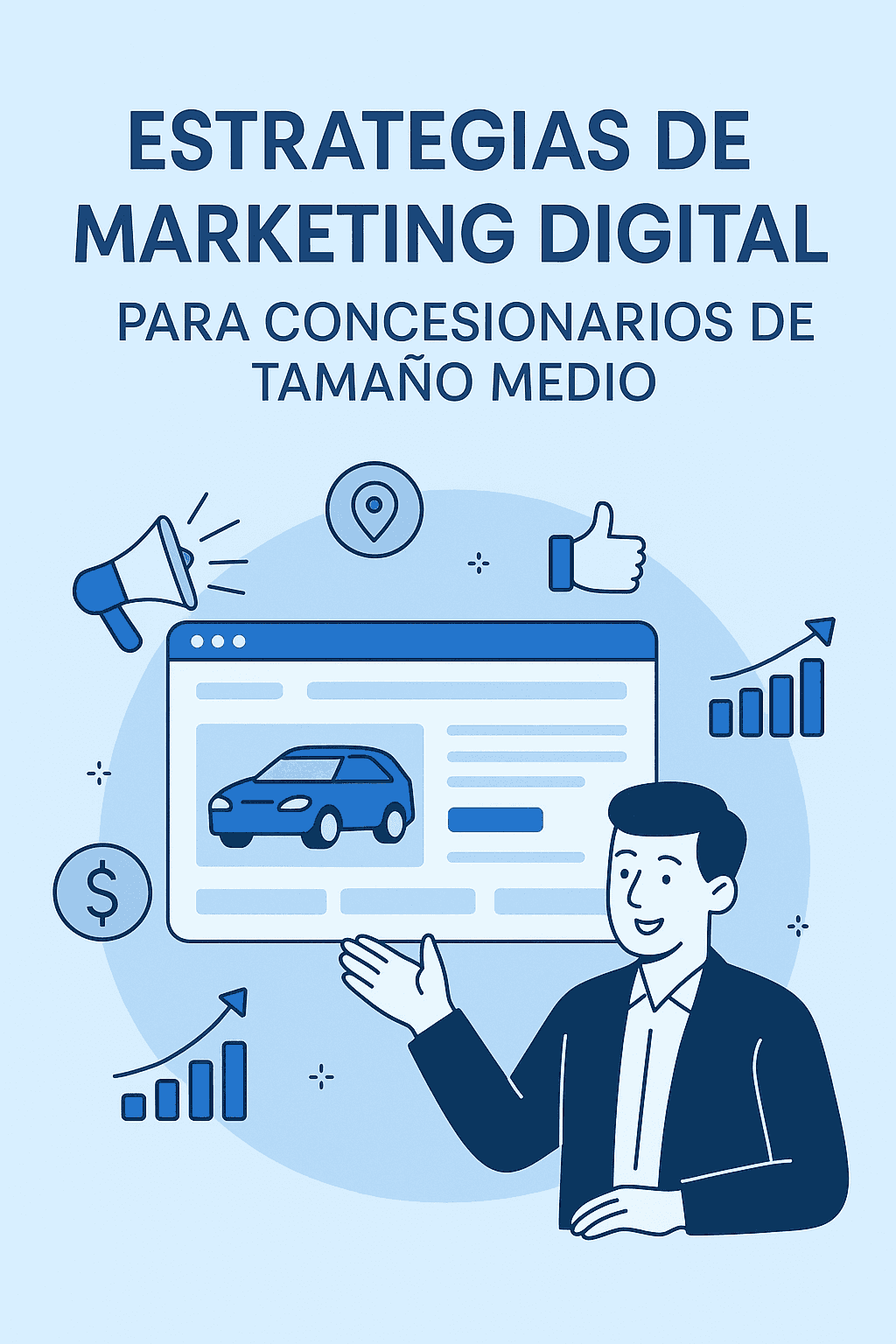
In an increasingly competitive sector like the used car buying and selling market, standing out online is no longer optional. For medium-sized dealerships that are starting to venture into digital marketing, it is key to understand where to begin and which actions really generate results. In this article, we review the most effective strategies and how tools like Dealcar can help you get the most out of them.
Why is digital marketing key for your dealership?
More and more people search for their next car through Google or social media before visiting a dealership. If your business is not well represented online, you are losing potential sales.
Advantages of digital marketing for dealerships:
You reach customers who are looking for exactly what you offer, with precise targeting.
You can compete with large groups thanks to well-focused local strategies.
You have real data to measure results and make better business decisions.
You improve your reputation and credibility through a consistent, professional presence.
7 digital marketing strategies that really work
1. Having a professional, optimised website
Your website is your digital shop window. It should load quickly, look good on mobile and be designed to convert visits into enquiries. Additionally, it should reflect the personality and professionalism of your dealership.
Essential elements:
Updated vehicle catalogue with easy-to-use filters
Contact forms and quick call buttons
Trust certificates, reviews and visible warranties
Responsive design and optimal loading speed
Tip: Use platforms like Dealcar, which offer websites specifically designed for dealerships, with integrated inventory, contact forms and modern design.
2. Local SEO positioning
Appearing in the top Google results when someone searches for "used cars in [your city]" is essential. Local SEO allows nearby users to find you easily.
Key actions:
Use geo-targeted keywords in titles, descriptions and website copy
Create an optimised and up-to-date Google Business Profile listing
Add real photos of your cars and dealership
Encourage positive reviews and respond to all of them
This not only improves your ranking, it also builds trust among potential customers.
3. Online advertising (Google Ads and Meta Ads)
Digital advertising makes it possible to get quick results, especially useful for dealerships with constantly rotating stock.
Advantages:
Targeting by location, age, interests, car model, etc.
Precise measurement of each campaign's performance
Ability to promote specific cars or one-off events (such as fairs or test drive days)
Pro tip: Use dynamic ads connected to your inventory so available cars are shown automatically. Dealcar can help you with this integration.
4. Social media with purpose
Having a presence on social media is not just about posting photos. It is about building a community and generating trust with useful and entertaining content.
Content ideas:
Videos showing featured or newly arrived cars
Customer testimonials in testimonial format
Advice on buying, maintenance, finance or warranties
Stories behind the business: team, values, day-to-day
Choose platforms according to your target audience: Instagram and Facebook work very well for most, but TikTok and YouTube Shorts can give great visibility if used well.
5. Review and online reputation management
Online reviews are one of the factors that most influence the purchase decision. A good digital reputation can make the difference between a visit and a missed opportunity.
Practical tips:
Ask every satisfied customer for a review (you can automate the process)
Always respond, thanking positive reviews and resolving negative ones
Post the best reviews on social media and on your website
This transparency builds trust and improves your local SEO ranking.
6. Automated email marketing
Email marketing remains one of the most effective tools for building loyalty and keeping in touch with your customers. Automating it saves time and keeps communication consistent.
Useful types of emails:
Monthly newsletters with new cars, promotions or news
After-sales emails: thank them for the purchase, ask for reviews, offer servicing
Lead recovery: if someone requested information but did not buy
Segment your lists to send more personalised and effective messages.
7. Analyse results and adjust strategies
Measuring is key to improvement. If you do not analyse your actions, you will not know what works or what to adjust.
Basic metrics to follow:
Website visits and session duration
Traffic sources (Google, social media, campaigns)
Generated enquiries (forms, calls, messages)
Conversion rate (how many enquiries turn into sales)
Dealcar makes this task easier with dashboards that show key metrics in real time and in a simple way.
Common mistakes you should avoid
Not having a website or having one that is not updated or mobile-optimised
Posting only cars, without adding value or standing out
Ignoring reviews or responding unprofessionally
Investing in advertising without targeting or measuring results
Copying strategies from big brands without adapting them to your local market
Conclusion
Digital marketing is not exclusive to the big players. With the right tools and a step-by-step approach, any dealership can gain visibility, attract more customers and sell more.
Start by having a good website, working on local SEO, showing your value on social media and measuring your actions. If you are looking for a solution that makes all this easier from one place, Dealcar is designed to help you stand out online without complications.
Frequently asked questions
What is the most important thing when starting with digital marketing in a dealership?
Having an optimised website, up-to-date Google listings, a well-managed social media presence and starting to measure your visits and enquiries.
How much should a medium-sized dealership invest in online advertising?
It depends on the area and the objectives, but with an investment of between €100 and €300/month you can get visible results if you target your campaigns well.
Can I do digital marketing without having a website?
You can use social media and Google listings, but it is very limited. A website of your own is the foundation of digital marketing: it gives you control, credibility and better results.
What metrics should I track to know if it works?
Website visits, form submissions, calls, messages from social media, and ultimately how many sales are generated from digital channels. Ideally, measure the whole funnel, from visibility to conversion.
Start digitising your dealership today and let customers find you where they are searching!
In an increasingly competitive sector like the used car buying and selling market, standing out online is no longer optional. For medium-sized dealerships that are starting to venture into digital marketing, it is key to understand where to begin and which actions really generate results. In this article, we review the most effective strategies and how tools like Dealcar can help you get the most out of them.
Why is digital marketing key for your dealership?
More and more people search for their next car through Google or social media before visiting a dealership. If your business is not well represented online, you are losing potential sales.
Advantages of digital marketing for dealerships:
You reach customers who are looking for exactly what you offer, with precise targeting.
You can compete with large groups thanks to well-focused local strategies.
You have real data to measure results and make better business decisions.
You improve your reputation and credibility through a consistent, professional presence.
7 digital marketing strategies that really work
1. Having a professional, optimised website
Your website is your digital shop window. It should load quickly, look good on mobile and be designed to convert visits into enquiries. Additionally, it should reflect the personality and professionalism of your dealership.
Essential elements:
Updated vehicle catalogue with easy-to-use filters
Contact forms and quick call buttons
Trust certificates, reviews and visible warranties
Responsive design and optimal loading speed
Tip: Use platforms like Dealcar, which offer websites specifically designed for dealerships, with integrated inventory, contact forms and modern design.
2. Local SEO positioning
Appearing in the top Google results when someone searches for "used cars in [your city]" is essential. Local SEO allows nearby users to find you easily.
Key actions:
Use geo-targeted keywords in titles, descriptions and website copy
Create an optimised and up-to-date Google Business Profile listing
Add real photos of your cars and dealership
Encourage positive reviews and respond to all of them
This not only improves your ranking, it also builds trust among potential customers.
3. Online advertising (Google Ads and Meta Ads)
Digital advertising makes it possible to get quick results, especially useful for dealerships with constantly rotating stock.
Advantages:
Targeting by location, age, interests, car model, etc.
Precise measurement of each campaign's performance
Ability to promote specific cars or one-off events (such as fairs or test drive days)
Pro tip: Use dynamic ads connected to your inventory so available cars are shown automatically. Dealcar can help you with this integration.
4. Social media with purpose
Having a presence on social media is not just about posting photos. It is about building a community and generating trust with useful and entertaining content.
Content ideas:
Videos showing featured or newly arrived cars
Customer testimonials in testimonial format
Advice on buying, maintenance, finance or warranties
Stories behind the business: team, values, day-to-day
Choose platforms according to your target audience: Instagram and Facebook work very well for most, but TikTok and YouTube Shorts can give great visibility if used well.
5. Review and online reputation management
Online reviews are one of the factors that most influence the purchase decision. A good digital reputation can make the difference between a visit and a missed opportunity.
Practical tips:
Ask every satisfied customer for a review (you can automate the process)
Always respond, thanking positive reviews and resolving negative ones
Post the best reviews on social media and on your website
This transparency builds trust and improves your local SEO ranking.
6. Automated email marketing
Email marketing remains one of the most effective tools for building loyalty and keeping in touch with your customers. Automating it saves time and keeps communication consistent.
Useful types of emails:
Monthly newsletters with new cars, promotions or news
After-sales emails: thank them for the purchase, ask for reviews, offer servicing
Lead recovery: if someone requested information but did not buy
Segment your lists to send more personalised and effective messages.
7. Analyse results and adjust strategies
Measuring is key to improvement. If you do not analyse your actions, you will not know what works or what to adjust.
Basic metrics to follow:
Website visits and session duration
Traffic sources (Google, social media, campaigns)
Generated enquiries (forms, calls, messages)
Conversion rate (how many enquiries turn into sales)
Dealcar makes this task easier with dashboards that show key metrics in real time and in a simple way.
Common mistakes you should avoid
Not having a website or having one that is not updated or mobile-optimised
Posting only cars, without adding value or standing out
Ignoring reviews or responding unprofessionally
Investing in advertising without targeting or measuring results
Copying strategies from big brands without adapting them to your local market
Conclusion
Digital marketing is not exclusive to the big players. With the right tools and a step-by-step approach, any dealership can gain visibility, attract more customers and sell more.
Start by having a good website, working on local SEO, showing your value on social media and measuring your actions. If you are looking for a solution that makes all this easier from one place, Dealcar is designed to help you stand out online without complications.
Frequently asked questions
What is the most important thing when starting with digital marketing in a dealership?
Having an optimised website, up-to-date Google listings, a well-managed social media presence and starting to measure your visits and enquiries.
How much should a medium-sized dealership invest in online advertising?
It depends on the area and the objectives, but with an investment of between €100 and €300/month you can get visible results if you target your campaigns well.
Can I do digital marketing without having a website?
You can use social media and Google listings, but it is very limited. A website of your own is the foundation of digital marketing: it gives you control, credibility and better results.
What metrics should I track to know if it works?
Website visits, form submissions, calls, messages from social media, and ultimately how many sales are generated from digital channels. Ideally, measure the whole funnel, from visibility to conversion.
Start digitising your dealership today and let customers find you where they are searching!