Contents
What is considered an imported car for sale purposes
Specific documents you need to sell an imported car
Common problems when selling an imported car
How importation affects the selling price
Checks the buyer will carry out
How to sell an imported car step by step
Where to sell an imported car
Frequently asked questions
Importing a car from Germany, France, Belgium or another country to register it in Spain is a common practice. Prices are often lower in certain European markets, and many buyers take advantage of that. But when the time comes to sell that car in Spain, particularities appear that do not exist in a vehicle bought on the domestic market.
Some buyers distrust imported cars. Others rule them out outright. And those who are willing to buy usually ask additional questions and carry out extra checks that a "national" car does not prompt. All this affects the price, the time it takes to sell and how you should approach the sale.
In this article we explain what to bear in mind when selling an imported car in Spain, what documents you need and how to achieve the best possible price.
What is considered an imported car for sale purposes
In practical terms, an imported car is any vehicle that was originally registered in another country and then re-registered in Spain. This includes cars bought in Germany (the most common source), France, Belgium, Italy, the Netherlands and any other country, whether inside or outside the EU.
Once the car is registered in Spain with Spanish plates, a Spanish registration certificate and the Spanish ITV technical inspection sheet, it is legally a Spanish car for all purposes. There is no legal difference between selling an imported car already registered in Spain and one originally bought here.
The difference is not legal, but one of buyer perception. And that perception affects the price and how easy it is to sell.
Specific documents you need to sell an imported car
In addition to the standard documents for any sale (ID, registration certificate, technical inspection sheet, valid ITV), when selling an imported car it is worth having extra documentation ready to answer the questions the buyer will inevitably ask.
European Certificate of Conformity (CoC). This is the document that certifies the car complies with European type-approval regulations. If you still have it, make it available. It is not required for the sale (it is already reflected in the Spanish technical sheet), but it inspires confidence.
Original purchase invoice from the country of origin. It proves the price you paid for the car, where it came from and the legality of the purchase. Some buyers ask for it to check that the car is not stolen and does not have a suspicious history.
Homologation and import ITV paperwork. The result of the import ITV inspection carried out when the car was registered in Spain. This document certifies that the vehicle was inspected and approved to drive in Spain.
Vehicle history report. A CARFAX or Carvertical report covering the history in the country of origin is a very powerful selling tool. These reports show recorded accidents, mileage at each inspection in the country of origin, number of previous owners and any incidents. For an imported car, this report dispels the buyer's two biggest concerns: "will it have had a serious accident abroad?" and "have the miles been tampered with?".
Maintenance history. If you have invoices for services carried out in Spain (or in the country of origin, if you still have them), show them. An imported car with documented history sells significantly better than one without it.
Common problems when selling an imported car
Buyer distrust
This is the most common problem and the hardest to solve. Many private buyers in Spain distrust imported cars for several reasons: possible mileage tampering in the country of origin, undeclared accidents, differences in equipment or specifications compared with the Spanish market, and the general perception that "if it was such a good car, why were they selling it so cheaply in Germany?".
This distrust is partly justified (there are cases of mileage fraud in imported cars from Germany and Eastern Europe) and partly unjustified (most imported cars are perfectly legal and in good condition). But as the seller, the buyer's perception is your reality.
The way to tackle it is with transparency and documentation. A clean history report, invoices from the country of origin, full homologation and an honest explanation of why you bought the imported car ("it was cheaper in Germany for the same equipment") neutralise most objections.
Not addressing distrust head-on is one of the mistakes that make you sell your car for less money.
Equipment different from the Spanish market
Some imported cars have slightly different specifications from those sold in Spain. They may have the handbook in another language, the navigation system set up for another country, headlights set for driving on the left (in cars from the UK) or equipment that is not standard in Spain.
These differences rarely affect how the car works, but they do affect the buyer's perception. If your car has any such particularity, mention it proactively and explain that it does not affect use.
Mileage that is difficult to verify
In Spain, the ITV history records the car's mileage at each inspection, which makes it possible to verify that the miles have not been tampered with. But the mileage before registration in Spain (the miles the car covered in the country of origin) does not appear in the Spanish ITV register.
This creates distrust, because the buyer cannot easily verify whether the mileage declared is genuine. A CARFAX or Carvertical report covering the country of origin solves this problem, because it shows the mileage recorded at each foreign inspection.
Manufacturer's warranty
If the car was bought new in another country and is still within the warranty period, that warranty is valid in Spain (manufacturer warranties in the EU are European, not national). However, some Spanish dealerships may put obstacles in the way when honouring the warranty of an imported car. If your car is under warranty, check with the official dealer in Spain before selling, so that you can inform the buyer with certainty.
How importation affects the selling price
The fact that a car is imported can affect its selling price in Spain, both positively and negatively.
Factors that reduce the price. General distrust of imported cars can knock between 3% and 8% off compared with an equivalent car bought in Spain. Private buyers apply an implied "import discount" because of the perceived risk (although it is not always justified). If the car has specifications that differ from the Spanish market or the mileage history cannot be easily verified, the discount may be greater.
Factors that add value. If the imported car has better equipment than is usual on the Spanish market for that model (for example, fully loaded versions that are more common in Germany than in Spain), that can offset the import discount. Informed buyers know that certain models come better equipped from the factory in Germany or France, and are willing to pay for it.
Professional dealerships are less reluctant. Dealers that buy cars from private sellers are used to assessing imported vehicles. They have access to history-check tools and know how to distinguish a legitimate imported car from a problematic one. For that reason, in many cases, selling to a professional gives better results than trying to convince a private buyer who is suspicious from the outset.
To maximise the price of an imported car, see our strategies for getting the best price for your car.
Checks the buyer will carry out
An informed buyer assessing an imported car will carry out these checks. Be ready for them.
Check the mileage history. They will look for consistency between the miles you declare, those shown on the Spanish ITV inspections and those they can obtain from the history in the country of origin. If the figures add up, you gain confidence. If there are unexplained jumps, interest drops.
Verify the origin. They will consult the DGT report to confirm that the car is free of encumbrances and that the Spanish registration was carried out correctly. They may also ask for a CARFAX or Carvertical report.
Inspect equipment and specifications. They will check that the equipment matches what the model is supposed to have, that there are no bodged adaptations (headlight changes, electrical modifications) and that everything works properly.
Ask about the car's history. Why did you buy it imported? Where? From whom? How long have you had it? Have you had any problems? Direct, honest answers build trust. Evasive answers create suspicion.
How to sell an imported car step by step
Step 1: Gather all the documentation. ID, Spanish registration certificate, Spanish technical sheet, valid ITV, original purchase invoice, CoC if you have it, maintenance history and, if possible, a vehicle history report. See the documents needed to sell a car for the full list.
Step 2: Get a history report. If you do not have one, invest €15-30 in a CARFAX or Carvertical report. It is the best investment you can make to neutralise buyer distrust. It shows real mileage, accident history and previous owners in the country of origin.
Step 3: Value your car with real data. Do not rely solely on Spanish marketplaces, because prices for imported cars may be slightly different. Get your car valued for free with Dealcar to see what professional dealerships are willing to pay. They know how to assess imported cars and their offer reflects the true market value.
Step 4: Decide on the sales channel. You can list it on marketplaces (making it clear that it is imported), sell to a direct-buy company or receive offers from competing dealerships. For imported cars, selling to professionals usually gives better results than selling to private buyers, because professionals have fewer prejudices and more verification tools.
Step 5: Be transparent from the start. Mention in the advert or in the first conversation that the car is imported, where it comes from and that you have all the documentation. Transparency filters out buyers who do not want imported cars (and would waste your time) and attracts those who are open to them, building trust from the first contact.
Step 6: Close the sale with a contract. Include in the sale and purchase contract a clause stating the vehicle's origin, ownership history and condition. This protects both parties.
Where to sell an imported car
Classified ad platforms. It works, but expect more haggling and more distrust than with a national car. Photos of the documents (CoC, history report) in the advert itself can help filter buyers.
Direct-buy companies. Compramostucoche, Flexicar and similar companies buy imported cars without a problem. Their assessor will check the paperwork and the homologation. The offer will be the usual one: 10-20% below market value. If this route interests you, see what you should know before accepting a direct-buy offer.
Platforms with dealership bidding. This is the best option for imported cars. Professional dealerships on Dealcar are used to assessing and buying imported cars. They do not have the prejudice of a private buyer, they know how to verify histories and they value the car on its merits, not its origin. With competition between several dealerships, the price is adjusted to the true market value.
Dealcar: get your car valued for free and receive dealership offers
Dealcar gives you a free valuation tool that prices your car in under 30 seconds, whether it is imported or national. You enter the registration number and vehicle details, and receive a valuation based on real prices from completed sales in the market.
From there, your car is presented to a network of more than 1,000 verified professional buyers who bid against each other to buy it. Professional dealerships know how to assess imported cars and do not apply the "distrust discount" that a private buyer would.
100% free for you. No commissions or hidden costs.
You get paid before handing over the keys. Bank transfer before delivering the car.
They collect the car from your home. No travel needed.
No paperwork hassles. The buyer handles the transfer, DGT and all the paperwork.
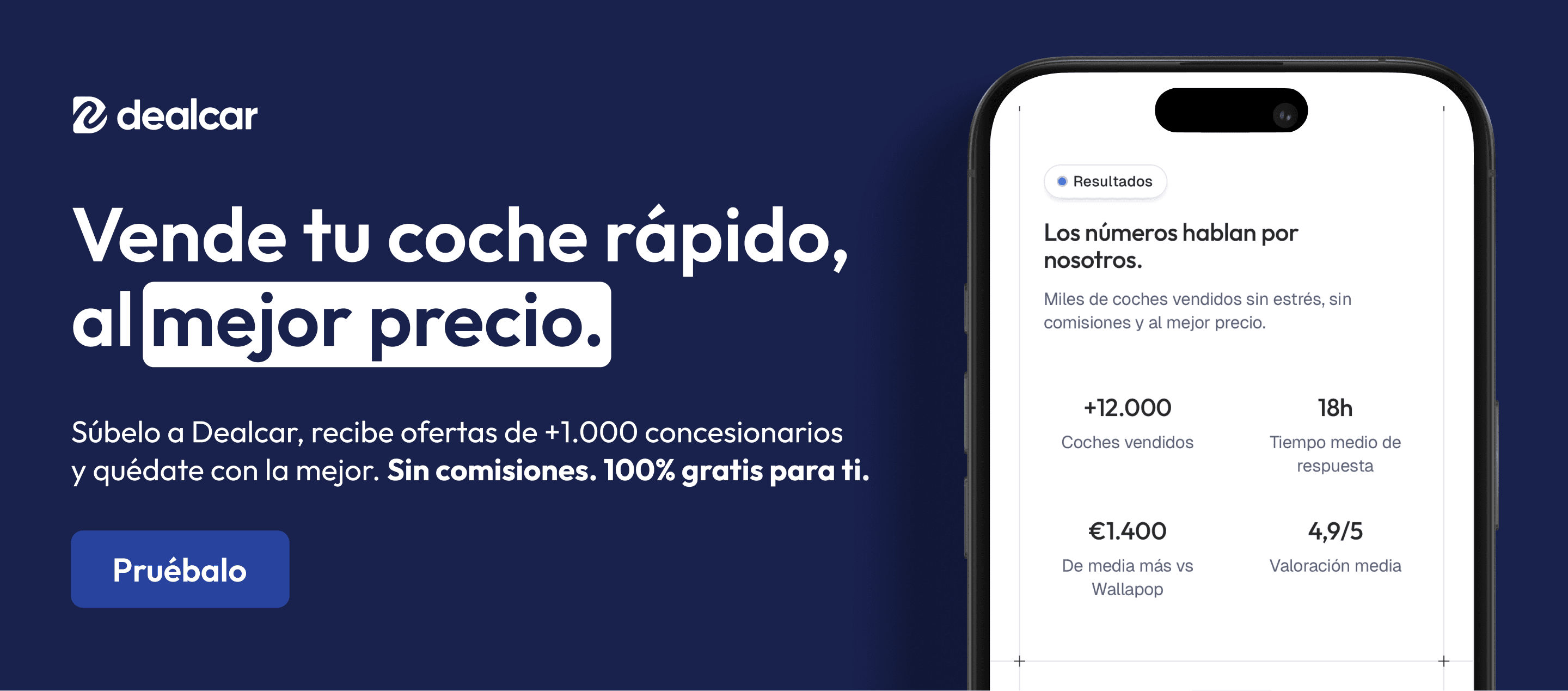
On average, €1,400 more than selling on Wallapop.
More than 12,000 cars sold and an average rating of 4.9 out of 5.
Use Dealcar's free valuation tool.
Frequently asked questions
Is an imported car worth less than a national one?
On the private market, it can be worth between 3% and 8% less because of general distrust. In the professional market (dealerships), the difference is smaller or non-existent, because professionals know how to verify the history and value the car for its features, not its origin.
Do I need special documents to sell an imported car already registered in Spain?
Legally, no. An imported car that already has Spanish plates, a registration certificate and a technical sheet is sold exactly like a national one. But having the original purchase invoice, the CoC and a history report makes the sale easier and justifies a better price.
Are the miles on an imported car reliable?
It depends. The miles recorded in the Spanish ITV inspections since registration in Spain are verifiable. The earlier miles (from the country of origin) can only be verified with a history report (CARFAX, Carvertical) or with maintenance invoices from the country of origin.
Will a dealership buy imported cars?
Yes. Professional dealerships regularly buy imported cars. They have tools to verify the history and the experience to assess them correctly. In many cases, selling to a professional gives better results than trying to sell to a private buyer who is suspicious.
Should I hide the fact that my car is imported?
No. Hiding it creates more problems than benefits. The buyer will discover it when checking the history with the DGT (where the date of first registration in Spain versus the date of manufacture is shown). Transparency builds trust and filters out buyers who are genuinely interested.
Contents
What is considered an imported car for sale purposes
Specific documents you need to sell an imported car
Common problems when selling an imported car
How importation affects the selling price
Checks the buyer will carry out
How to sell an imported car step by step
Where to sell an imported car
Frequently asked questions
Importing a car from Germany, France, Belgium or another country to register it in Spain is a common practice. Prices are often lower in certain European markets, and many buyers take advantage of that. But when the time comes to sell that car in Spain, particularities appear that do not exist in a vehicle bought on the domestic market.
Some buyers distrust imported cars. Others rule them out outright. And those who are willing to buy usually ask additional questions and carry out extra checks that a "national" car does not prompt. All this affects the price, the time it takes to sell and how you should approach the sale.
In this article we explain what to bear in mind when selling an imported car in Spain, what documents you need and how to achieve the best possible price.
What is considered an imported car for sale purposes
In practical terms, an imported car is any vehicle that was originally registered in another country and then re-registered in Spain. This includes cars bought in Germany (the most common source), France, Belgium, Italy, the Netherlands and any other country, whether inside or outside the EU.
Once the car is registered in Spain with Spanish plates, a Spanish registration certificate and the Spanish ITV technical inspection sheet, it is legally a Spanish car for all purposes. There is no legal difference between selling an imported car already registered in Spain and one originally bought here.
The difference is not legal, but one of buyer perception. And that perception affects the price and how easy it is to sell.
Specific documents you need to sell an imported car
In addition to the standard documents for any sale (ID, registration certificate, technical inspection sheet, valid ITV), when selling an imported car it is worth having extra documentation ready to answer the questions the buyer will inevitably ask.
European Certificate of Conformity (CoC). This is the document that certifies the car complies with European type-approval regulations. If you still have it, make it available. It is not required for the sale (it is already reflected in the Spanish technical sheet), but it inspires confidence.
Original purchase invoice from the country of origin. It proves the price you paid for the car, where it came from and the legality of the purchase. Some buyers ask for it to check that the car is not stolen and does not have a suspicious history.
Homologation and import ITV paperwork. The result of the import ITV inspection carried out when the car was registered in Spain. This document certifies that the vehicle was inspected and approved to drive in Spain.
Vehicle history report. A CARFAX or Carvertical report covering the history in the country of origin is a very powerful selling tool. These reports show recorded accidents, mileage at each inspection in the country of origin, number of previous owners and any incidents. For an imported car, this report dispels the buyer's two biggest concerns: "will it have had a serious accident abroad?" and "have the miles been tampered with?".
Maintenance history. If you have invoices for services carried out in Spain (or in the country of origin, if you still have them), show them. An imported car with documented history sells significantly better than one without it.
Common problems when selling an imported car
Buyer distrust
This is the most common problem and the hardest to solve. Many private buyers in Spain distrust imported cars for several reasons: possible mileage tampering in the country of origin, undeclared accidents, differences in equipment or specifications compared with the Spanish market, and the general perception that "if it was such a good car, why were they selling it so cheaply in Germany?".
This distrust is partly justified (there are cases of mileage fraud in imported cars from Germany and Eastern Europe) and partly unjustified (most imported cars are perfectly legal and in good condition). But as the seller, the buyer's perception is your reality.
The way to tackle it is with transparency and documentation. A clean history report, invoices from the country of origin, full homologation and an honest explanation of why you bought the imported car ("it was cheaper in Germany for the same equipment") neutralise most objections.
Not addressing distrust head-on is one of the mistakes that make you sell your car for less money.
Equipment different from the Spanish market
Some imported cars have slightly different specifications from those sold in Spain. They may have the handbook in another language, the navigation system set up for another country, headlights set for driving on the left (in cars from the UK) or equipment that is not standard in Spain.
These differences rarely affect how the car works, but they do affect the buyer's perception. If your car has any such particularity, mention it proactively and explain that it does not affect use.
Mileage that is difficult to verify
In Spain, the ITV history records the car's mileage at each inspection, which makes it possible to verify that the miles have not been tampered with. But the mileage before registration in Spain (the miles the car covered in the country of origin) does not appear in the Spanish ITV register.
This creates distrust, because the buyer cannot easily verify whether the mileage declared is genuine. A CARFAX or Carvertical report covering the country of origin solves this problem, because it shows the mileage recorded at each foreign inspection.
Manufacturer's warranty
If the car was bought new in another country and is still within the warranty period, that warranty is valid in Spain (manufacturer warranties in the EU are European, not national). However, some Spanish dealerships may put obstacles in the way when honouring the warranty of an imported car. If your car is under warranty, check with the official dealer in Spain before selling, so that you can inform the buyer with certainty.
How importation affects the selling price
The fact that a car is imported can affect its selling price in Spain, both positively and negatively.
Factors that reduce the price. General distrust of imported cars can knock between 3% and 8% off compared with an equivalent car bought in Spain. Private buyers apply an implied "import discount" because of the perceived risk (although it is not always justified). If the car has specifications that differ from the Spanish market or the mileage history cannot be easily verified, the discount may be greater.
Factors that add value. If the imported car has better equipment than is usual on the Spanish market for that model (for example, fully loaded versions that are more common in Germany than in Spain), that can offset the import discount. Informed buyers know that certain models come better equipped from the factory in Germany or France, and are willing to pay for it.
Professional dealerships are less reluctant. Dealers that buy cars from private sellers are used to assessing imported vehicles. They have access to history-check tools and know how to distinguish a legitimate imported car from a problematic one. For that reason, in many cases, selling to a professional gives better results than trying to convince a private buyer who is suspicious from the outset.
To maximise the price of an imported car, see our strategies for getting the best price for your car.
Checks the buyer will carry out
An informed buyer assessing an imported car will carry out these checks. Be ready for them.
Check the mileage history. They will look for consistency between the miles you declare, those shown on the Spanish ITV inspections and those they can obtain from the history in the country of origin. If the figures add up, you gain confidence. If there are unexplained jumps, interest drops.
Verify the origin. They will consult the DGT report to confirm that the car is free of encumbrances and that the Spanish registration was carried out correctly. They may also ask for a CARFAX or Carvertical report.
Inspect equipment and specifications. They will check that the equipment matches what the model is supposed to have, that there are no bodged adaptations (headlight changes, electrical modifications) and that everything works properly.
Ask about the car's history. Why did you buy it imported? Where? From whom? How long have you had it? Have you had any problems? Direct, honest answers build trust. Evasive answers create suspicion.
How to sell an imported car step by step
Step 1: Gather all the documentation. ID, Spanish registration certificate, Spanish technical sheet, valid ITV, original purchase invoice, CoC if you have it, maintenance history and, if possible, a vehicle history report. See the documents needed to sell a car for the full list.
Step 2: Get a history report. If you do not have one, invest €15-30 in a CARFAX or Carvertical report. It is the best investment you can make to neutralise buyer distrust. It shows real mileage, accident history and previous owners in the country of origin.
Step 3: Value your car with real data. Do not rely solely on Spanish marketplaces, because prices for imported cars may be slightly different. Get your car valued for free with Dealcar to see what professional dealerships are willing to pay. They know how to assess imported cars and their offer reflects the true market value.
Step 4: Decide on the sales channel. You can list it on marketplaces (making it clear that it is imported), sell to a direct-buy company or receive offers from competing dealerships. For imported cars, selling to professionals usually gives better results than selling to private buyers, because professionals have fewer prejudices and more verification tools.
Step 5: Be transparent from the start. Mention in the advert or in the first conversation that the car is imported, where it comes from and that you have all the documentation. Transparency filters out buyers who do not want imported cars (and would waste your time) and attracts those who are open to them, building trust from the first contact.
Step 6: Close the sale with a contract. Include in the sale and purchase contract a clause stating the vehicle's origin, ownership history and condition. This protects both parties.
Where to sell an imported car
Classified ad platforms. It works, but expect more haggling and more distrust than with a national car. Photos of the documents (CoC, history report) in the advert itself can help filter buyers.
Direct-buy companies. Compramostucoche, Flexicar and similar companies buy imported cars without a problem. Their assessor will check the paperwork and the homologation. The offer will be the usual one: 10-20% below market value. If this route interests you, see what you should know before accepting a direct-buy offer.
Platforms with dealership bidding. This is the best option for imported cars. Professional dealerships on Dealcar are used to assessing and buying imported cars. They do not have the prejudice of a private buyer, they know how to verify histories and they value the car on its merits, not its origin. With competition between several dealerships, the price is adjusted to the true market value.
Dealcar: get your car valued for free and receive dealership offers
Dealcar gives you a free valuation tool that prices your car in under 30 seconds, whether it is imported or national. You enter the registration number and vehicle details, and receive a valuation based on real prices from completed sales in the market.
From there, your car is presented to a network of more than 1,000 verified professional buyers who bid against each other to buy it. Professional dealerships know how to assess imported cars and do not apply the "distrust discount" that a private buyer would.
100% free for you. No commissions or hidden costs.
You get paid before handing over the keys. Bank transfer before delivering the car.
They collect the car from your home. No travel needed.
No paperwork hassles. The buyer handles the transfer, DGT and all the paperwork.
On average, €1,400 more than selling on Wallapop.
More than 12,000 cars sold and an average rating of 4.9 out of 5.
Use Dealcar's free valuation tool.
Frequently asked questions
Is an imported car worth less than a national one?
On the private market, it can be worth between 3% and 8% less because of general distrust. In the professional market (dealerships), the difference is smaller or non-existent, because professionals know how to verify the history and value the car for its features, not its origin.
Do I need special documents to sell an imported car already registered in Spain?
Legally, no. An imported car that already has Spanish plates, a registration certificate and a technical sheet is sold exactly like a national one. But having the original purchase invoice, the CoC and a history report makes the sale easier and justifies a better price.
Are the miles on an imported car reliable?
It depends. The miles recorded in the Spanish ITV inspections since registration in Spain are verifiable. The earlier miles (from the country of origin) can only be verified with a history report (CARFAX, Carvertical) or with maintenance invoices from the country of origin.
Will a dealership buy imported cars?
Yes. Professional dealerships regularly buy imported cars. They have tools to verify the history and the experience to assess them correctly. In many cases, selling to a professional gives better results than trying to sell to a private buyer who is suspicious.
Should I hide the fact that my car is imported?
No. Hiding it creates more problems than benefits. The buyer will discover it when checking the history with the DGT (where the date of first registration in Spain versus the date of manufacture is shown). Transparency builds trust and filters out buyers who are genuinely interested.